The mountain passes of South Africa often represent unexplored roads capable of turning an ordinary trip into a vibrant weekend event. Although well-known routes like Chapman’s Peak and Swartberg Pass attract a lot of attention, there are several fully paved alternatives offering breathtaking views without the need for a four-wheel-drive vehicle.
These five passes deserve a place on the bucket list for road trip enthusiasts, photographers, and those who enjoy short scenic stops.
Pass Descriptions
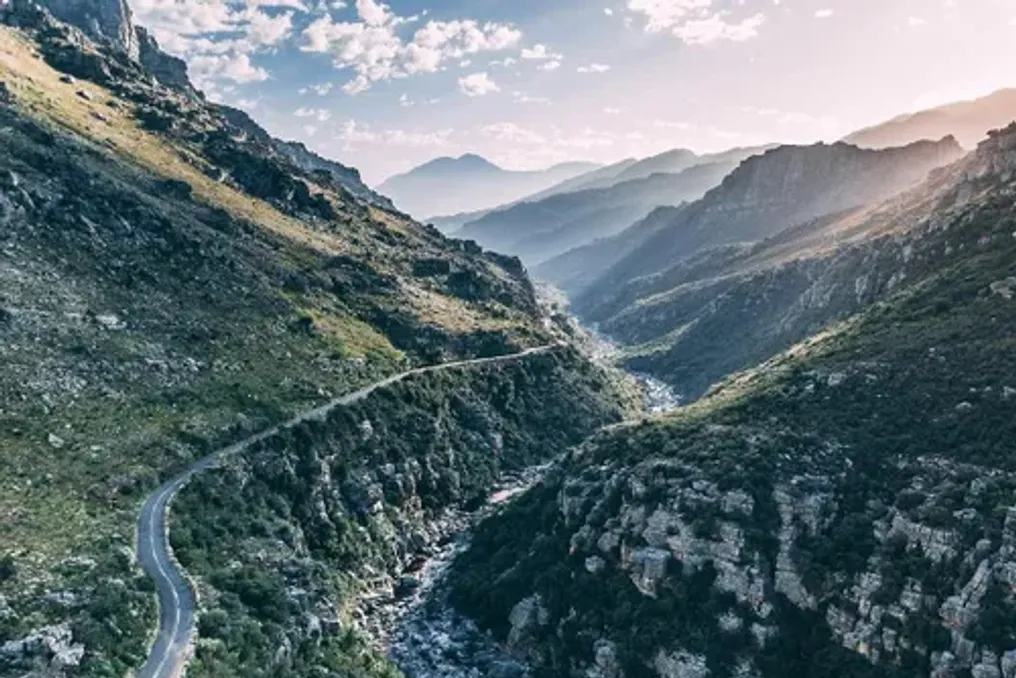
Bainskloof Pass, built by the legendary road engineer Andrew Geddes Bain and opened in 1854, remains one of the most impressive routes in the Western Cape. This pass winds through the Limietberg mountains between Wellington and Ceres, offering views of historic stone bridges, waterfalls, and natural rock pools. It is notable for feeling remote from nearby wine regions; in summer, visitors swim in the mountain pools, while in winter, misty cliffs and rushing streams are encountered. The route is also recognized as a national monument.
Most travelers heading from Paarl to Worcester now use the Huguenot Tunnel, but the original Du Toitskloof Pass offers a much more memorable journey. The road gently ascends through rugged terrain, after which expansive views of the Breede River valley open up. Due to reduced traffic, it is easier to stop at viewpoints and appreciate the scale of the surrounding peaks. It is an ideal detour for those traveling to the Breede Valley, Ceres, or the Little Karoo.
Tradouw Pass connects Barrydale and Stellenbosch, passing through a dramatic section of the Langeberg mountains. Despite being fully paved, it retains a sense of adventure due to its winding turns and towering cliffs. After heavy rains, waterfalls cascade down the surrounding cliffs, and the vegetation becomes noticeably greener. The pass also serves as a gateway between Overberg and the Little Karoo, making it a popular addition to longer Garden Route journeys.
Sir Lowry’s Pass has been used to transport travelers through the Hottenots Holland mountains since the 19th century and remains a classic scenic Cape route. The pass is part of the drive between Cape Town and Overberg, offering stunning views of False Bay and the surrounding mountain ranges. Although many drivers simply pass through on their way to Hermanus or along the Garden Route, this route rewards those who stop at the viewpoints. On clear days, the combination of ocean, vineyards, and rugged mountains creates one of the most spectacular panoramas of the Western Cape.
Clarence Drive is technically a coastal pass rather than a mountain pass, but few roads in the country combine mountains and ocean as dramatically. Stretching between Gordon's Bay and Roei-Els, this route follows the edge of the Kogelberg Biosphere Reserve. On one side are steep fynbos-covered slopes, and on the other, an unobstructed view of False Bay. During the whale season in winter and spring, southern right whales can often be seen from the roadside. Many Cape Town residents consider it one of the most beautiful day trips in the country.
Advantages of These Routes
All five routes share a common feature: they are accessible by a standard passenger car, yet they offer landscapes that many travelers associate with remote gravel roads. These roads are fully paved, provide excellent photo opportunities, offer views of mountains and valleys, and are easily accessible from major cities, making them suitable for most drivers.
Tips Before Traveling
Before starting your journey, it is recommended to check the road conditions after heavy rains, especially in winter. You should also refuel before entering remote mountainous areas and allow extra time for stops at viewpoints and short walks. It is important to watch out for cyclists, livestock, and wildlife on quieter stretches of the road. To enjoy some of the most spectacular mountain scenery in South Africa, you do not require heavily modified transport.