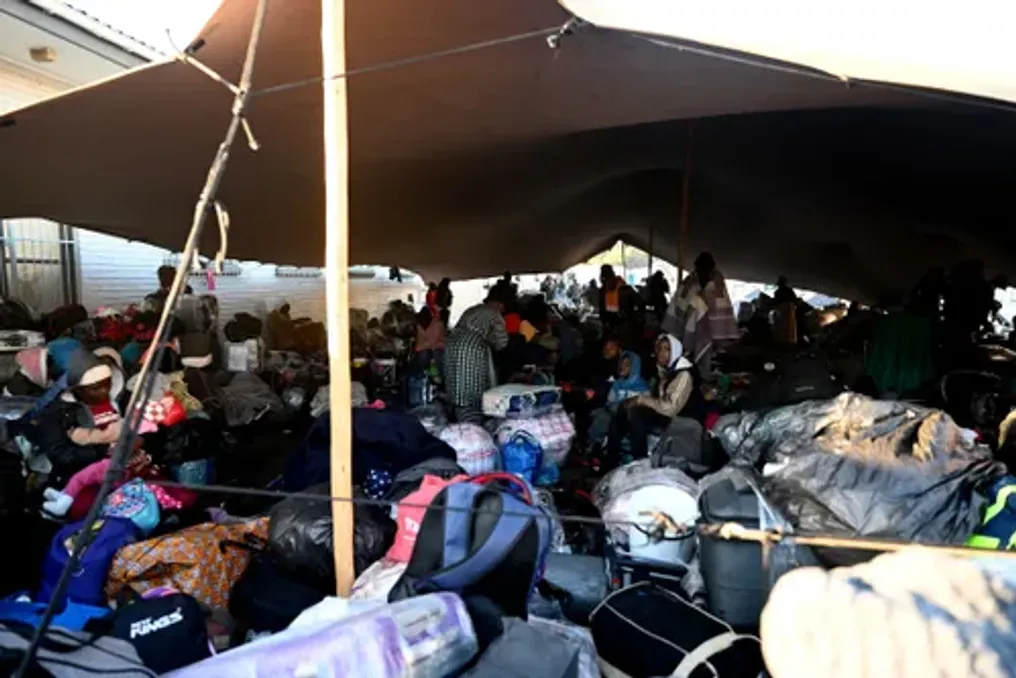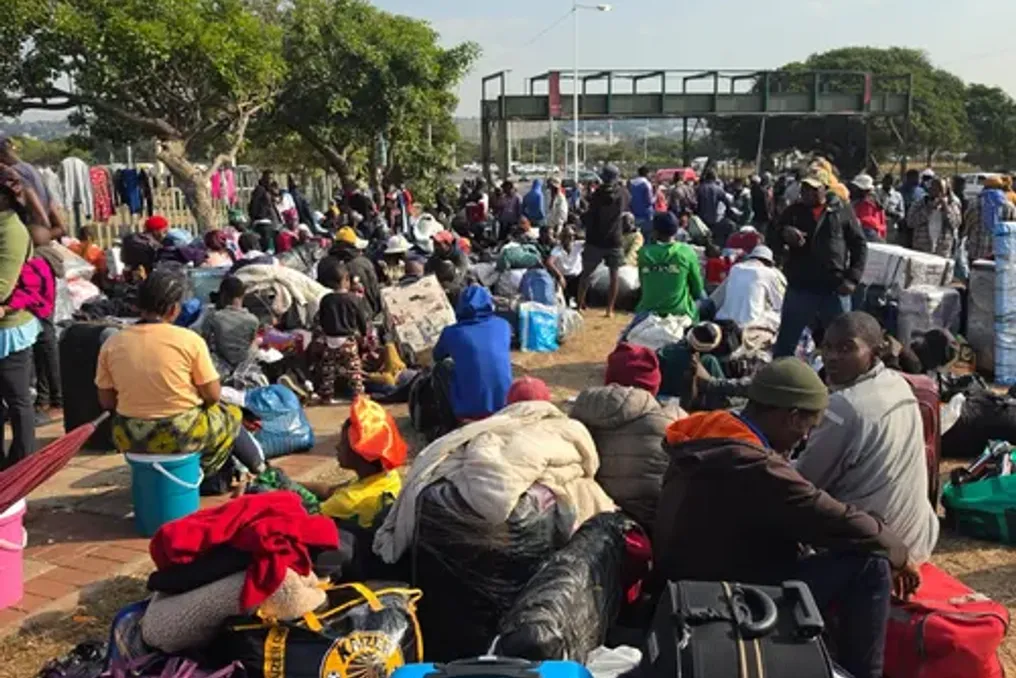
According to the provincial Department of Internal Affairs, the number of undocumented migrants who have undergone deportation procedures and voluntary repatriation at the Temporary Repatriation Centre in Musina has risen to between 47,000 and 50,000 people.
Increase in Migrant Flow
Hundreds of migrants continue to arrive at the center as authorities actively conduct deportations and voluntary returns through the Beitbridge border post. This increase occurred after the closure of the Durban Repatriation Centre and coincides with intensified demands from anti-migrant organizations for illegal immigrants to leave South Africa.
Some foreign nationals have already been deported or voluntarily returned to countries such as Mozambique and Malawi amid growing tensions surrounding illegal immigration.
Center Management Comments
Albert Matsaung, manager of the Limpopo Department of Internal Affairs, speaking at the center on Thursday, noted that the department is beginning to see results from its repatriation program. He informed the public broadcaster that while a huge number of people were initially processed, the figures have now decreased. Specifically, 1,675 people were processed the day before yesterday, and everyone in the facility was moved by the end of the workday.
However, Matsaung emphasized that the situation remains dynamic: as people are processed, new applicants appear, brought here from nine provinces.
Statistics and Processing Process
On Thursday morning, there were between 1,500 and 2,000 migrants at the center awaiting processing. Matsaung stated that the total number of processed migrants continues to grow. He expressed satisfaction with the progress, noting that since starting operations in KwaZulu-Natal and continuing activities at this center, the total number processed has reached between 47,000 and 50,000 people.
He clarified that the figure yesterday was around 46,000, and with new arrivals, it is approaching 50,000, which statistically corresponds to the range of 47,000 to 50,000 people, including those currently at the center.
Security Measures
Matsaung attributed the success of the operation to the dedication of officials and the support of stakeholders. He stressed that officials contributed through their commitment, and the achieved results were made possible by the cooperation of all government departments and civil society.
He also described the procedures that undocumented migrants undergo after arriving at the center. An important part of the process is a check for criminal history, conducted by the South African Police Service (SAPS).
SAPS is based at the center and uses biometric technology to check for convictions. The police have already identified individuals linked to serious crimes such as robbery, murder, and rape, according to SAPS reports.
Digitization of Migrant Data
After police screening, Department of Internal Affairs staff assist migrants in filling out necessary documentation and entering personal data. Fingerprints are then taken. Although biometric data allows for the identification of people already in the system, fingerprints are collected as part of the record digitization process. This digitized biometric data will be uploaded to the Department of Internal Affairs system, allowing authorities to track individuals returning to South Africa after deportation via their fingerprints.