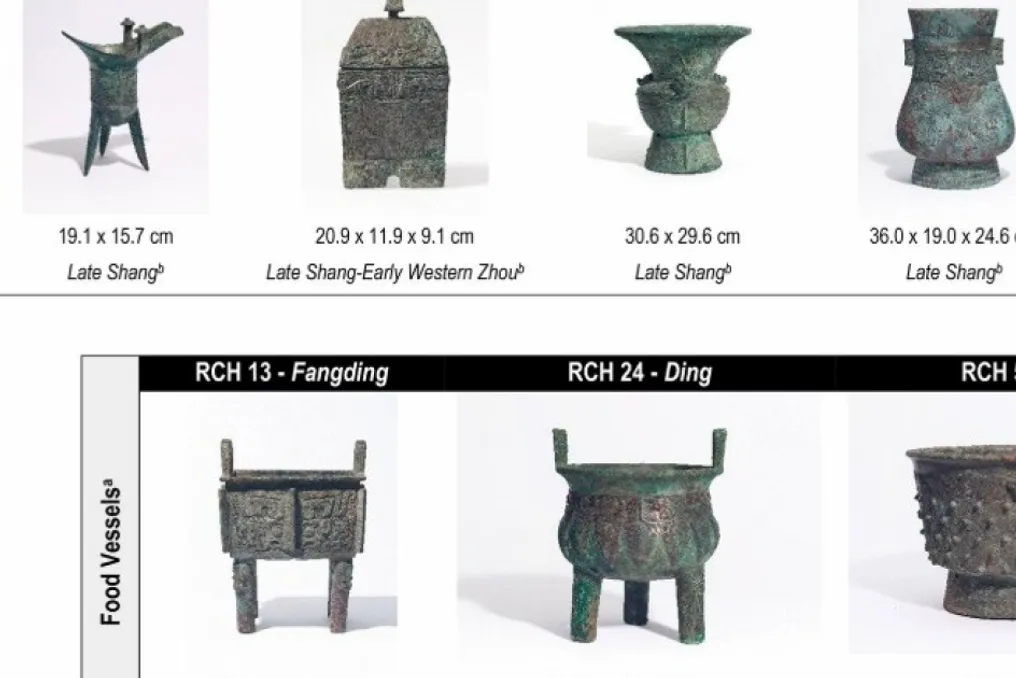
British and Swiss researchers analyzed protein fragments preserved in ancient Chinese bronze vessels. During this analysis, biomarkers characteristic of ginger and mold were identified in one of the artifacts. These findings suggest that an alcoholic beverage was stored in the vessel, which was made approximately three thousand years ago.
Popular
Historical Context of Alcohol
The production of alcoholic beverages began in deep antiquity. Archaeological data indicates that representatives of the Natufian archaeological culture in the Middle East during the Epipaleolithic era were already capable of brewing beer. This is evidenced by finds from the Israeli cave of Raqefet, where remains of grains processed about 13,7–11,7 thousand years ago were discovered. However, such drinks likely gained widespread popularity among farmers during the Neolithic period.
Early Evidence in China
The earliest signs of alcohol production in modern China date back to the early Neolithic. It was recently established that prehistoric inhabitants in the Yangtze River basin produced rice beer about ten thousand years ago. The first evidence of alcohol preparation is presented by remains of fermented plants, which are identified using microscopy, as well as specific biomarkers determined by chemical methods.
Study of Bronze Vessels
As part of a new project, scientists from the UK and Switzerland, led by Luciana da Costa Carvalho of Oxford University, focused on finds from a later period than the Neolithic. They studied eight ancient Chinese bronze vessels, which were possibly used for ritual purposes. These artifacts are housed in the Rietberg Museum in Zurich and were obtained through antique dealers rather than archaeologists, making their exact provenance uncertain. Nevertheless, based on the characteristics of the items, scientists determined that they belong to the Shang Dynasty (approximately 1500–1046 BCE) and the early Zhou Dynasty (approximately 1046–978 BCE).
Laboratory Analysis Results
The goal of the study was to determine the presence of specific biomarkers in the vessels, despite layers of internal corrosion, as these items had not undergone restoration or conservation after entering the museum, according to specialists. Oxford University specialists found probable remnants of an alcoholic beverage in one of the vessels. These remnants included proteins from the mold Monascus purpureus and medicinal ginger (Zingiber officinale), as well as traces characteristic of bird egg, although there is a possibility that the latter resulted from subsequent contamination.
Conclusions on Ritual Use
Previously, ancient evidence of the use of ginger and molds was only found through microscopic analysis of plant remains in ceramics, as well as in ancient written sources where ginger is mentioned as an ingredient for drinks. Based on this, researchers concluded that the vessel type 'hu' from the late Shang Dynasty most likely contained an alcoholic beverage, probably intended for ritual ceremonies.
Other Finds in China
Periodically, even liquid alcohol residues are preserved in ancient vessels. For example, recently, unfiltered wheat beer was discovered in the tomb of a Chinese military official who lived more than two thousand years ago.
Burials in Latvia
It is also worth noting the study of remains from a rare Iron Age collective burial found in Latvia. In 1990, archaeologists discovered six skeletons, estimated to be from the late 8th to early 10th century AD. Genetic analysis showed that the individuals were of local origin, including kinship ties. It was established that three individuals had perimortem injuries on their bones, including a severed cervical vertebra, indicating decapitation. One of the researchers' hypotheses links this burial to Viking raids, as reported in the Journal of Archaeological Science: Reports.