Sonam Wangdu shares thoughts on living in harmony with nature, environmental legislation, and a sustainable lifestyle, based on his upbringing in Ladakh. A graduate of the National Law University with degrees in business and law, he studied at Druk Padma Karpo School and SECMOL. His experience has shaped an understanding of both traditional knowledge and modern legal systems, striving to connect local wisdom with current environmental and social issues.
In the age of social media, inspiring images are often displayed: solar kitchens, influencers promoting a sustainable lifestyle. These moments create a feeling of saving the planet through every published video. However, this idealized picture often diverges from the reality of many people living in apartments without balconies, where waste sorting systems remain an obscure concept.
Attempts to follow eco-advice in an urban apartment setting can lead to disappointment and guilt. Sustainability should not feel like punishment or a restriction on joy and choice; it is a search for balance between meeting current needs and preserving resources for the future.
Principles of Sustainability from Traditions
The author argues that the true principles of sustainable existence have long existed in communities that are often ignored, especially in the Himalayan mountain and tribal societies. He emphasizes that sustainability is not a set of rules, but a way of thinking applicable in both a mountain village and an apartment building.
Rethinking Recycling
Many misunderstand the concept of recycling, reducing it to accumulating old things. In mountainous regions, recycling is a way of life where nothing is thrown away but is transformed. For example, dry toilets turn waste into fertilizer that nourishes the soil, and sun-dried clay bricks return to the landscape after deterioration.
This principle applies to the urban environment as well: instead of just reusing items, one must change the approach to resources. This means choosing durable clothing over fleeting trends and rethinking ownership—the possibility of renting or sharing tools. When buying, one should ask what will happen to the item after its service life ends.
Conscious Consumption and the Rhythm of the Earth
Sustainable consumption goes beyond recycling. In cities, it is easy to fall into a trap where attempts to live 'ecologically' become burdensome. In mountains like Ladakh, residents learned this out of necessity. Due to limited land resources, they practiced terraced farming, and in the high-altitude desert of Ladakh, the 'zing' system was used—small interconnected water bodies that slow glacial melt and replenish groundwater.
The system functioned through accountability: an official appointed by the community regulated water use. This approach is based on the belief that people are custodians of Earth's gifts, not their owners. Ancient Indian texts, including the Vedas and Arthashastra, reflect this idea of careful stewardship of natural wealth.
The Importance of Community in Sustainability
Sustainability should not be an individual project. In traditional communities, it is woven into the fabric of social life. In contrast, in cities, community often seems superficial. Traditional agro-pastoral systems, combining agriculture and animal husbandry, represent a closed loop where little goes to waste. The architecture of these places is also designed for generations.
The main lesson is the absence of a singular goal. Applying community principles in the city is possible through participation in local gardening groups, tool sharing, or volunteering. This transforms transactional relationships into trusting bonds.
Sustainability as Freedom
Ultimately, sustainability is not self-punishment, but liberation. The constant desire to acquire new things or chase trends is anxiety, not joy. The mindset of a custodian frees one from the guilt and pressure of owning many things. It is a shift from endless demand to conscious appreciation, allowing one to live well in the modern world without completely rejecting it.
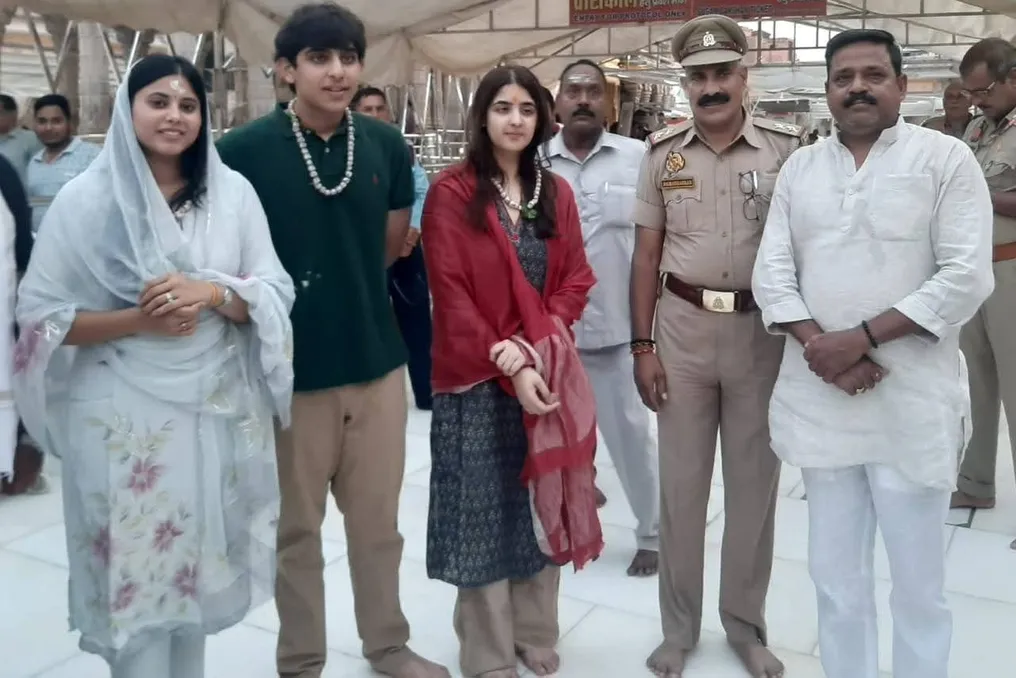
Akhilesh Yadav's children, Tina and Arjun, attracted public attention due to their modesty during a recent visit to Kashi Vishwanath. They visited the temple along with Priya Saroj, the fiancée of cricketer Rinku Singh. Photos from this trip are actively circulating on social media, eliciting admiration for their simple and devout appearance. Tina Yadav looked elegant in an ethnic outfit, combining a dark-print jacket with beige trousers and a maroon dupatta. Arjun Yadav was seen in a simple dark green T-shirt with a white garland, highlighting his casual look. Priya Saroj maintained her traditional Delhi style, dressed in a light blue floral print suit and covering her head with a matching dupatta. Despite being the children of a former UP Chief Minister, their modesty during this religious journey won the hearts of the public.