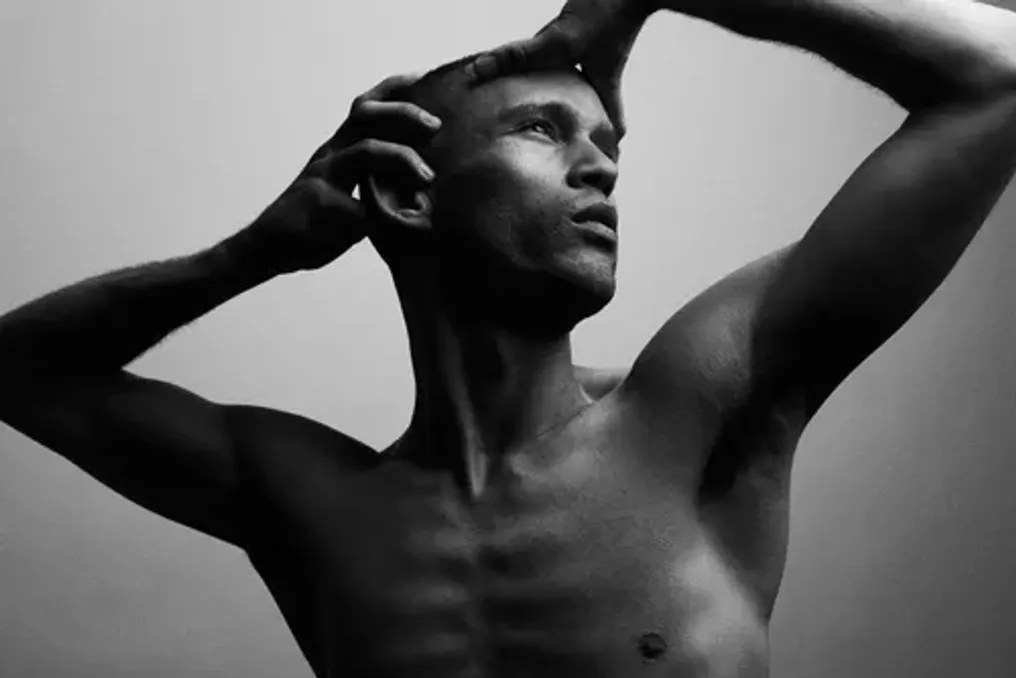
Darion Adams, who works as an artist, teacher, choreographer, and project coordinator, describes himself as a 'multi-hybrid dance artist.' He was born and raised in Manenberg—a Cape Flats neighborhood known for high crime rates and poverty. Despite limited resources, Adams founded the AIM Society, an initiative aimed at challenging stereotypes about Manenberg as a place of crime and hopelessness.
Cultural Development and Recognition
The core principle of this organization's work is transforming the cultural landscape of Manenberg through interdisciplinary artistic projects, including areas such as 'Art in Manenberg' and 'Dance in AIM.' Through his dedication to both his craft and his community of origin, Adams has achieved significant success. These include securing the arts economic development program through the US Consulate in Cape Town and traveling across the United States to engage with various art organizations. Recently, Adams received the prestigious Pina Bausch Fellowship for 2025, which is a major achievement for any dancer.
Journey to Self-Acceptance
In a conversation with Karl Collinson, Adams shares the difficulties he faced as a queer creator in Manenberg, his journey toward self-acceptance and acceptance of his community, and how celebrating these aspects led to the recognition of his work on the global stage.
Performance in Germany
During the celebration of the 10th anniversary of the Pina Bausch Fellowship, Adams presented his piece titled 'Môre, Môre, Môre.' This was the largest event in ten years, gathering fellows from 2025 and 2024. His presentation was a collage combining four months of practice, including time spent with his interlocutor and Aldo at the Purple Mountain Arts Residency. The title 'Môre, Môre, Môre' comes from the word 'môre,' which means 'good morning,' but also implies 'tomorrow,' or the future. The work explored what performances could look like in a community like Manenberg. Adams moved a table, which symbolized the system and home, using it in motion around the body, stepping over it, and carrying it.
Presenting Manenberg to the World
He framed the presentation as an improvised or local performance so that the audience felt part of this world. During the show, footage of Manenberg and the roads where he lives was displayed on screen. He then showed a film created with Nomandala Vilakazi and sat with the audience, similar to film screenings in Manenberg. Adams was very proud to have been able to present Manenberg in Wuppertal, Germany, to fellows from all over the world, including Australia, Nigeria, the US, and Europe. It was extremely important to him to present himself, his work, and the context from which his art emerges, taking Manenberg beyond stereotypes.
Choice of Dance and Career
Adams earned a diploma in dance teaching from UCT. When asked about his choice of dance, he explained that he started dancing at age five in church, and from day one, it was clear he would pursue it. He was supported by his mother and family, although many wondered how he would make a living. Initially, he studied dance teaching because that is what those around him did, but he actually wanted to be a performer and a theatre creator. He did not initially want to attend UCT; he aspired to Jazz Arts Dance Theatre to perform. However, during teaching practice, he felt bored and disliked all the work required by the school system, as he felt it could kill his passion and creativity.
AIM Society and Love for Home
Adams emphasizes the importance not only of presenting himself and his work to the audience but also of 'transporting Manenberg' there so that people see the context of his creativity and the origins of his art. He spoke about his 'love-hate relationship' with Manenberg. In his first film, 'Reclamation: Home,' he reflected on the necessity of accepting the current situation. Initially, he saw life outside Manenberg as better, following the common belief that 'the grass is always greener on the other side.' He did not love his home because of its unattractiveness and lack of luxury. However, over time, he realized that 'the grass is greener where you are.' This process of self-acceptance forced him to learn to love everything related to his background. By founding the AIM Society in 2023, he asserted his right to this community, a place where he finds peace and restoration despite violence and crime.
Accepting Identity
Adams noted that he was often judged because of his background. He recalls being judged in 'snobbish art circles' even before he started dancing. Now, he pays no mind to it, asserting that talent resides precisely in Manenberg. He draws a parallel between his queerness and Manenberg: both aspects are often criticized, but he forced himself to find strength in them. He realized that what people tried to suppress in him—his queerness and his 'Manenbergness'—was exactly what needed to be amplified, and those were his superpowers.