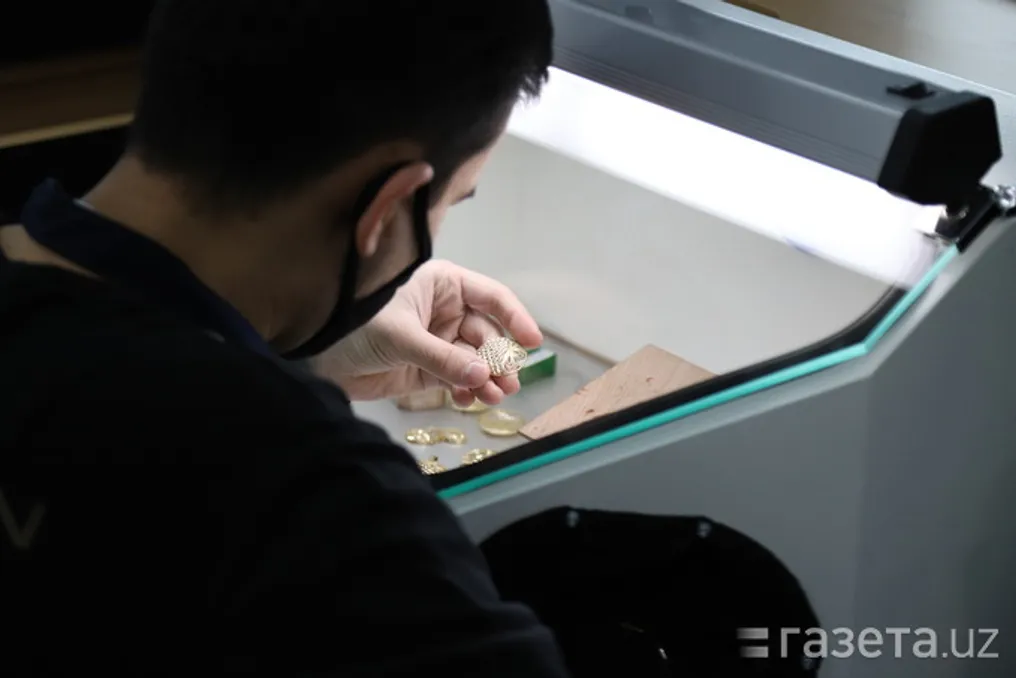
Uzbekistan is developing a plan for the phased introduction of mandatory digital marking for jewelry, as well as other items made from precious stones and metals. This plan is presented as a draft Cabinet of Ministers resolution, which was published for public discussion on July 6.
Goals and Timelines for Implementation
Popular
The main goal of this document is to ensure accounting of all jewelry turnover, improve control in this area, prevent illegal circulation, and guarantee consumers receive high-quality and reliable products.
Initially, a pilot project for digital marking will be launched, scheduled until December 30, 2027. After the pilot is completed, the regulatory legal act on the procedure for mandatory digital marking must be submitted to the Cabinet of Ministers by July 1, 2028.
Phased Introduction of Requirements
It is proposed that starting January 1, 2029, mandatory digital marking will become a requirement for all entrepreneurs engaged in the production or import of jewelry and other items made from precious metals and stones. Requirements for retail trade are planned to be activated later, on April 1, 2029.
Marking System and Operator
CRPT TURON has been designated as the operator for both the pilot and future mandatory projects. It will serve as the operator of the national information system for product marking and tracking called Asl belgisi. All data on digital marking and the movement of goods throughout their entire lifecycle will be aggregated and processed in this system.
During the pilot experiment period, participants will be provided with marking codes free of charge. However, the participants themselves must independently provide the necessary equipment and software for applying the marking.
Operating Mechanism and Consumer Rights
During the experiment, no legal measures will be applied to entrepreneurs who violate the marking rules. The marking will be applied either directly to the item or to a tag in the format of a GS1 Data Matrix two-dimensional barcode. The Asl belgisi system will record the release of the product into circulation, its transfer between market participants, import, and final retail sale.
When purchasing at a retail point, the seller is obliged to scan the item's identification code, after which the information will appear on the cash receipt and be transmitted to the marking system via the fiscal data operator. Buyers will be able to verify the authenticity of the items through the operator's free mobile application, where information about the place of manufacture, place of packaging, and current status of the product will be displayed.
If a consumer discovers a discrepancy between the data in the system and the actual condition of the product, they have the option to send a corresponding notification through the Asl belgisi and Soliq applications.
Integration and Pilot Participants
The project also provides for the integration of the Asl belgisi system with the information system of the State Assay Supervision Inspectorate, which is under the Ministry of Economy and Finance. This connection will be established through the interdepartmental integration platform of the 'E-Government'. The project appendix lists four companies that must participate in the pilot marking: Gold Moon Tashkent, Sofizar, Merrit Jewellery, and Termez Gold Production.
It should be noted that in Uzbekistan, the process of introducing digital marking and product tracking started back in 2019, beginning with tobacco products and alcohol, and subsequently expanding to medicines, household appliances, and non-alcoholic beverages.
History of the System Operator
CRPT Turon is the exclusive operator of the system. This company was founded by the Russian Center for Development of Advanced Technologies (CRPT), which is the unified operator of the 'Chestny Znak' marking system in Russia. Currently, CRPT Turon belongs to Digital Holding, which is associated with entrepreneur Alisher Usmanov, as well as the Agency for State Property Management of Uzbekistan.