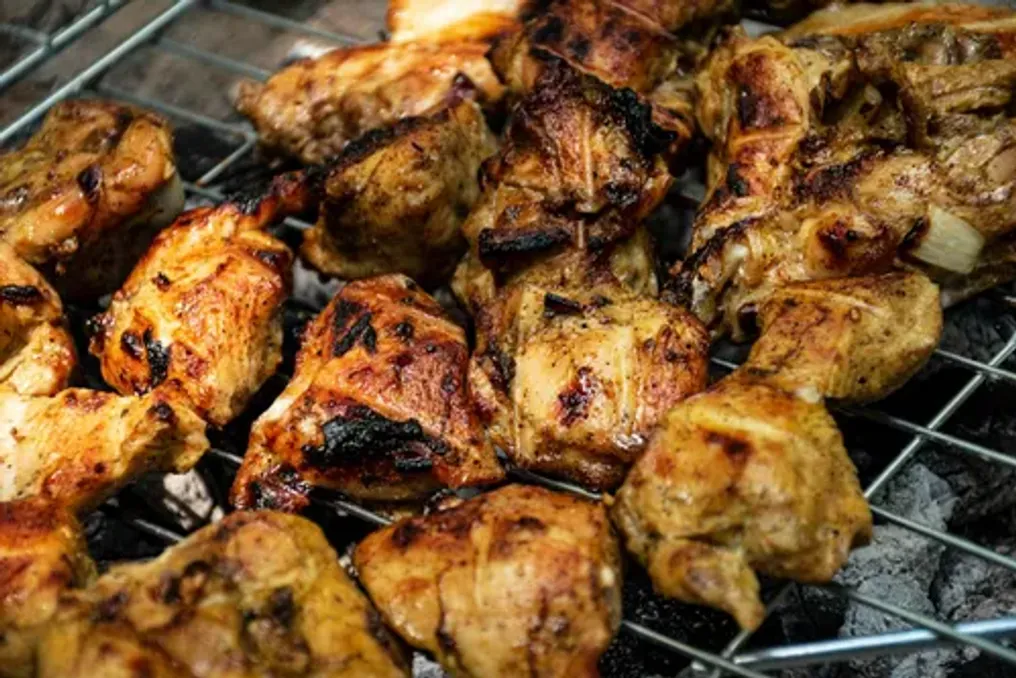
Grilling chicken is considered one of the most challenging tasks because excessive heat causes the exterior to quickly char while the meat near the bone remains raw. Cooking for too long makes the chicken dry and stringy, and removing it too early can result in serving undercooked poultry that may contain dangerous bacteria such as Salmonella.
Food safety experts strongly recommend cooking chicken to an internal temperature of at least 74°C–75°C to ensure it is safe to eat. Although everyone has a favorite marinade or family recipe, the correct cooking technique plays a crucial role. Members of the IOL team shared their proven methods, which show that perfect grilled chicken depends less on expensive ingredients and more on patience, temperature control, and knowing when to stop cooking.
According to IOL editor-in-chief Lance Witten, many people rush and do not wait until the coals are ready. He advises against placing chicken on the coals until he can hold his hand over them for at least 10 seconds at the same height where the chicken will be cooked without getting burned. Higher temperatures will cause the chicken to burn before the meat on the bone is cooked.
Chicken responds best to stable, moderate heat rather than intense flames. It is also recommended to add the chicken to sauce only when it is almost done.
While timers can be helpful, Witten points to another equally reliable sign: 'When the meat starts to separate from the bone, it is done.' Anyone who has cooked chicken drumsticks or thighs will notice a small area of exposed bone becoming visible as the meat shrinks during thermal processing. This is one of the simplest visual indicators that the chicken is nearly ready.
For larger pieces, such as thigh quarters or bone-in breasts, he advises turning them regularly and then checking the condition near the bone after about 25–30 minutes. Another sign of doneness is when the juices run clear.
One unexpected point is that Witten rarely bastes the chicken during grilling. He claims never to pour marinade onto the grill because the marinade drips and immediately burns on the coals. Instead, if a marinade is used, he waits until the chicken is almost cooked before dipping it in the sauce and briefly returning it to the grill until the coating becomes sticky. Repeating this process adds flavor without leaving charred, bitter sugars on the meat, leading to caramelization rather than blackened marinade.
IOL's automotive editor, Jason Woosie, believes there is one tool that completely removes uncertainty when grilling chicken. He emphasizes that the safest way is to use a thermometer and ensure the internal temperature reaches 75 degrees.
Although experienced grill enthusiasts often determine doneness by feel or appearance, a digital thermometer remains the most reliable way to know that the chicken is fully cooked. Medical authorities also recommend relying on temperature rather than color, as chicken can sometimes look done before it reaches a safe internal temperature.
Woosie notes that bone-in chicken takes longer than many expect. For bone-in pieces, he considers it safer to cook for over 35 minutes over medium heat, covered with a lid if using a Weber or kettle braai. Boneless chicken, conversely, is more forgiving. Cooked boneless pieces with skin are usually easier and take less than 25 minutes. Wings typically cook in 25 minutes or less.
If you are preparing large portions for a big group, there is another option. If in doubt, pre-cooking these large pieces in the oven for 15–20 minutes won't hurt. Many experienced grillers quietly practice this when hosting guests. This reduces cooking time on the grill while lowering the risk of raw meat near the bone. Ultimately, great grilled chicken does not require complex techniques; it all starts with the right fire, rewards patience, and ends with knowing when enough is enough.