Folding bikes represent a practical alternative for individuals who need to combine cycling with other modes of transport or who need to optimize residential space. However, the size reduction of these bikes often compromises comfort during use.
Folding bikes represent a practical alternative for individuals who need to combine cycling with other modes of transport or who need to optimize residential space. However, the size reduction of these bikes often compromises comfort during use.
The South Korean startup Analog Machine Works seeks to change this reality with the launch of the Tetra, a folding bike that integrates a tubular frame and a hydraulic rear suspension system. This design aims to provide a more pleasant riding experience without sacrificing ease of transport. Currently, the project is available in a crowdfunding campaign on the Kickstarter platform.
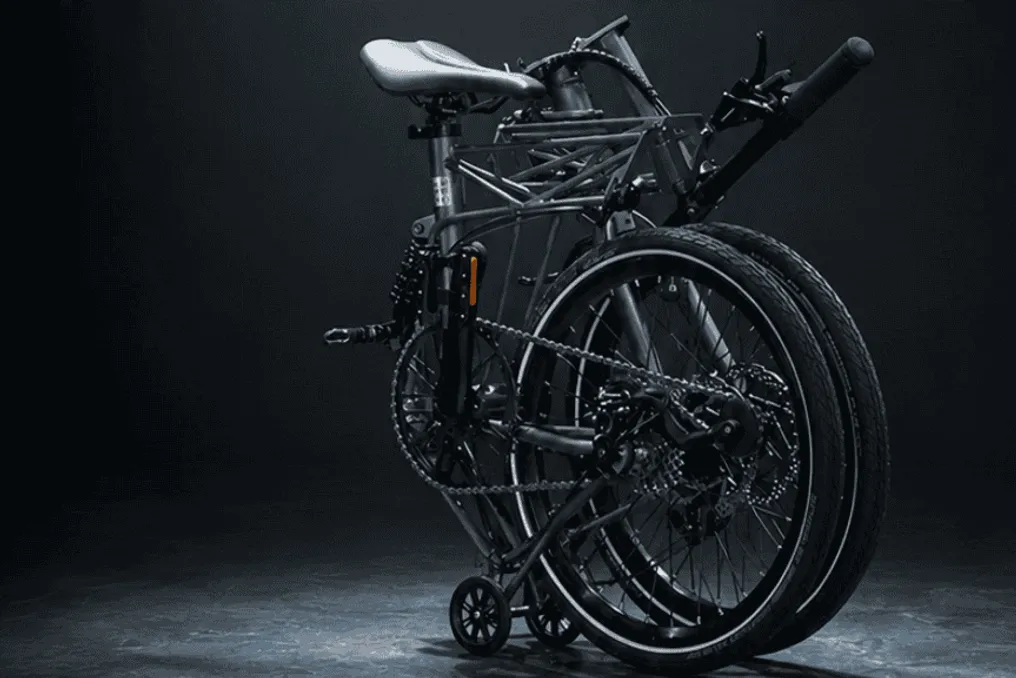
Analog Machine Works detailed that the Tetra has a structure inspired by tetrahedrons and a mechanism that allows it to fold in four stages, facilitating both storage and transportation. The model is equipped with wheels of approximately 51 centimeters in diameter, hydraulic rear suspension, a nine-speed gear system, and disc brakes, aiming to increase riding comfort.
The great differential of the Tetra lies in its structural conception, which mimics tetrahedrons, geometric shapes composed of four triangular faces. This design enabled the development of the Tetra-Fold System, a mechanism that folds the bike in four steps, resulting in a significant reduction in occupied space when closed. In its compacted state, the bike measures about 70 cm in height, 70 cm in length, and 37 cm in width, dimensions ideal for being stored in trunks, elevators, and other restricted areas. Furthermore, it features smaller wheels that allow it to be pushed when folded, eliminating the need for manual carrying.
A notable aspect is the use of 20-inch wheels, equivalent to about 51 centimeters in diameter. Unlike many folding bikes that opt for smaller wheels to save space, the Tetra prioritizes this larger size to ensure greater stability and comfort during the ride. Additionally, the bike incorporates a rear suspension with a hydraulic shock absorber, a feature uncommon in this segment. Other components include a nine-speed gear system, disc brakes, and a chromoly steel construction, a metallurgical alloy recognized for its combination of lightness and durability. The total weight of the bike is approximately 13 kg.
Analog Machine Works informed that work on the development of the Tetra began in 2021, and before being launched on Kickstarter, the project went through several testing phases and received design awards. During the crowdfunding campaign, the Tetra is offered at a price of US$ 2,390 (approximately R$ 12 thousand at the current exchange rate), a price lower than the projected retail value of US$ 3,990.
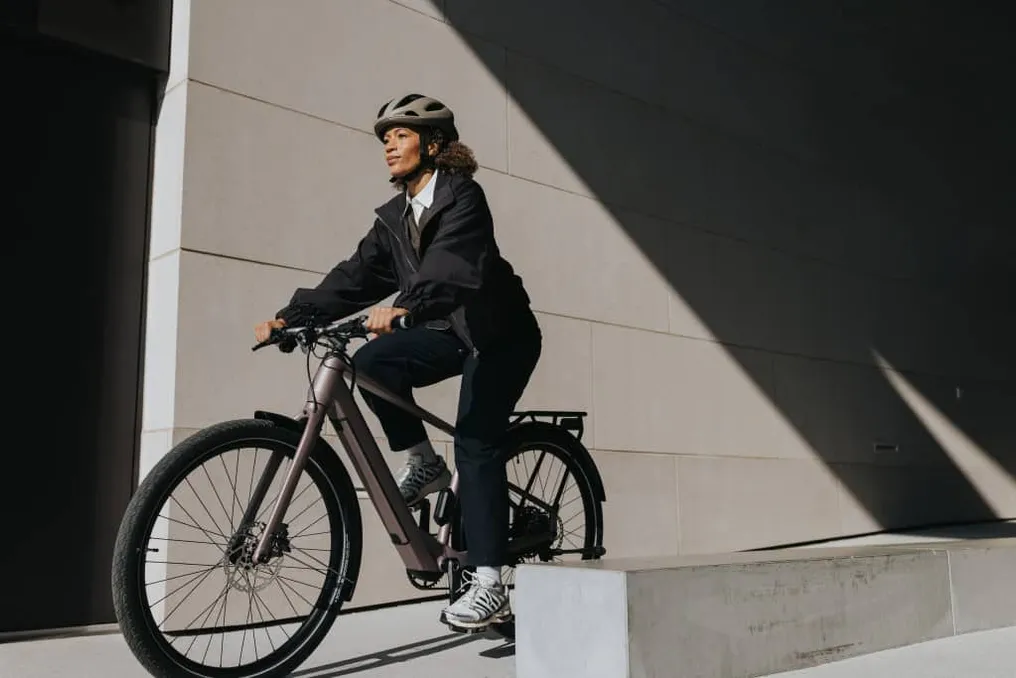
Bosch, the German manufacturer known for its central motors, has announced the Hub Line, its unprecedented hub motor intended for electric bicycles. This launch represents a shift in the company's strategy, which now focuses on systems suitable for light urban bikes, integrating a new rear motor, a compact battery, and digital functionalities.
The novelty was recently revealed and is scheduled to equip the first commercial models this year. The Hub Line is specifically designed for the light urban segment, unlike Bosch's previous focus on central motors, which were a benchmark in the European market. This new system installs the motor directly into the rear wheel hub, a configuration common in urban and lighter models.
The rear motor weighs approximately 2.3 kg and can generate a torque of up to 45 Nm. According to Bosch, the system tracks the cyclist's effort in real time, automatically adjusting electrical assistance. It is important to note that when reaching the speed limit of 25 km/h, established for electric bicycles in Europe, the motor deactivates, forcing the bicycle to return to manual pedaling mode.
Along with the motor, Bosch introduced the PowerTube 360 battery, described as the thinnest ever developed by the company. With a capacity of 360 Wh and weighing about 2.1 kg, this battery was designed to be incorporated into the bicycle frame. In Eco mode, the range achieved can reach 80 km, according to the manufacturer.
The entire set is part of the Bosch Smart System ecosystem and is compatible with the Flow app. This application offers various utilities, including navigation options, the possibility of software updates, and anti-theft security features. Additionally, the system has a USB-C port for charging mobile devices.
Manufacturers such as Canyon and Vello have already announced the first models using Hub Line technology. Although Bosch has not disclosed the cost of the system to its partners, the first bicycles equipped with this innovation were announced in the price range between €2,400 and €3,000.