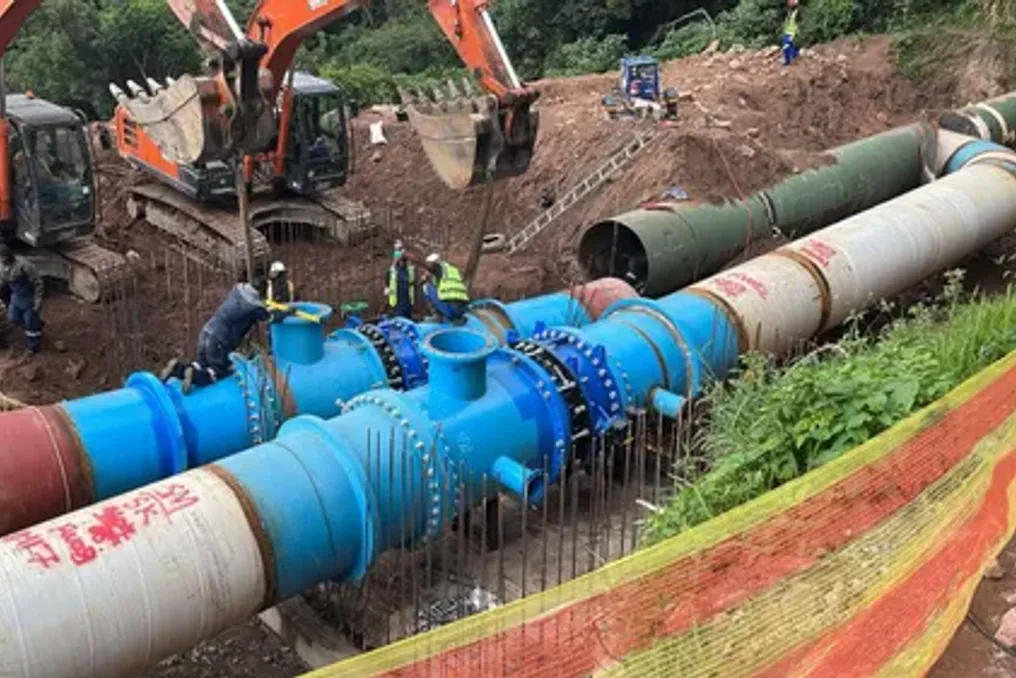
Revenue models in the water sector must simultaneously consider three key requirements: investor confidence, service accessibility for municipalities, and the public's right to reliable water supply. South Africa faces growing pressure on water resources, demanding both technical and social solutions.
Water supply challenges in South Africa
In Johannesburg areas such as Koronaville and Westbury, residents regularly face prolonged water outages, highlighting the need for more resilient systems. Instability in supply between rationing and restoration has been observed in Gqeberha and Nelson Mandela Bay, while Durban and Tshwane are working to keep pace with rapid urban growth through infrastructure modernization.
At the national level, water losses remain significant: more than two out of five liters of treated water never reach paying consumers due to leaks, theft, and inefficient metering. This issue negatively affects the financial capacity of municipalities and service reliability, but it also points to areas where targeted measures can yield the greatest benefit.
Reform and the investment environment
Water infrastructure is fundamental, as its functioning supports health, economic activity, and social stability. Solving these problems now opens an opportunity to strengthen resilience, restore public trust, and stimulate sustainable growth. The good news is that the necessary architecture is being formed through reforms that shift the risk profile in the right direction.
Firstly, the National Water Resources Infrastructure Agency is being established under the Agency Act. It will be responsible for developing, operating, and financing national water infrastructure, attracting commercial and investment finance independent of government guarantees, which gives the state a stronger basis for attracting private capital into strategic projects.
Secondly, the Water Services Amendment Act clarifies the roles of Water Service Authorities and Water Service Providers, allowing qualified private or regional municipal entities to operate within clear service models and contracts with municipalities.
Thirdly, recent steps by the Department of Water and Sanitation and the National Treasury to allocate municipal water revenues to a dedicated fund and to restore Blue Drop, Green Drop, and No Drop water quality audits indicate the formation of a more investment-friendly structure where responsibilities are clear and results are visible.
New project support mechanisms
Another element is the recently established Water Partnerships Office at the Development Bank of South Africa. It was created to assist municipalities in preparing, structuring, and procuring bankable projects in areas such as desalination, water reuse, and non-revenue water reduction, by developing standardized documentation and program management for scalable solutions.
Sector development priorities
One urgent priority is eliminating non-revenue water, which accounts for 40% of the national volume. Performance-based contracts between municipalities and water service providers that incentivize maintenance can turn leaks and losses into billable volume and more stable service.
The second critical aspect is wastewater reuse. Municipal and industrial reuse increases climate change resilience without the need for new water abstraction, and when integrated at a program level, it supports standardized risk distribution and better pricing. Both categories offer clear public interest benefits.
Public-Private Partnerships (PPPs) are a proven model for mobilizing private capital into water infrastructure both in South Africa and globally. Under such structures, private partners finance, build, and operate treatment and distribution facilities under long-term contracts, while the government retains ownership and regulatory oversight, allowing operational risks to be transferred and service delivery to be improved.
With support from clear legal frameworks, bankable project preparation, and cost-reflective tariffs, PPPs can bridge funding gaps at municipal and provincial levels, as demonstrated by the Silulumani and iLembe concessions, which expanded access, modernized systems, and increased efficiency, overcoming complex issues of affordability, free basic water, and equitable service levels.
By applying lessons from the South African renewable energy programme, standardizing PPP agreements, creating specialized program offices, and leveraging the experience of institutions like the National Treasury's PPP Unit and experienced investors in long-term infrastructure debt, transaction costs can be reduced and PPP projects scaled up so that more communities receive reliable and sustainable water services.
Ensuring revenue generation
A key requirement for attracting private capital is confidence that revenues collected from household and business water payments are directed to the water service provider and not commingled to cover other municipal obligations.
Recent reforms by the Department of Water and Sanitation and the National Treasury directly target this issue by allocating municipal water revenues to a dedicated fund, separating the functions of the Water Service Authority and the Water Service Provider with distinct accounting and service agreements, and restoring Blue Drop, Green Drop, and No Drop audits to track water quality, losses, and billing efficiency.
These measures together can create more transparent and predictable revenue streams that support cost recovery and allow for financially sound tariffs within long-term PPP contracts. Revenue models must also account for measures to mitigate municipal payment risks directly. Even with strengthened collection discipline, revenue shortfalls can still manifest as a payment risk, so additional credit support from development banks and the National Treasury remains a vital part of the equation.
There are successful local examples. The iLembe-Siza concession on the Dolphin coast and Silulumani in Mbombela expanded access and professionalized operations under long-term contracts, demonstrating how public-private collaboration can stabilize service delivery with clearly defined roles and measured outcomes. They also identified pitfalls to avoid: inherited underinvestment cannot be fixed overnight, and affordability pressures require explicit social measures, including policies for low-income earners, which must be funded and ensured.
Sustainable development and the future
None of this will work without measurable results. Sustainability in water supply is not just a label; it is about the delivery of services. In this sector, sustainability goes beyond regulatory compliance and actively contributes to progress toward Sustainable Development Goals (SDGs), particularly SDG 6 on clean water and sanitation and SDG 9 on industry, innovation, and infrastructure.
Key indicators include reliably served households, efficient water use, and infrastructure that supports long-term community sustainability. This represents accountability for reliable water services and the potential to create long-term shared value within Africa's sustainability priorities. Specialists at Old Mutual Alternative Investments can provide the long-term financing and structuring expertise needed to support water PPPs, viewing finance as a practical and sustainable debt structure.
Through ongoing political reforms that form a positive foundation for boosting investor confidence, South Africa can transform today's emergency into a reproducible stream of bankable projects, restoring dignity, protecting growth, and reducing the overall cost of water over time.