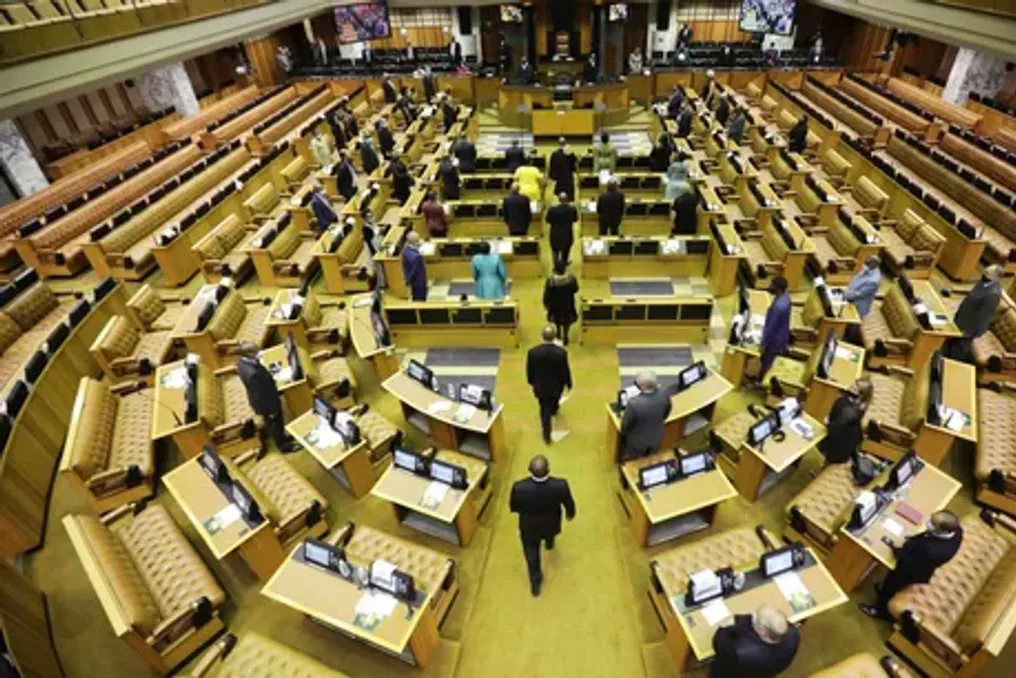
The organization Free SA has launched a campaign urging Parliament to amend the Constitution of South Africa to set a limit of 20 cabinet ministers. This initiative is based on the assertion that the current structure is costly and inefficient.
The Problem with the Current Government Structure
According to Free SA, the president's unrestricted freedom to appoint ministers from Members of Parliament has led to one of the largest and most expensive executive structures in the world. The proposed change involves setting an upper limit on the number of cabinet ministers to no more than twenty.
The organization emphasizes that South Africa's shift towards coalition politics makes constitutional guarantees even more vital. Free SA believes that large cabinets increase public spending through ministerial salaries, support staff, official residences, security measures, vehicles, and administrative structures, and often lead to overlapping mandates, which weakens accountability.
Analysis of the Current Government Composition
The discussion comes amid close scrutiny of the executive branch of the Government of National Unity (GNU), which currently comprises 34 ministers and 43 deputy ministers, totaling 77 members. Paul Marts, director of Free SA, believes that the executive branch has become excessively large and expensive.
Marts stated that the goal of the proposal is to create a compact yet functional executive branch, and 20 people should be considered the target figure. He added that they previously argued it was possible to run the entire executive branch with only 26 people: a president, a deputy president, 12 ministers, and 12 deputy ministers. Recognizing the potential instability from such a reduction, they propose 20 people, which would provide sufficient space for the incumbent president.
Financial Aspects and Comparison with Other Countries
Marts sharply criticized the size and cost of the current executive branch, noting that South Africa has one of the most bloated and expensive cabinets globally. The current GNU composition of 77 people costs taxpayers over 1 billion rand annually for salaries, allowances, and VIP protection. He characterized this structure as prioritizing quantity over quality, patronage over efficiency, and bureaucracy over results.
According to Marts, ministerial salaries alone demonstrate the scale of public expenditure on political figures: each minister receives nearly 2.7 million rand per year, and their deputies receive 2.2 million rand. He contrasted these amounts with the socio-economic reality of ordinary South Africans, pointing out that the minimum wage in the country is about 4,500 rand per month, meaning one minister earns more in a year than a minimum-wage worker does in over 50 years.
Free SA argues that reducing the Cabinet to 20 ministers and 20 deputy ministers would save approximately 91 million rand annually just on salaries. However, the organization insists that real savings will come from reducing overlapping departments, support staff, housing, travel budgets, communication teams, and security measures.
A key element of the Free SA campaign is comparing South Africa's executive branch with the executive bodies of larger economies. Marts noted that the scale of the cabinet is difficult to justify, especially when compared to BRICS partners. He cited examples: Brazil, with a population of over 214 million, has 37 ministers; India, with a population of over 1.4 billion, has 30; and China, the world's second-largest economy, is governed by a more modest 37 ministers. The USA, whose GDP is almost 60 times that of South Africa, has a cabinet of only 24 people. Furthermore, Germany, with a population of about 84 million, operates with 16 federal ministers.
Counterarguments and Restructuring Proposals
Critics of constitutional limits often argue that government responsibilities expand over time, requiring new portfolios and ministries. Marts rejects this argument, asserting that the purpose of the limit is to stimulate adaptation, not expansion. He explained that new functions do not necessarily require new ministries; they can be reorganized, merged into existing portfolios, delegated to provinces, or administered through agencies and departments.
Free SA believes that the limitation will force the government to focus on efficiency rather than creating new political positions when new problems arise. Previously, the organization proposed significant government restructuring, including transferring functions such as basic education, healthcare, policing, and labor relations to the provinces; abolishing several ministries; and merging overlapping departments. Proposed mergers include combining Electricity and Energy, Water and Sanitation, Transport and Land Reform into a Ministry of Public Works and Infrastructure, and Correctional Services into the Ministry of Justice. They also propose 'one deputy for every minister.'
Overall Goal of the Reforms
For Free SA, this issue ultimately boils down to restoring public trust in the government. The proposal aims to improve government functioning in three ways: first, by cutting spending on political officials and administrative overhead; second, by increasing accountability through reduced overlapping duties; and third, by improving policy implementation by decreasing bureaucracy and optimizing decision-making. The overall objective is to create a state that spends more resources on service delivery and less on maintaining structures of political patronage. Marts concluded that ordinary South African citizens benefit when the government becomes more compact, accountable, and efficient.