The information agency 'BelTA' reported that Uzbekistan has entered the top five countries for exchange trading with Belarus, based on the press service of the Universal Commodity Exchange.
>The information agency 'BelTA' reported that Uzbekistan has entered the top five countries for exchange trading with Belarus, based on the press service of the Universal Commodity Exchange.
>By the end of the first half of 2026, the republic's companies ranked fourth globally in terms of transaction volume on this exchange. During a specific period, the turnover of Uzbek entrepreneurs exceeded 66 million dollars, which is 21% more compared to January-June 2025.
There was also an increase in the number of residents of the republic registered on the exchange: from 201 people in July last year to 281 people in July of this year. This information was announced during a trilateral meeting of representatives of Belarus and Uzbekistan held in Minsk.
According to Roman Yaniv, chief press secretary of the UCTB, Uzbek business shows active interest in the Belarusian commodity market, using exchange trading primarily as a means of procurement. He noted that most transactions with Uzbeks are related to product imports.
Traditionally, high demand is observed for timber, which was supplied to the partner country during the year in the volume of 69% of the total goods. Additionally, agricultural trade is actively developing. The volume of dry milk trade increased by 1.5 times compared to the first half of last year, reaching 17.1 million dollars, and the volume of butter trade grew 15 times, amounting to 1.2 million dollars.
There is high potential to expand the list of Uzbek goods sold through the exchange. An important step in this direction was the signing of a contract worth 1.3 million dollars in June, when a major clothing producer sold its products on our exchange for the first time. Furthermore, textile companies have regularly been purchasing cotton and other types of threads produced in Uzbekistan for two years now.
Another area of development for exchange trading is the mutual supply of agricultural products. This process includes the supply of meat products and feed from Belarus, as well as food raw materials and some additional materials from Uzbekistan.
The Belarusian Universal Commodity Exchange, established in 2004, began its first trading in June 2005. One of the main functions of this exchange, which is one of the largest in Eastern Europe, is to assist local enterprises in exporting their products and foreign companies in entering the Belarusian market. The institution trades a wide range of goods, including metals, forestry, agriculture, industry, and consumer goods.
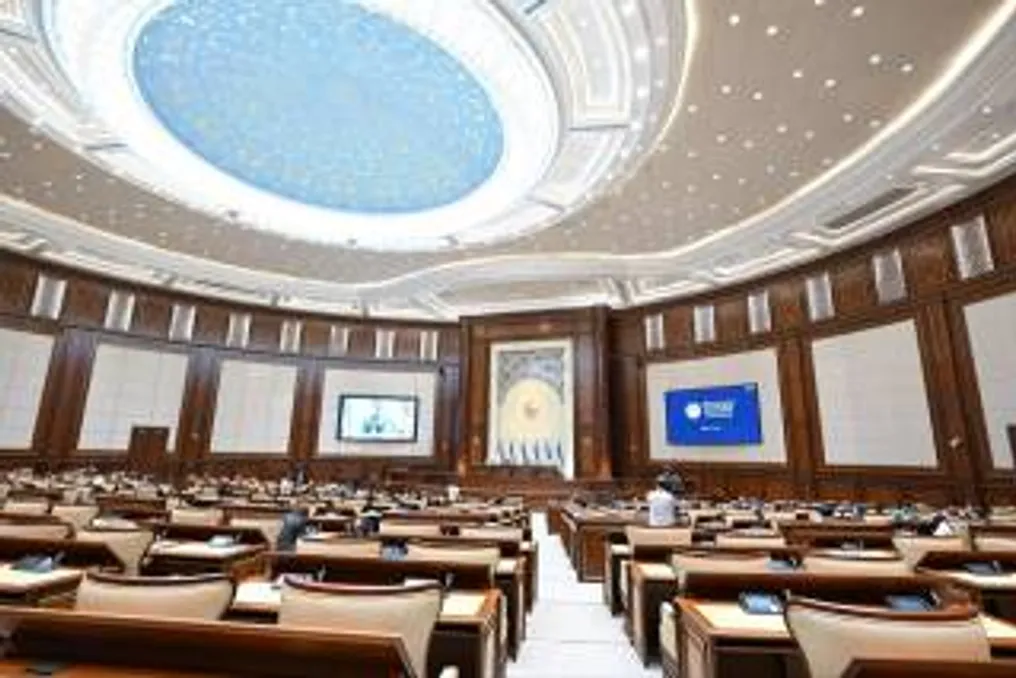
The seventeenth plenary session of the Senate of the Legislative Chamber of the Republic of Uzbekistan has begun in the city of Tashkent. Members of the Senate and Government, heads of ministries and agencies, and media representatives are participating in the event.
A number of important issues concerning the country's socio-economic development, public administration, technical regulation, fire safety, pharmaceuticals, social protection, digital technologies, international cooperation, and legislative improvement were included in the agenda. Among them are the constitutional laws of the Republic of Uzbekistan 'On the International Financial Center of Tashkent' and 'On the International Center for Digital Technologies', as well as the 'Law on Labor Activity'.
During the plenary session, laws related to improving the system of providing social services to victims of violence and coercion, as well as issues of technical regulation, state supervision in the construction sector, fire safety, civil service, the pharmaceutical industry, and other areas are being discussed.
A national report on enhancing the Republic of Uzbekistan's standing in sustainable international rankings and indices will also be heard. Furthermore, the results of a parliamentary inquiry sent to the Cabinet of Ministers regarding the quality of services provided by property management services and housing companies will be reviewed.
As part of the project, which is being implemented in cooperation between the Ministry of Poverty Reduction and Employment and the European Union, the program 'Strengthening the Economic Potential and Efficiency of Farms and Landowners in Uzbekistan' is being carried out. The main goal of this initiative is to promote the development of a sustainable, market-oriented, and inclusive food production system.
The project aims to increase the income of landowners and farms, expand employment and income opportunities in rural areas, and strengthen food security. Dil'dor Otazhonov, Consultant at the Ministry of Poverty Reduction and Employment on agricultural product export issues, notes that the experience of European countries shows that cooperatives allow farms and products produced on land to achieve real competitiveness in external markets.
This is particularly relevant because currently over 5.2 million families in Uzbekistan grow agricultural products on their own land, as well as on land allocated to the population, covering a total area of 220 thousand hectares. However, most of them operate on small plots and face certain difficulties in processing, storing, packaging, and exporting products, which limits their ability to earn high income.
Uniting several small farms into one cooperative gives them the opportunity to jointly use necessary machinery, warehouse facilities, logistics, and other resources. This creates a favorable environment for export. In personal experience, selling a large batch of products is significantly easier than selling a small volume from a single farm. Furthermore, cooperatives are easier to attract loans and subsidies because banks and funds prefer to work with stable cooperatives rather than individual farms.
Another important aspect is knowledge exchange: landowners and farmers within the cooperative study effective methods from each other and adopt modern agricultural technologies more quickly. It is assumed that with the development of the cooperative system in the regions, the export income of the participating farms could increase by at least 25 percent. The project, implemented by the Ministry of Poverty Reduction and Employment together with the European Union, lays the foundation for the systematic development of this area in the regions.
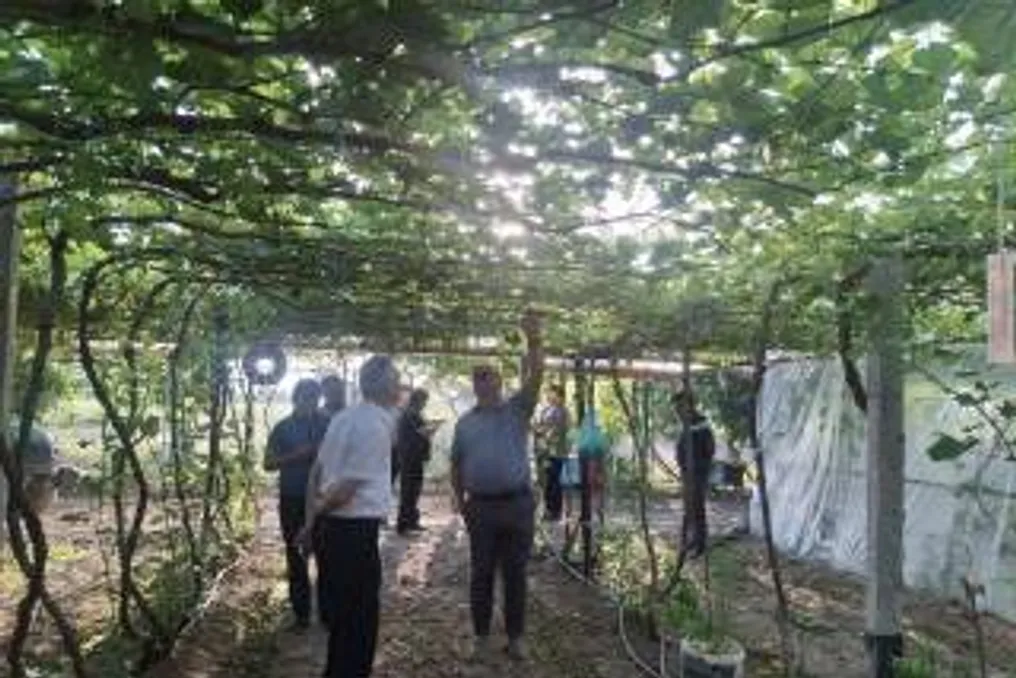
Within the framework of the project, the legal and practical literacy of landowners and farmers is increased, training sessions on modern agricultural technologies, product processing and packaging methods, and ways to enter the export market are organized. In the first stage, landowners and farmers who expressed a desire to form 30 cooperatives in Tashkent region participate in educational and practical seminars. There they are provided with the necessary knowledge and skills on creating and managing cooperatives, attracting financial resources, and effectively using logistical and marketing opportunities.
Thanks to this, farms and landowners gain the opportunity to integrate their products into the value chain, reduce costs, and increase market competitiveness. As a result of the project, new jobs will be created for the population in rural areas, stable sources of income will be formed, and food security will be strengthened. The Law 'On Agricultural Cooperative' will also play a regulatory role in this process. The project will ensure the effective participation of citizens without employment in agriculture in these processes and increase their awareness of current regulatory legal documentation.
During the implementation of the program, mentorship, training trips to Latvia, and start-up grants are provided. The practical experience gained will be summarized in a guide on cooperative development. The duration of the project is 3 years, and 2,617,545 euros will be allocated to it. The Republic of Latvia, through the Central Agency for Finance and Contracts (CFCA) and the Center for Agricultural Consulting and Training (LLKC), conducts technical activities such as training landowners and farmers, developing and supporting cooperatives, mentorship, training trips, and applying European experience in agricultural consulting and cooperative management.
Starting from July 2026, educational and practical seminars involving agricultural producers will begin in the regions of Tashkent, Samarkand, and Andijan. From July 8, 2026, the project team will start working in the Tashkent region, where practical seminars will be organized on agricultural production, problems faced by farmers, cooperation opportunities, exports, storage and processing of products, use of common resources, and cost reduction. In July-August of this year, the project will continue in the Samarkand and Andijan regions. Based on these works, the project team will determine the most relevant needs and practical opportunities for agricultural producers in each region to develop targeted support measures in subsequent stages.
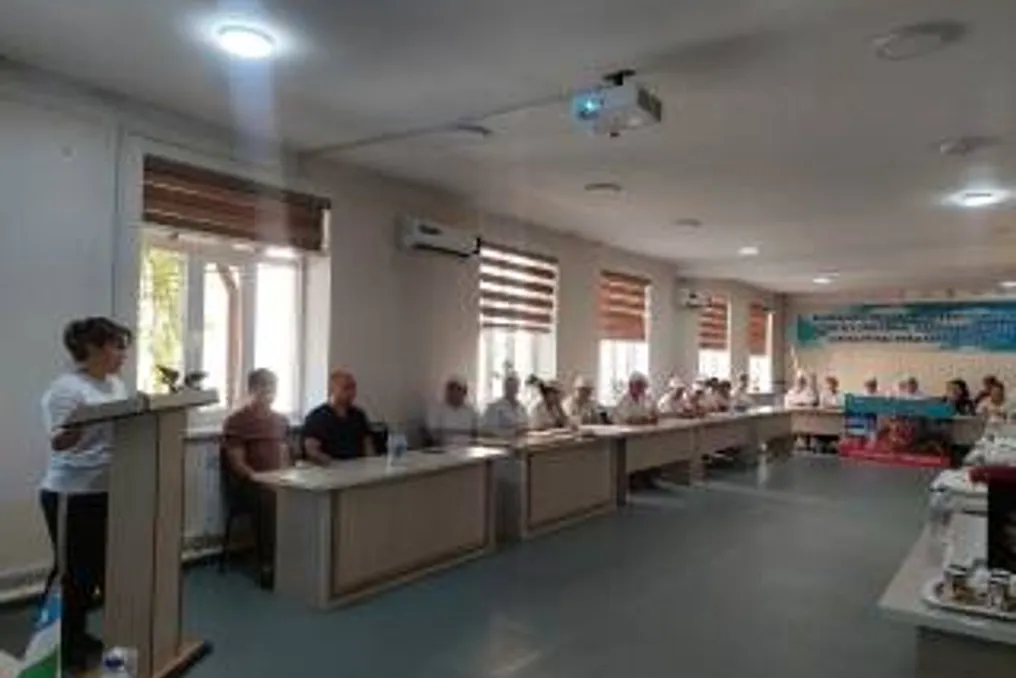
An event titled "Drug Addiction – The Enemy of Life" took place at the branch of the Republican Scientific and Practical Center for Oncology and Radiology. This event was organized on the occasion of World Drug Day, which is observed on June 26th.
At the event, Shokhrukhmirzo Mamajonov, Head of the Healthcare Department of the Andijan Region, emphasized that large-scale work is being conducted in the country to counter drug addiction. He noted that medical workers systematically engage in preventing and combating this problem.
Furthermore, doctors presented their views, suggestions, and comments regarding increasing the effectiveness of propaganda campaigns to prevent drug addiction among the population, especially young people. Strengthening cooperation with local communities, educational institutions, and other organizations was also discussed.
Ahrorbek Toshpolatov, Director of the branch, stated that drug addiction is a catastrophe that harms human health and societal development. He stressed that medical personnel must actively participate in the fight against this problem and raise public awareness about the need for its prevention.
The event included sports activities, lectures dedicated to promoting the fight against drug addiction, and exhibitions. In conclusion, participants defined important tasks for strengthening preventive and promotional work against drug addiction.