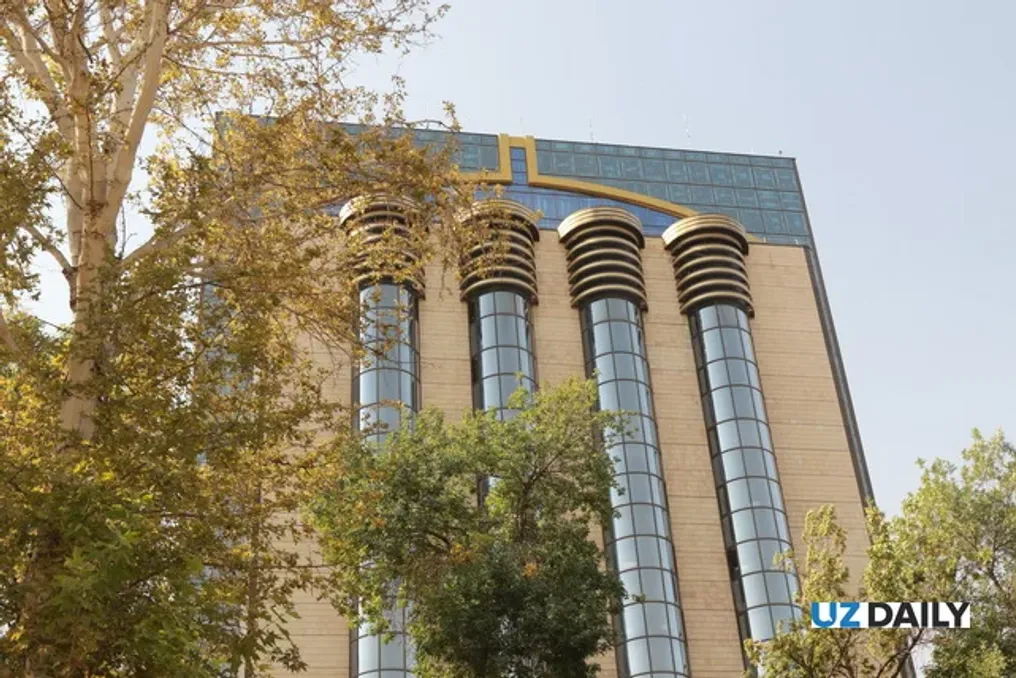
According to the Central Bank's financial stability review published in July, the net profit of the banking system of Uzbekistan reached 15.5 trillion soms by the end of 2025. This figure demonstrated a growth of 2.2 times compared to 2024 data.
According to the Central Bank's financial stability review published in July, the net profit of the banking system of Uzbekistan reached 15.5 trillion soms by the end of 2025. This figure demonstrated a growth of 2.2 times compared to 2024 data.
During the year, the return on equity (ROE) of banks grew by 5.8 percentage points, reaching 12.4% as of January 1, 2026. Meanwhile, the return on assets (ROA) increased by 0.8 percentage points, amounting to 2.2%. The growth was driven by an 11% increase in net interest income and a 39% rise in non-interest income.
An improvement in the quality of the credit portfolio was observed. The volume of non-performing loans (NPL) decreased by 15% over the year, reaching 18.1 trillion soms, and their share in the total portfolio decreased by 1 percentage point to 3%. Thanks to this indicator, Uzbekistan approached the median of European and Central Asian countries, excluding high-income states.
The coverage ratio for provisions on non-performing loans increased by 7 percentage points, reaching 53%. The ratio of non-performing loans, excluding provisions, to the banks' regulatory capital decreased from 10% to 6%, which the Central Bank interprets as an increase in the system's resilience to potential credit losses.
Liquidity also improved: the share of highly liquid assets in the total assets of banks reached 21%, which is 4 percentage points higher than the previous year. The volume of such assets grew by 42%, mainly due to investments in government securities, which increased by 81%, and funds in Central Bank accounts, which grew by 27%.
The financial stress index of the banking system in 2025 fell to a historical minimum. The regulator explains this by the stable situation in the domestic currency and money markets. It should be noted that the Central Bank publishes its financial stability review twice a year, and the current edition was prepared based on data as of January 1, 2026.
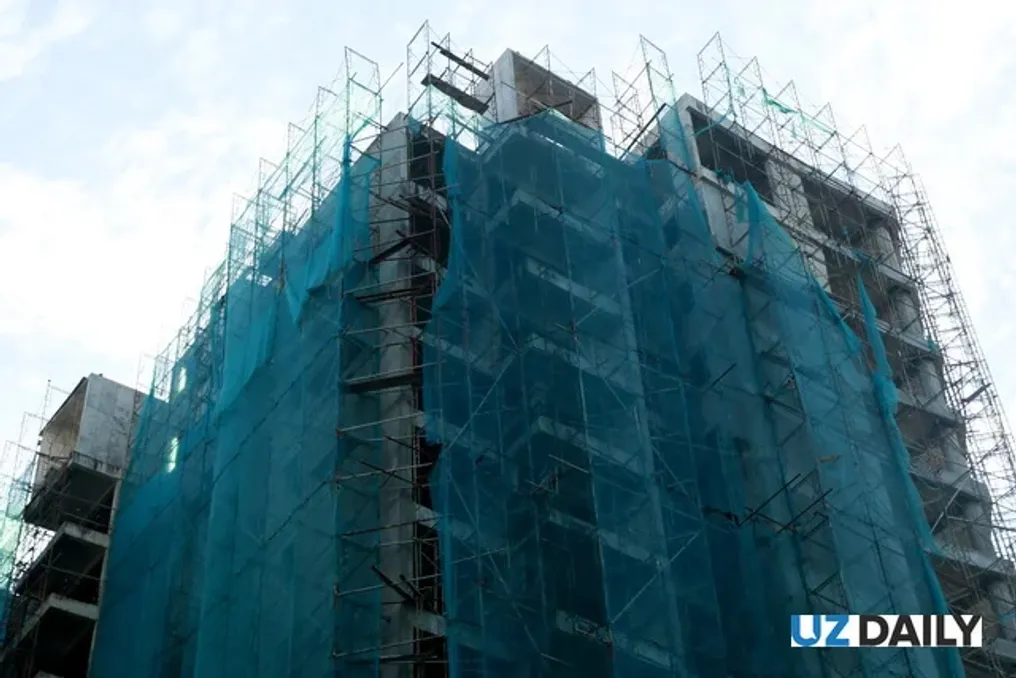
The volume of construction work in Uzbekistan for the period from January to May 2026 reached 104,943.7 billion soums at current prices. This figure demonstrates a growth of 14.5% compared to the same period last year. The data was published by the National Statistical Committee of the Republic of Uzbekistan.
The highest growth rates among regions were recorded in the Karakalpakstan Republic, where the increase amounted to 151.3%. Significant growth was also noted in Khorezm region (132.4%) and Bukhara region (126.2%).
The largest absolute volume of construction work is concentrated in Tashkent, which amounted to 28,025.2 billion soums. It is followed by the Tashkent region with a volume of 10,704.9 billion soums and the Fergana region with a figure of 6,874.8 billion soums.
By type of activity, the construction of buildings and structures accounted for the largest share, making up 70.4% of the total volume and showing a growth of 116.9%. Civil object construction provided 20.1% of the total amount, increasing by 14.0%. The share of specialized construction work was 9.5%, while its volume remained almost unchanged compared to the previous year (99.9%).
Small enterprises and microfirms lead the sector, accounting for 48.5% of the total volume of work, corresponding to an amount of 50,847.5 billion soums and a growth of 111.0%. Large construction organizations contributed 26.1% of the total volume (27,399.8 billion soums), showing an increase of 21.5%. The informal sector accounted for 25.4% (26,696.4 billion soums), increasing by 14.6%.
Among large construction organizations, the largest volumes of work were carried out in Tashkent (9.6 trillion soums), Tashkent region (2.9 trillion soums), and Karakalpakstan Republic (1.9 trillion soums). Overall, the construction industry remains predominantly private, as the non-state sector accounts for 97.9% of the total volume, while the state sector provides only 2.1%.