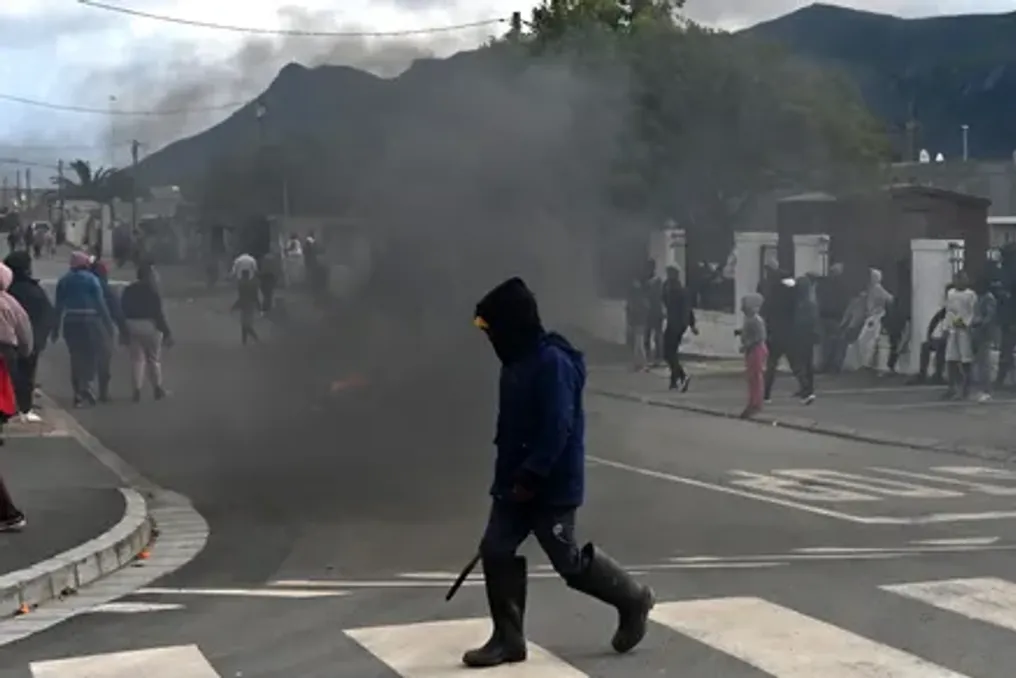
A study revealed the persistent problem of xenophobia in South Africa and its destructive economic impact, focusing on acts of violence against foreign-owned spaza shops.
A study revealed the persistent problem of xenophobia in South Africa and its destructive economic impact, focusing on acts of violence against foreign-owned spaza shops.
The author, who completed a master's thesis in 2019 on violence against foreign owners of spaza shops in Soweto, reached an unencouraging conclusion: South Africa has failed to solve the problem of xenophobia. This issue is rooted in a longer history of xenophobic violence in the country, including the 2008 attacks that drew international attention, as well as outbreaks in 2015 and 2018.
Of particular concern was that the violence against foreign spaza shop owners remained understudied, especially from the perspective of local residents who witnessed these attacks but were not always their direct victims or perpetrators.
The violence that occurred on June 30, 2026, when businesses were closed, foreign nationals fled their homes, and fear gripped communities, confirms this trend, as police were deployed in several provinces. Xenophobia in South Africa is not an isolated incident or a seasonal flare-up; it is a recurring feature of the economy that continues to let down millions of people.
The research conducted established that the explanations provided by local residents for attacks on foreign enterprises were multifaceted. Among the main factors identified were crime, unemployment, and economic competition.
These grievances regularly manifested as violence directed against one identifiable group—foreign nationals working in the informal economy. The author emphasizes that while economic hardship may explain some of the frustration fueling these attacks, it does not justify turning migrants into targets of collective punishment.
The informal economy has become a battleground where South Africa's broader economic failures are played out, representing perhaps the most opaque sector of the country's economy. Instead of being viewed as an ecosystem providing livelihoods, creating jobs, and improving food security, it is perceived as temporary, disorganized, and largely invisible. However, for millions of South Africans and migrants, informal trade constitutes the economy itself, not just a stepping stone.
Foreign-owned spaza shops often demonstrated remarkable resilience due to collective procurement networks, efficient supply chains, and longer operating hours, allowing them to establish highly competitive businesses in areas where formal retail is limited. Unfortunately, their success became both their strength and their vulnerability.
When violence destroys these businesses, the damage extends far beyond the individual owner. Every looted shop means a disruption in supply chains. Local landlords (who are South African citizens) lose tenants. South African employees lose jobs. Wholesalers lose customers. Municipalities lose economic activity. Consumers lose affordable access to food and essential goods. Investor confidence weakens.
Thus, xenophobia is not merely a humanitarian crisis, but an economic crisis. South Africa is already facing stagnant economic growth, persistently high unemployment, and declining business confidence, making attacks on entrepreneurs, regardless of nationality, one of the most self-destructive responses. Instead of solving the problems faced by communities, such violence destroys productive economic activity in places that need more investment, not less, and targets many people who are doing what policymakers encourage: starting businesses, creating jobs, and generating income.
Legitimate concerns about undocumented migration and weak border management must be taken seriously, and any sovereign state has the right and obligation to regulate immigration; however, immigration management cannot replace economic policy. The question is not whether xenophobic violence will happen again, because if structural factors remain unchanged, it almost certainly will. A more pressing question is whether South Africa is prepared to confront the conditions that continue to breed these cycles, including an unsupported informal economy, weak local economic development, poor policing, limited employment opportunities, and declining trust in state institutions.
An honest approach to migration is part of this work, but it cannot be separated from the broader economic failures that make communities vulnerable to fear, resentment, and mobilization. Until xenophobia is viewed not only as a security issue but also as a symptom of deeper economic dysfunction, South Africa will continue to experience the same tragedy.