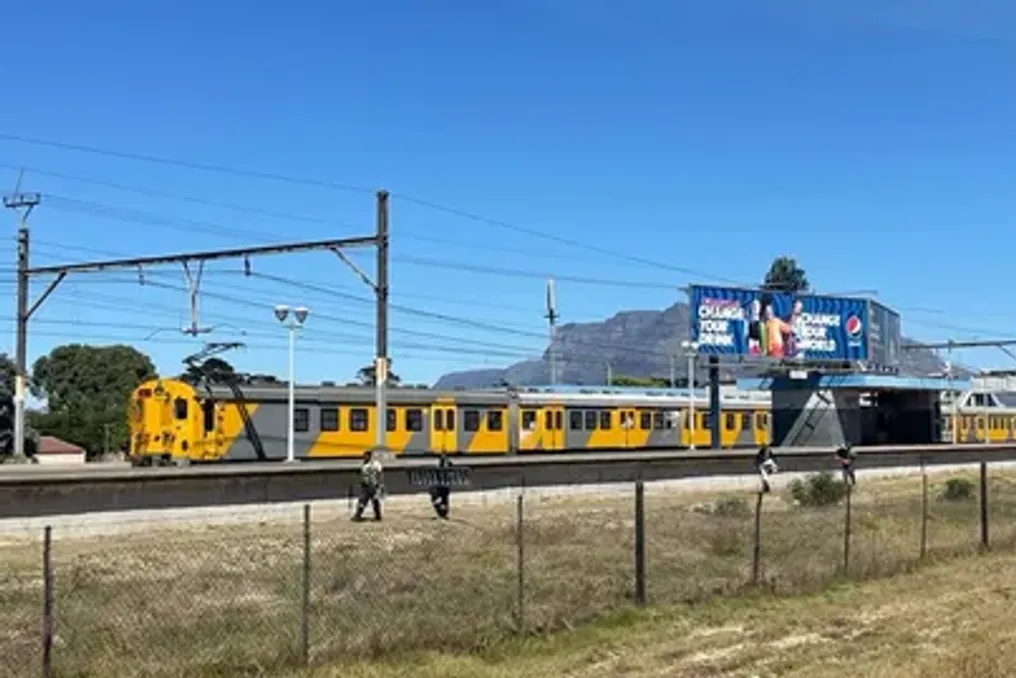
The United National Transport Union (Untu) has expressed its disagreement with the plans by the Passenger Rail Agency of South Africa (Prasa) to engage private security firms, given that the agency possesses its own qualified security personnel to protect the country's railway infrastructure.
Popular
Planned Reductions at PRASA
These statements came amid Prasa's intention to cut over 600 jobs in the long-distance passenger transport division. The state-owned enterprise initiated the reduction process in accordance with Section 189 of the Labour Relations Act in May 2026.
The reason cited for the cuts was serious financial difficulties and the prolonged inactivity of certain railway corridors, which, according to the agency, makes it impossible to continue paying employees who are not performing productive work.
Financial Status and Investments
This occurs despite the Minister of Finance, Enoch Godongwana, allocating R5.8 billion for suburban park modernization, capital programs, and regional infrastructure restoration. In the 2022/23 financial year, Prasa received a total government subsidy of R19.5 billion (of which R7.2 billion was for operations and R12.3 billion for capital expenditure).
The agency's income increased through interest earnings of R1.7 billion, rent of R620 million, other income of R181 million, and passenger fare revenue of R119 million. Security staff are among the 600 people whose jobs are at risk.
UNTU Union's Position
An Untu representative, Atenkosi Plaatjie, emphasized that reducing security personnel while Prasa faces widespread vandalism, cable theft, and attacks on critical railway infrastructure is both illogical and counterproductive. She stated that the union's position contradicts Prasa's corporate plan, which calls for strengthening protective services, not reducing them.
Plaatjie added that they would not support the scenario of laying off experienced Prasa security staff when there is a need to enhance security during Prasa's line restoration. She also stressed that they are strongly against engaging private companies when they already have their own competent and trained staff.
Security Measures and Legal Proceedings
A Prasa representative, Andiswa Makanda, did not respond to requests. Previously, Prasa terminated contracts with 20 private security companies after discovering tender irregularities and significant asset losses. To replace outsourced providers, the agency created its own security system, hiring thousands of internal guards directly under its management.
The agency launched a R1.5 billion security upgrade program to place over 1,400 internal staff at high-tech advanced bases to ensure the safety of railway lines within a 35 km radius. Untu temporarily approached the Labour Court demanding a stay of the process, citing insufficient transparency and erroneous assistance from the Commission for Conciliation, Mediation and Arbitration (CCMA).
The union withdrew its urgent court application after Prasa extended the timeline for the reduction process to ensure continued engagement with organized labour. A dedicated task force was formed to urgently seek viable alternatives to job cuts.
Optimization Process and Department of Transport Intervention
Plaatjie reported that the union participated in Prasa's workforce optimization process, which aimed to find opportunities to transfer mainline service (MLPS) employees to other areas of the railway business instead of dismissing them. However, while this process was underway, Untu received notification from Prasa about its intention to commence consultations under Section 189 via the CCMA.
After participating in consultations before two CCMA commissioners, the union deemed the process fundamentally flawed due to a lack of sufficient information to study alternatives to cuts. Because of this, Untu urgently approached the Labour Court demanding a halt to the process.
The situation was suspended following intervention from the Department of Transport, which established a task force comprising representatives from the department, Prasa management, and organized labour to study alternatives aimed at minimizing job losses. The work of this task force is ongoing, and no final conclusions have been reached yet. Plaatjie noted that since the process is not yet complete, an official report has not been submitted to the Minister of Transport, and all parties remain committed to constructive engagement until the task force's mandate is fulfilled.
Overall Network Situation
The South African Transport and Allied Workers Union (Satawu), which also opposes the proposed Section 189 reduction process, stated that it would not comment on the matter until further notice. Prasa manages an extensive railway network spanning 2,000 km, which has long suffered from issues related to safety, corruption, and outdated equipment. To restore reliability for millions of urban passengers, the agency launched a massive R7.5 billion general modernization program in 2022, aimed at repairing aging trains. By March 2025, R3.48 billion had been invested from the budget to maintain these vital Metrorail commuter and mainline passenger trains.