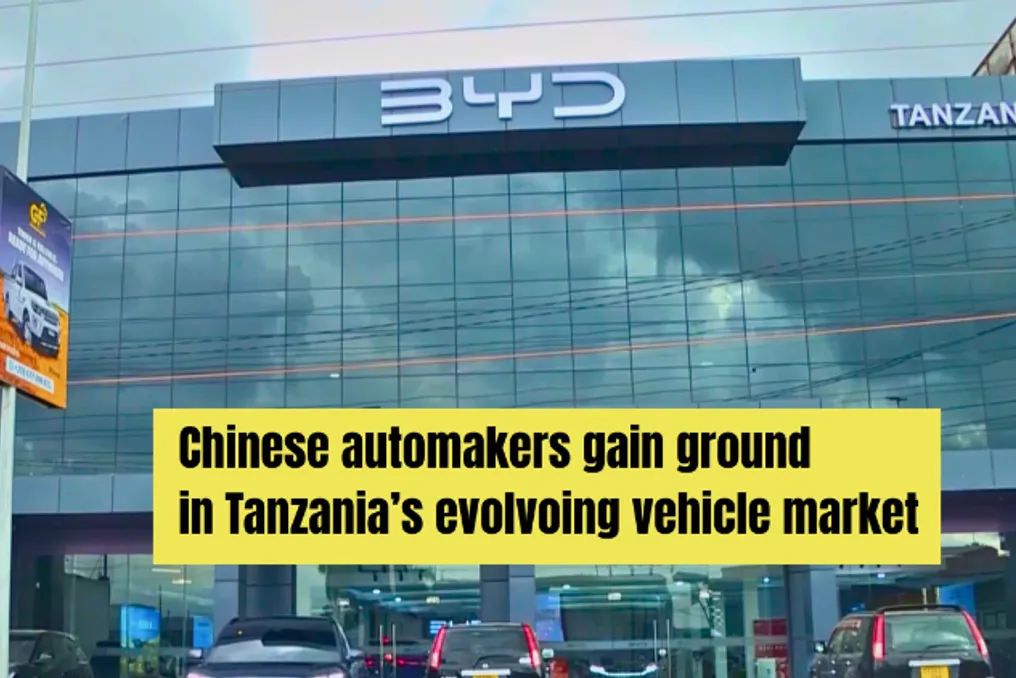
Automobile companies from China are strengthening their activities in Tanzania amid changes in the automotive market of one of East Africa's fastest-growing countries. This process is driven by increased taxes on older imported vehicles.
Traditional Market and Demand
For a long time, Tanzanian roads were filled with used cars imported from Japan. These vehicles were valued for their affordability, reliability, and low maintenance costs. Despite the recent increase in taxes on outdated models, demand for second-hand imports remains high.
According to data from the Bank of Tanzania, spending on importing passenger vehicles increased by almost 54 percent in the first quarter of 2026. Stella Albert, an automotive industry analyst from Troni Motors, noted that the main factors driving this growth are affordability, reliability, and low operating costs. She added that customers often prefer Japanese brands due to the ease of finding spare parts and servicing.
Arrival of Chinese Brands
The Chinese electric vehicle manufacturer BYD entered the Tanzanian market this year. The company notes growing consumer interest in more modern technologies, reduced operational costs, and environmental friendliness of transport. Li Ruipeng, Sales Manager at BYD Tanzania, stated that BYD's entry aims to provide local buyers with safer and more advanced options, as well as to expand the choice of innovative technologies.
BYD is one of several Chinese manufacturers, such as Chery, GWM, and Jetour, that are expanding their presence across Africa by offering hybrid and electric models. Analysts attribute the rise in sales of Chinese cars in Africa to competitive pricing, longer warranties, and strengthening consumer trust in Chinese brands, which is also supported by a 75 percent growth in South Africa, the continent's largest automotive market.
Strategy and Challenges
In Tanzania, manufacturers are employing a strategy that dealers call 'Afrocentric.' This strategy involves offering plug-in hybrids and sports SUVs adapted to local driving conditions, aiming to capture a market with high growth potential. However, there are also serious obstacles.
One of the main barriers is the shortage of qualified technical specialists capable of servicing new Chinese technologies. Hamis Silanda, a sales consultant at BYD Tanzania, reported cooperation with the Department of Vocational Education and Training to conduct training on BYD technologies for mechanics. He emphasized that if local mechanics do not understand BYD vehicles, they may be unable to assist customers when problems arise.
To increase market share, Chinese automakers are increasingly focusing on government and corporate fleets looking to reduce fuel consumption and emissions. Furthermore, they are expanding their operations beyond the commercial capital of Dar es Salaam as competition in the African automotive sector intensifies.