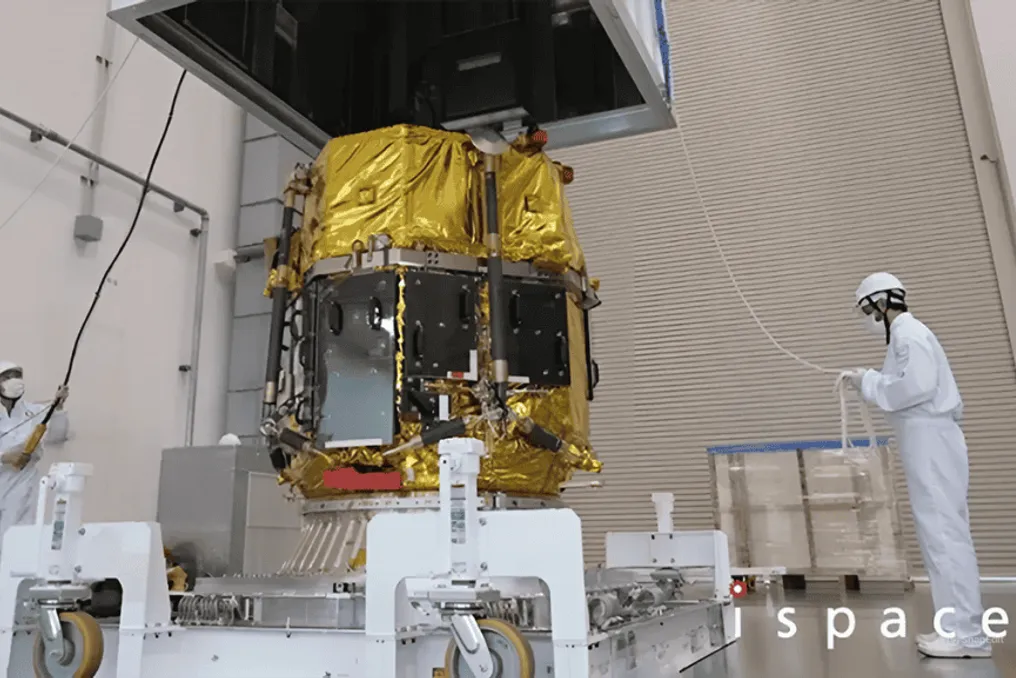
ispace, a Tokyo-based company, is expanding its lunar plans by incorporating SpaceX's Starship rocket. In an announcement made this Wednesday (8), the company secured 500 kg of cargo capacity on the Starship, the vehicle considered the largest and most powerful ever built, aiming for a lunar mission that could take place as early as 2030. This agreement was closed for a value of US$ 50 million (equivalent to R$ 258.2 million), as reported by Tokyo Brief.
ispace's Collaboration and Objectives
Takeshi Hakamada, founder and CEO of ispace, expressed satisfaction with the possibility of using the Lunar Access Integration service through the partnership with SpaceX. He emphasized that the high-capacity and moderately priced lunar transport offered by Starship is fundamental to enabling the sustainable lunar economy that ispace aims to establish.
Future Use of the Cargo System
This statement suggests that ispace may become a recurring customer of Starship. The company intends to use the giant vehicle to transport its new Mobile Cargo System (MCS) to the lunar surface. The MCS is described as a flat platform rover capable of carrying up to 500 kg across the lunar terrain. The initial mission with the MCS aboard Starship is scheduled to launch only from 2030, depending on SpaceX's ability to make Starship a fully operational vehicle, given that it has already completed 12 test flights, all suborbital.
History of Partnerships with SpaceX
ispace already has flight experience with SpaceX. In 2022 and again in 2025, Falcon 9 rockets transported the Japanese company's robotic rover HAKUTO-R. Although HAKUTO-R successfully reached lunar orbit on these two occasions, it suffered landings during the landing attempts. Starship, on the other hand, is SpaceX's super-heavy vehicle, designed for full reusability and capable of placing up to 150 tons into low Earth orbit.
The development of the rocket began some time ago, first presented by Elon Musk during the International Astronautical Congress in Mexico in 2016. Predictions about its operational readiness have constantly changed. In 2021, SpaceX aimed to conduct the first lunar mission before 2024, but development delays postponed that date. In 2024, NASA was scheduled for the first crewed lunar landing of the Artemis program, but this plan changed. NASA contracted Starship as the lunar lander module for this event, which is now scheduled for Artemis 4 at the end of 2028, with agency officials responsible for citing Starship as a factor in the Artemis schedule delays.
Other Users of Starship
NASA and ispace are not the only customers reserving seats on Starship destined for the Moon. Yusaku Maezawa, a Japanese businessman, announced the #dearMoon project in 2018, reserving Starship to take himself and a group of artists on a potential first crewed mission of the vehicle around the Moon. However, due to successive delays of Starship, Maezawa canceled the flight in 2024.
Growing Lunar Interest
Nevertheless, the momentum for lunar missions with Starship is increasing. NASA already has two successes in its Artemis history: Artemis 1, uncrewed, which reached lunar orbit at the end of 2022, and the Artemis 2 flight, with four crew members, conducted around the Moon last month. The agency is preparing for Artemis 3, which should test rendezvous and docking operations with the NASA Orion capsule and two crewed lunar lander modules—Starship and Blue Moon from Blue Origin—in Earth orbit in mid-2027, if planning is met.
Thus, ispace positions itself as a crucial element in a probable lunar race. ispace stated that the advent of rockets capable of transporting large volumes of cargo to the Moon should accelerate the implementation of lunar infrastructure, covering energy, communication, construction, data, and mobility. The company added that establishing this infrastructure on the lunar surface will reduce obstacles for future projects, promoting rapid expansion in the transport of smaller loads for exploration, technological validation, and business development. As demand for missions increases, the cargo capacity of the Mobile Cargo System units will also grow. In addition to the new MCS design, ispace also plans three lunar landing missions with its ULTRA Lander, scheduled for 2028, 2029, and 2030.