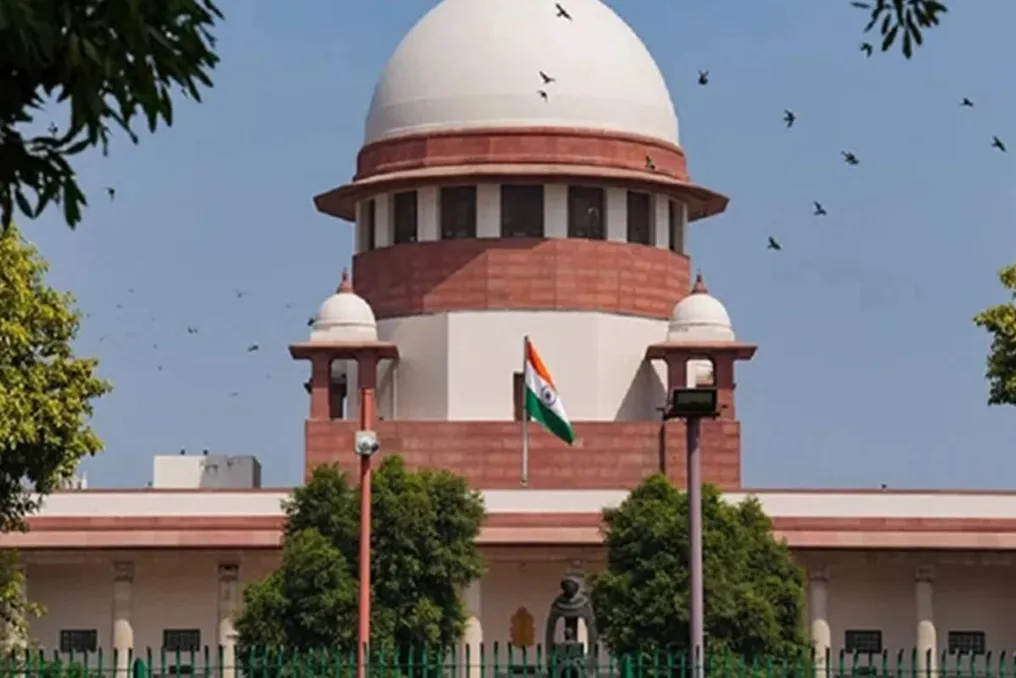
The Tamil Nadu state government has approached the Supreme Court, challenging a ruling by the Madras High Court. This ruling annulled a state decision that allowed individuals from reserved categories who converted to Islam to continue receiving benefits under the lower-class Muslim category.
In March 2024, the state issued an order stating that an individual who converted to Islam from the lowest classes, most marginalized communities or castes could be considered a lower-class Muslim for receiving advantages in quota allocations.
However, a bench at the Madras High Court ruled that the Tamil Nadu government's order was unconstitutional. The court rejected the petition of a man who converted to Islam and demanded a certificate confirming his affiliation with the Lebbai Muslim community to receive quotas.
The state officially recognized seven Muslim communities, including the Lebbai Muslims, as lower-class Muslims. The High Court relied on various decisions from the Supreme Court and the Madras High Court, including the case of G Michael versus S Venkateswara.
The court stated that when an Hindu converts to Islam, they simply become a Muslim, and their position in the Muslim community is determined not by the caste they belonged to before conversion. It was also established that they cease to be a member of any caste.
Furthermore, the High Court noted that Christian missionaries and Islamic preachers have asserted for decades and centuries that their religions offer social equality, unlike Hinduism, which has caste as an inherent feature. By adopting such a stance for conversions, one should not falsely claim the existence of a hierarchy in Islam. In the court's view, categorizing certain sects as lower and others as higher contradicts the injunctions of the Quran. Islam strives to create an egalitarian society.
The court emphasized that since the Madras High Court bench in the G Michael case ruled that a person converted to Islam becomes simply a Muslim, the state government is not permitted to issue orders undermining this decision. This is precisely what the government did by recognizing the possibility of conversion into any of the seven sects identified as lower-class Muslims.