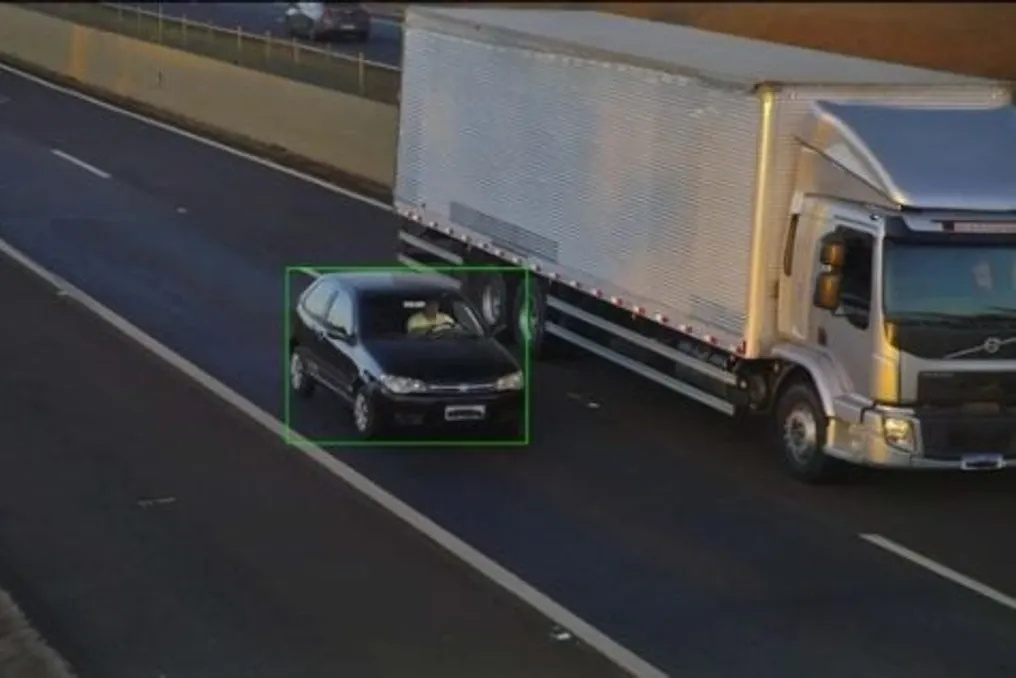
Road traffic enforcement in São Paulo has advanced to a new stage with the implementation of radars equipped with Artificial Intelligence. After a period dedicated to testing, which aimed to calibrate the system and raise driver awareness, these devices have started issuing valid fines.
Location and Operation of the Equipment
The devices are specifically installed on the South and East segments of the Mário Covas Ring Road (Rodoanel). These sections are managed by the concessionaire SPMAR, which is responsible for approximately 76% of the metropolitan stretch of the Rodoanel operating in the Greater São Paulo area. The South segment connects to the Régis Bittencourt, Imigrantes, and Anchieta highways.
Functionalities of the Enforcement Technology
Unlike traditional radars, which only monitor speed, these new systems use high-definition cameras and infrared sensors to track occupants' behavior throughout the day. The concessionaire reports that the equipment can analyze images with great accuracy, even when cars are traveling at high speeds, looking for two dangerous infractions: using a mobile phone while driving and not wearing a seatbelt.
Results of the Testing Phase
During the testing period, which took place between May 12 and June 9, the equipment recorded a total of 4,879 infractions in 28 days, representing an average of 168.2 occurrences per day. Most of the records were related to not wearing a seatbelt, with 2,420 cases of drivers without the device and 1,440 cases of passengers. Mobile phone use while driving was recorded in 1,019 instances.
Fining Process and Objectives
It is important to note that the application of the fine is not automatic. The algorithm only signals a possible irregularity, but the collected material must be mandatorily verified by highway police before any citation is issued. According to the responsible bodies, the purpose of this initiative is not to generate revenue, but rather to increase enforcement capacity and prevent accidents caused by distraction. For SPMAR, the established priority is prevention and driver education, not penalization.
Context and Expansion of the Technology
This focus on prevention is supported by data presented by the Brazilian Association of Traffic Medicine (Abramet), which indicates that 90% of traffic incidents have some factor of distraction as a cause, whether it is cell phone use or non-compliance with legal norms. Furthermore, the technology has proven useful in recording risk situations and accidents in real time, allowing for a faster response from rescue teams. AI radars are already active in other areas of the state, such as on stretches of the Anhanguera, in Ribeirão Preto, and on the Campinas-Mogi highway, where they have been in use since 2023, while other São Paulo concessionaires are evaluating the adoption of similar systems.