New clinical trials conducted by Australian scientists have refuted observational study data: the meningococcal group B vaccine does not prevent gonorrhea infection among men who have sex with men.
New clinical trials conducted by Australian scientists have refuted observational study data: the meningococcal group B vaccine does not prevent gonorrhea infection among men who have sex with men.
The report on the results was published in The New England Journal of Medicine. The problem of rising gonorrhea incidence is a serious global issue; according to the World Health Organization, 82.4 million people were infected with this infection in 2020, and there is currently no specific approved vaccine.
Gonococcus (Neisseria gonorrhoeae) is similar to meningococcus (Neisseria meningitidis). Previous observational data indicated that the four-component vaccine 4CMenB provided 38% protection against gonorrhea. Based on this data, England began offering this vaccination to high-risk groups, but its use as gonorrhea prophylaxis had not been previously tested in clinical trials.
Kate Seib from Griffith University and her team organized a multi-center, double-blind, randomized controlled Phase III trial called GoGoVax. The study involved 587 men aged 18 to 50 (mean age—34.2 years). All participants had a diagnosis of gonorrhea or syphilis within the previous 18 months, indicating a high risk of infection.
Additional information showed that over the last six months, 61.4 percent of participants had more than ten sexual partners, 73.8 percent engaged in group sex, and 26.2 percent had never used a condom with a casual partner.
Participants were randomly assigned in a 1:1 ratio: they received two doses of the 4CMenB vaccine intramuscularly with a three-month interval or placebo. For two years after administration, screening for STIs was conducted every three months. This screening included analysis of swabs from the urethra, anorectal area, oropharynx, and vagina (for transgender individuals) for gonorrhea using nucleic acid amplification methods. Data on demographics, sexual behavior, and antibiotic use were also collected.
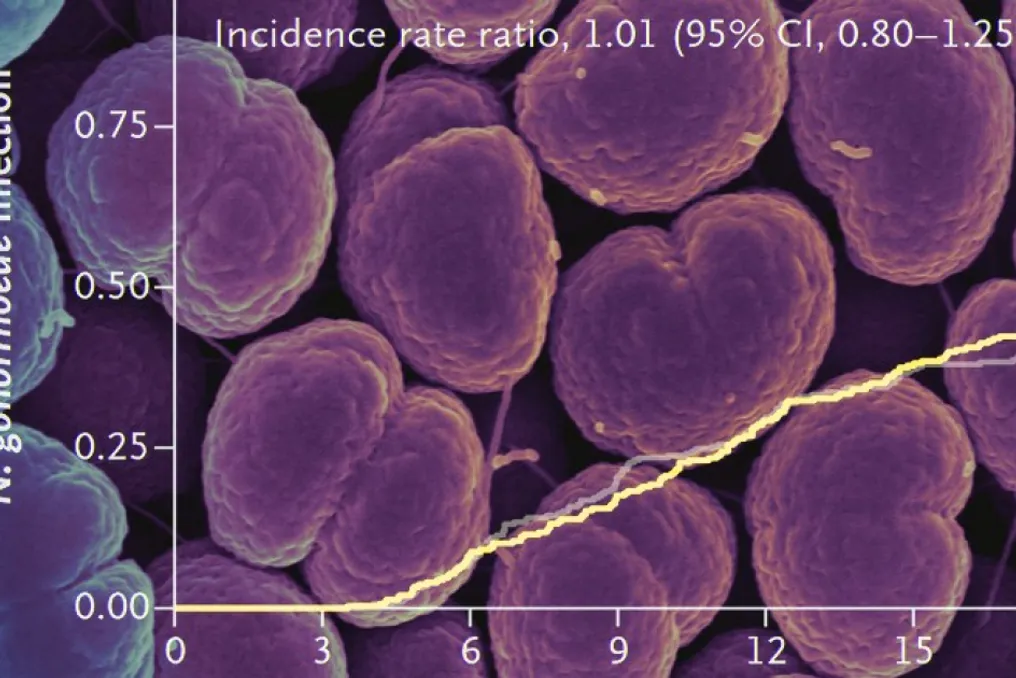
During the observation period, the incidence rate of gonorrhea was 48.1 cases per 100 person-years after vaccination and 47.8 cases per 100 person-years after receiving placebo (the ratio of rates was 1.01; p = 0.97). The overall vaccine efficacy was estimated at -0.5 percent, while efficacy against symptomatic infection was 5.5 percent, and against asymptomatic infection was -6.4 percent. Efficacy regarding urogenital, anorectal, and oropharyngeal infections was -20.0; -1.2, and 2.6 percent, respectively. Analysis across various subgroups also did not reveal positive vaccine efficacy.
Serious adverse events were observed in 4.7 percent of the main group participants and in 2.8 percent of the control group participants. Thus, the results of the randomized trials demonstrated that the 4CMenB vaccine does not reduce the probability of contracting gonorrhea in high-risk men who have sex with men.