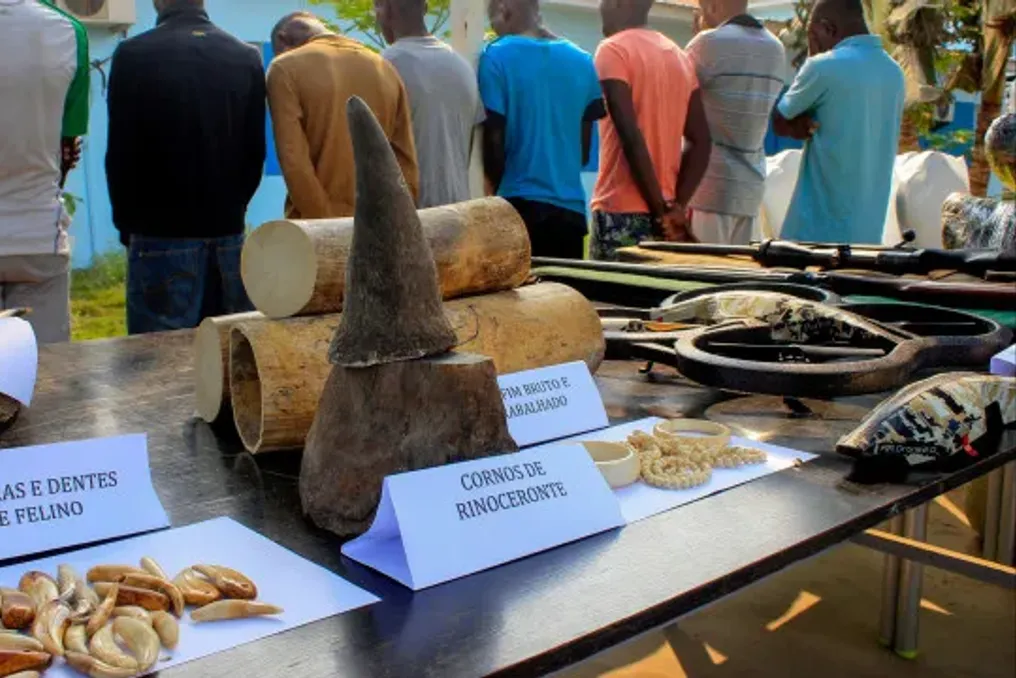
The Angolan Hunters Association (ACA) issued an alert regarding the severity of the poaching problem following an incident recorded in June. The event involved an attempt to kill three female white rhinoceroses within a farm located in the Cahama municipality, in the Cunene province.
Details of the rhino attack
A group of individuals armed with AK-47 rifles attempted to attack the animals. According to Mário Ribeiro, the caliber used was not suitable for hunting rhinoceroses, resulting in serious injuries but not immediate death for the animals. Only one of the females had to be euthanized after receiving about five shots, which was performed by a veterinarian from Namibia. The other two females underwent surgery and survived.
Farm situation and police investigation
On the farm in question, there were a total of 11 rhinoceroses, all imported for the purpose of repopulating the region. The ACA leader informed that the police initiated an investigation and managed to detain one suspect. The others fled upon noticing the approach of an official vehicle. Mário Ribeiro detailed that the detained suspect was talking to the farm workers to obtain information.
Poaching combat by the ACA
Mário Ribeiro emphasized that the association, which has been operating for approximately 20 years, actively works against poachers, clearly differentiating this practice from subsistence hunting. He stressed that those who kill animals to sell them on the roads are considered poachers, not subsistence hunters. In addition to public awareness, the ACA collaborates with the National Police in collecting traps and weapons, having noted a reduction in animals killed on National Road 100.
New hotspots and environmental concerns
Despite the authorities' crackdown, poachers are finding new areas of operation, such as the Cuanza Sul province. Mário Ribeiro reported recently seeing endemic animals hanging, warning of the serious damage to local fauna. EcoAngola, an environmental defense organization, expressed concern over wildlife protection, arguing that Angola must intensify its monitoring and accountability measures for environmental crimes. For EcoAngola, the case of the rhinos in Cunene underscores the urgency of transparent investigations and combating illegal species trafficking, whose main reason for slaughter is the sale of horns.