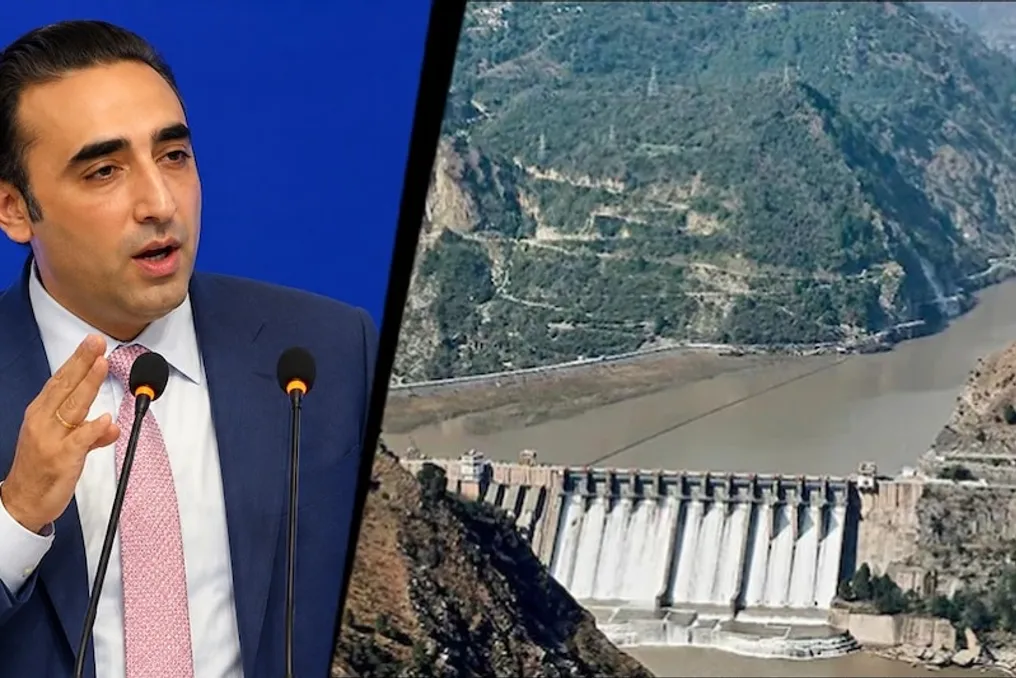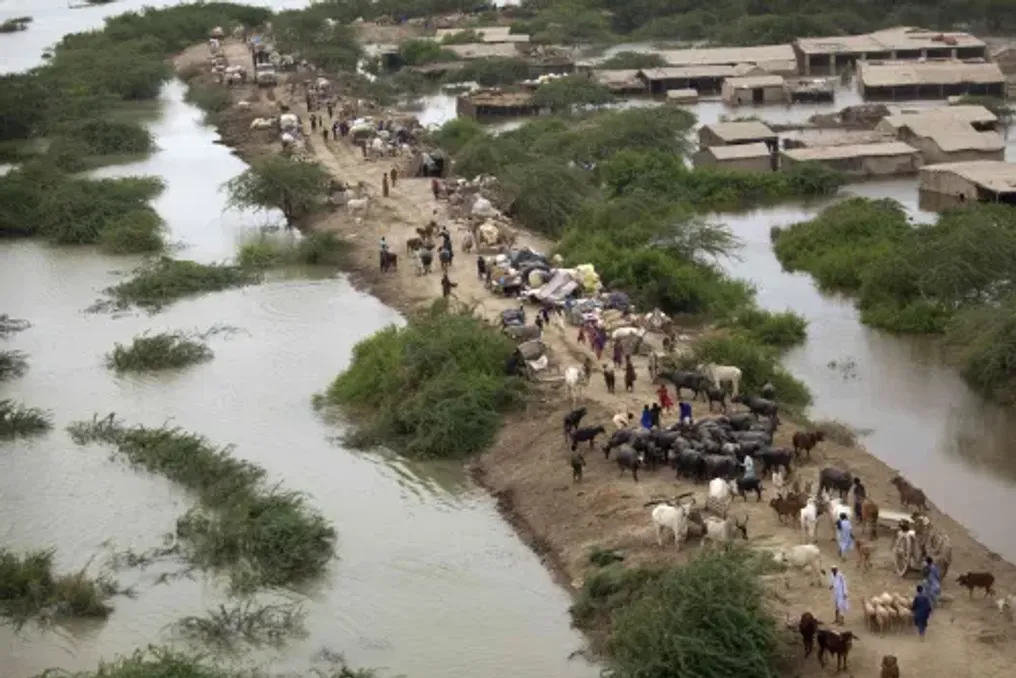
The article argues that Pakistan's accusations against India regarding water supply under the Indus Waters Treaty ignore the core issue—chronic inefficient resource management within Pakistan itself.
Accusations vs. Water Distribution Reality
For decades, Pakistan has leveled claims against India, asserting that it restricts its water supply according to the Indus Waters Treaty. This rhetoric was often amplified by politicians, commentators, and media outlets, portraying India as the upstream user capable of 'turning off the tap.' However, a more detailed analysis reveals a different picture: the water deficit in Pakistan is more closely linked to its own inefficient resource management than to actions taken by India.
The Indus Waters Treaty, signed in 1960, allocated three eastern rivers—Ravi, Beas, and Sutlej—to India, guaranteeing Pakistan unlimited use of the western rivers—Indus, Jhelum, and Chenab, except for limited use by India. India has largely adhered to its obligations. Studies show that Pakistan receives approximately 140 million acre-feet (MAF) of water annually from the western rivers, slightly exceeding the 135 MAF estimated at the time of the treaty's signing. Even the flow in the eastern rivers, although reduced by about 15%, remains substantial.
Underutilization and Growing Demand
Nevertheless, Pakistan uses only about 104 MAF for irrigation. The remaining nearly 36 MAF is either lost in the system or flows into the Arabian Sea. These losses alone are enough to transform Pakistan's water security with effective management. In the 1950s, Pakistan irrigated 21 million acres using 66 MAF. Today, the area of irrigated land has reached 34 million acres with a consumption of 104 MAF, but the water consumption per acre has remained unchanged. Due to population growth, the decline in per capita water availability is exacerbated by outdated methods, hindering Pakistan's ability to meet modern needs.
India, conversely, has actively invested in increasing water use efficiency. Despite receiving only 33 MAF from the eastern rivers, India irrigates 26 million acres, which is almost comparable to Pakistan's figures but with a significantly smaller volume of water. A 2018 World Bank study, 'Pakistan: Getting More from Water,' concluded that Pakistan possesses sufficient water resources but undermines its own security due to weak governance. The report highlighted poor water data accounting, excessive groundwater exploitation, low agricultural water productivity, widespread pollution, and inadequate flood and drought forecasting.
Efficiency and Storage Problems
An analysis by the International Mountain Society in 2011 confirmed that Pakistan receives about 142 MAF annually. Of this volume, 104 MAF is directed to irrigation, 9.7 MAF is lost due to systemic inefficiency, and 28 MAF goes to the sea. The productivity of this water is among the lowest in the world. For instance, Pakistan yields only 0.5 kg of wheat per cubic meter of water, whereas India produces 1.0 kg. Despite repeated warnings, Pakistan has made little effort to improve agricultural water use efficiency.
India, on the other hand, has launched programs such as 'Per Drop More Crop,' development of catchment basins, and micro-irrigation, investing over 1.25 lakh crore in improving water use efficiency over the last decade. Pakistan's reservoir capacity is a serious concern—it accounts for only 15% of annual river runoff, enough for just 30 days. Since the construction of the Tarbela Dam three decades ago, no major water storage projects have been completed. Without adequate reservoirs, Pakistan cannot regulate monsoon floods, which bring 80% of the annual water in just four months, causing huge volumes to be lost to the sea unused.
Groundwater and Infrastructure
Excessive groundwater extraction has intensified the problem. Drilling millions of private wells has led to an average water table drop of 1.5 meters per year, while salinization and poor water quality compound the crisis. India faces similar challenges but responds with initiatives such as aquifer mapping, groundwater recharge programs, and crop diversification schemes. In Punjab, the 'Bijli Bachayo, Paisa Kamayo' program limits the misuse of free electricity for pumping, and in Haryana, farmers are being encouraged to switch from water-intensive rice cultivation.
Pakistan's irrigation system remains predominantly canal-based, suffering from inefficiency and losses. Modernization efforts are minimal and limited to small pilot projects supported by international agencies. India, however, has adopted a technological approach, utilizing SCADA systems, pipeline networks, micro-irrigation, and farmer-led water user associations, which has significantly increased efficiency.
Internal Disputes and Climate
Domestic politics further complicates water resource management in Pakistan. The 1991 water sharing agreement attempted to resolve disputes between the provinces of Punjab, Sindh, Khyber Pakhtunkhwa, and Balochistan. Nevertheless, mistrust persists, stalling the implementation of projects like the Kalabagh Dam, which could increase storage capacity. Instead of cooperating, provinces accuse each other of resource theft, reducing water management to a zero-sum game.
Climate change has heightened the need for conservation, but Pakistan has done little beyond rhetoric. India, conversely, invests 90,000 crore annually in environmental protection measures. In the last eight years alone, it has conserved 11 billion cubic meters of water through ponds, reservoirs, and recharge structures. Pakistan's response to India's suspension of the Indus Waters Treaty was to announce plans for small reservoirs; however, given financial constraints and past experience, the realization of these plans is questionable.
Pakistan's water scarcity is caused not by a lack of water, but by how it is managed. The 36 MAF lost annually could secure the country's future with proper management. Instead, a narrative of victimhood persists, diverting attention from systemic failures. India, despite facing similar issues—population growth, climate change, and pollution—has achieved tangible results through integrated water resource management, focusing on modernization, conservation, and institutional reforms. Pakistan, meanwhile, remains stuck in the past, clinging to outdated methods and political blame games.
Conclusion: Focus on Management
The Indus Waters Treaty was established to ensure fair resource distribution. Six decades later, the problem is no longer distribution, but management. Pakistan receives as much or even more water than anticipated in 1960, but it does not use it effectively. Accusing India may serve political ends, but it does not solve the crisis. The real solution lies in reforming governance, increasing yields, investing in storage, modernizing infrastructure, and strengthening inter-provincial cooperation. Until Pakistan adopts integrated water resource management, no volume of inflow will be sufficient. The water is there—the question is whether Pakistan will learn to manage it.