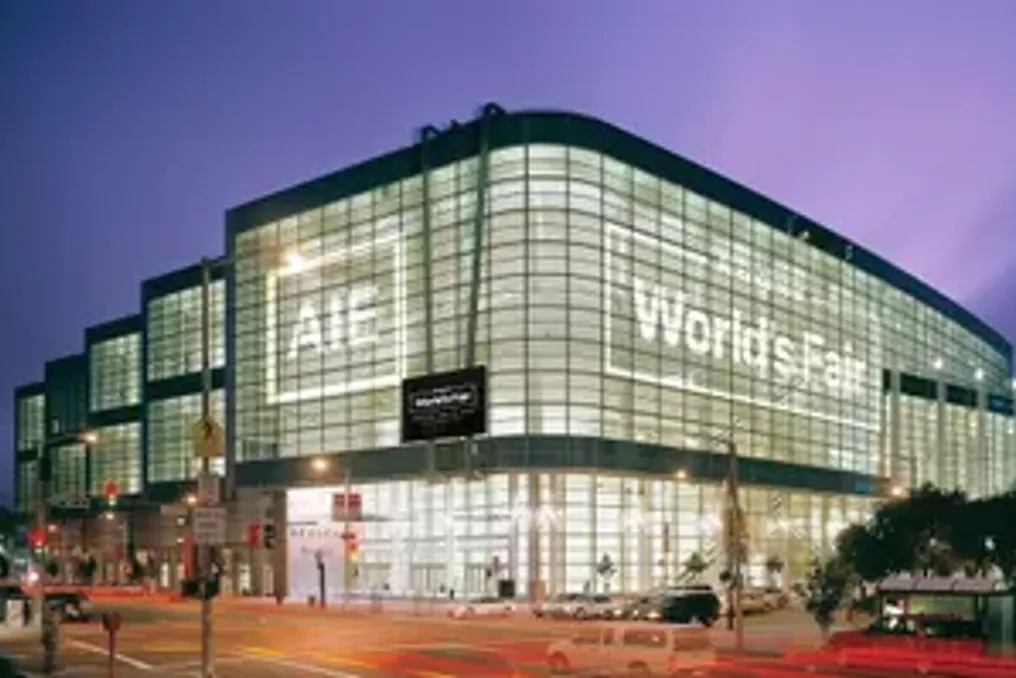
The AI Engineer World's Fair 2026 concluded on July 2nd in San Francisco, USA, after four days at the Moscone Center. This global event, held in the city for the fourth consecutive year, brought together companies, developers, researchers, investors, and corporate technology executives from the AI sector to exchange achievements in industrial AI implementation and optimization of engineering processes.
Shift in the AI Industry Focus
Discussions at the fair shifted from the initial focus on model performance to what many participants termed 'Production AI.' The main objective became transforming AI models into reliable, scalable, secure, and deployable systems capable of functioning in a corporate environment.
Compared to previous editions, the current event demonstrated a clear transition from a 'model race' to what attendees called an 'applications and engineering race.' The emphasis moved from training increasingly large models to integrating AI into production workflows, optimizing deployment, and creating tangible business value.
Key Conference Themes
Conference sessions covered topics such as AI agents, prompt engineering, inference optimization, Retrieval-Augmented Generation (RAG), multimodal AI, AI infrastructure, and enterprise adoption. Organizers stated that this year's program focused on creating AI systems that can be tested, scaled, and reliably operate in production environments, rather than just developing the models themselves.
One of the strongest areas of the conference was the rapid growth of AI agents. Speakers and developers suggested that 2026 could be a turning point for the large-scale adoption of AI agents in enterprises. AI agents are increasingly being designed not merely as intelligent assistants but as tools for executing end-to-end workflows in software development, customer service, office automation, content creation, and business operations. Many participants viewed this as evidence of AI evolving from a productivity enhancement tool into an integral part of corporate infrastructure.
Priorities on the Exhibition Floor
The exhibition hall reflected a similar shift in industry priorities. While foundational model developers like OpenAI and Anthropic remained prominent figures, a growing number of exhibitors focused on AI cloud services, inference platforms, GPU orchestration, AI databases, security, Model Context Protocol (MCP), and developer tools.
Another important theme throughout the conference was the increasing significance of open source in AI. Many sessions were dedicated to open models, open agents, and open infrastructure. Developers argued that long-term competitiveness would depend not only on proprietary cutting-edge models but also on the strength of developer communities, software toolchains, application ecosystems, and industry collaboration. Many participants believed that the next phase of AI competition would be determined equally by ecosystem building as by model performance advancements.
Expansion of AI Application Scope
The conference also showed how quickly AI is moving beyond the technology sector. Demonstrations and case studies covered healthcare, finance, manufacturing, robotics, public services, legal services, education, logistics, and real estate, reflecting AI's transition from technological innovation to widespread industrial implementation.
Analysts noted that the AI Engineer World's Fair demonstrated a fundamental change in the competitive dynamics of the global AI industry. Future leadership in AI will be determined not by who creates the largest models, but by who builds the strongest engineering capabilities, deployment infrastructure, open ecosystems, and practical applications.