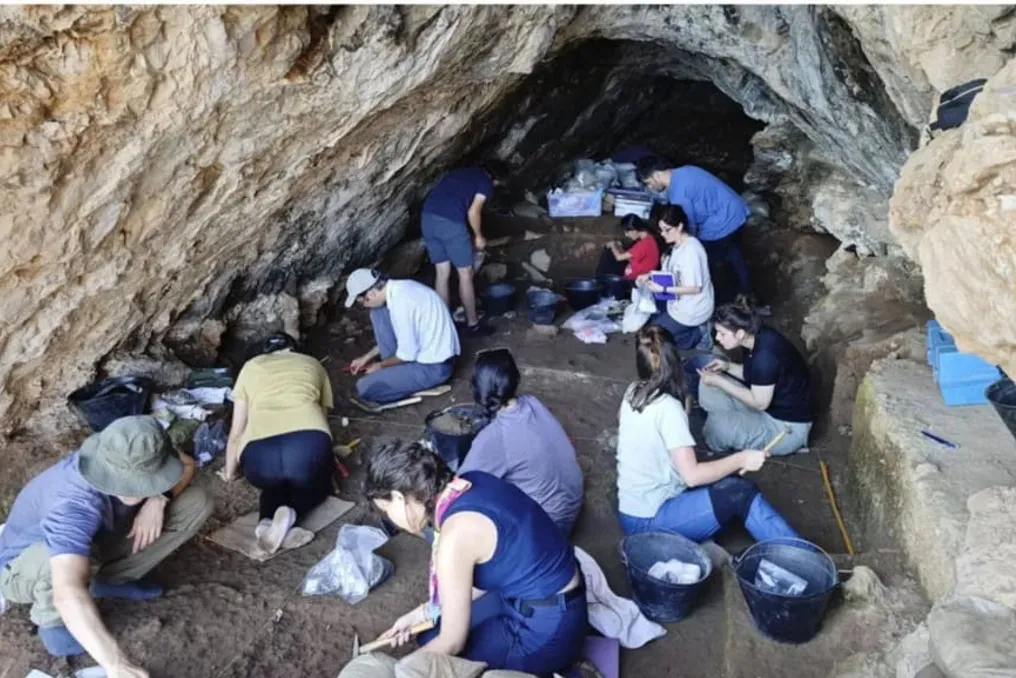
Researchers have discovered evidence suggesting that Neanderthals and Homo sapiens in the Levant practiced similar cultural behavioral models thousands of years ago. This finding was made by studying a cave on the Mediterranean coast of modern Turkey, where different human groups occupied the same space during different time periods.
Analysis of artifacts in Üçağızlı II Cave
The study, published in the journal PNAS last Monday (the 6th), included an analysis of fossils, stone tools, and shells found in the Üçağızlı II cave. The results showed that both groups used similar food procurement methods and created objects that may have held symbolic value. This conclusion strengthens new interpretations regarding the relationship between these two human lineages, suggesting they might have exchanged knowledge and cultural preferences even without living in the same place simultaneously.
Archaeological evidence of cultural continuity
The team conducting the research examined materials preserved in the Üçağızlı II cave, which is located in a region that served as a link between the Levant (Eastern Mediterranean) and Eurasia. Although researchers only found teeth and parts of jaws, they managed to distinguish human groups based on the internal structure of the fossilized teeth. Dating of the deposits showed that Neanderthals used the cave approximately between 77,000 and 59,000 years ago, while Homo sapiens appeared later, around 59,000 and 47,000 years ago.
Despite these time gaps, the archaeological deposits demonstrated similar characteristics. Researchers found similar patterns in the use of stone tools, the utilization of natural resources, and food acquisition methods. Among the hunted animals were wild goats, ibexes, deer, and boars. Furthermore, both groups used the same local raw material sources, including silica used in tool making.
Symbolism and cultural practices
Particular attention was drawn to the presence of 29 shells of the small marine mollusk species Columbella rustica. These items were apparently not used for consumption but most likely served as ornaments. Some shells had holes, indicating an intention to turn them into accessories, and one shell associated with the Neanderthal presence showed discoloration caused by intentional heating.
According to Naoki Morimoto, a paleoanthropologist from Kyoto University and one of the study's authors, the findings indicate cultural closeness between biologically different groups. He stated that 'these two different but close human collectives likely shared symbolic preferences.' This discovery also resonates with data obtained from other archaeological sites in the Middle East and Europe. In the Tinhşemet cave in Israel, researchers previously reported signs of similar behavior between Neanderthals and Homo sapiens in even earlier periods.
Expert opinions and open questions
April Newell, an archaeologist specializing in the Paleolithic from the University of Victoria in Canada, who did not participate in this study, noted that sites like Üçağızlı II are changing the understanding of cultural connections between these populations. In an interview with Live Science, she assessed that these findings demonstrate a high level of interaction between various ancient human groups. Nevertheless, the observed continuity leaves an open question: if Neanderthals and Homo sapiens had such similar behavior, what factors explain the disappearance of Neanderthals around 40,000 years ago?
The study's authors emphasize the need for further investigation into when and where these common practices arose, and whether cultural similarity relates to interbreeding between the two human populations. Future excavations at Üçağızlı II and other archaeological sites may deepen the understanding of how different groups exchanged knowledge at the end of the Pleistocene.