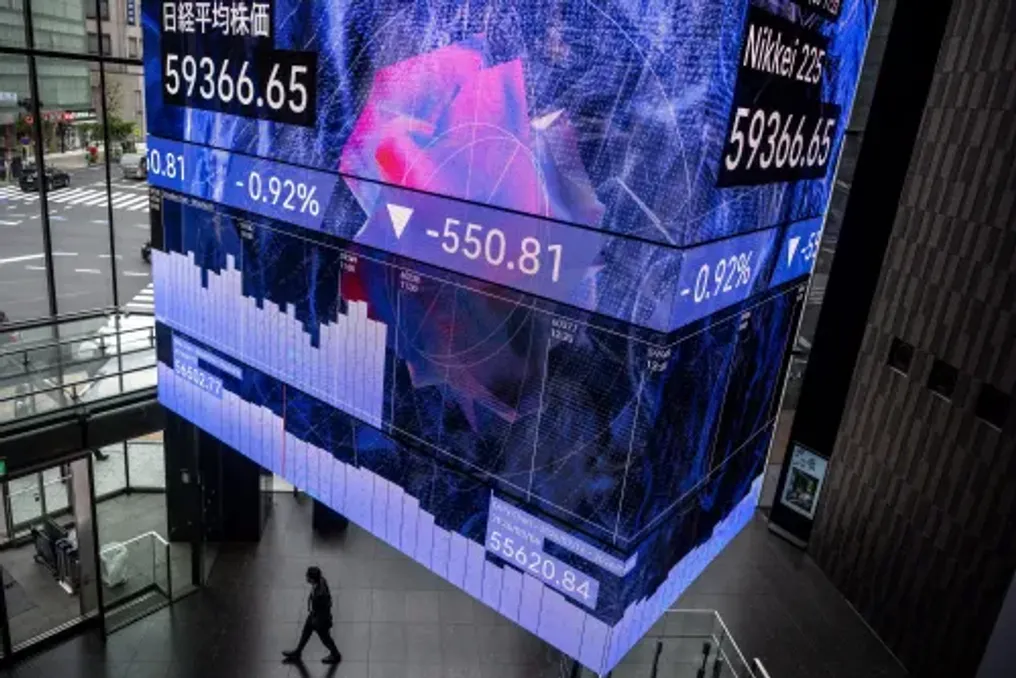
Indian stock markets sharply fell, reflecting a global outflow of funds from risky assets. The Sensex and Nifty recorded their most significant decline in the last three months amid escalating tensions between the United States and Iran. This escalation led to a rise in oil prices and reignited inflation concerns.
Decline in Key Indices
The Sensex index closed the trading session at 76,504 points, representing a drop of 1,677 points or 2.2 percent. The Nifty index closed at 23,882 points, down by 517 points or 2.1 percent. Both indices showed the largest decline since March 30, 2026. The total market capitalization of companies listed on the BSE decreased by 9 trillion rupees, reaching 471 trillion rupees.
Reasons for Market Instability
Stock markets worldwide experienced a downturn after Washington and Tehran effectively declared the temporary peace agreement invalid. New US military strikes on targets in Iran and retaliatory Iranian attacks intensified fears that shipping through the Strait of Hormuz could be threatened, keeping energy markets tense.
Brent crude oil prices rose by 9 percent over the past two days and traded at $78.34. High crude oil prices represent a structural negative factor for India, which is a major oil importer, and threaten to widen the current account deficit, weaken the rupee, and undermine corporate profits.
Investor Reaction and Market Analysis
Besides India, indices of all major Asian stock markets, with the exception of Hong Kong and Taiwan, closed in the red as investors pull funds out of risky assets. The Nifty Bank and Nifty Financial Services indices each fell by 2.5 percent. The rupee weakened by 0.6 percent against the US dollar, trading at 95.56.
UR Bhat, co-founder of Alphaniti Fintech, noted: 'The renewed hostile actions brought back one of the biggest market problems, just when investors thought the situation was stabilizing. The escalation revived concerns about India's import bill, inflation, and the broader macroeconomic outlook, explaining the sharp reaction. However, markets are accustomed to geopolitical surges and are less likely to overreact unless the conflict escalates further. If there are no new attacks, especially on shipping routes, and the situation does not worsen, investors may start viewing this as the new normal and focus on the probability of continued behind-the-scenes negotiations. In such a scenario, today's sharp sell-off could attract buying support tomorrow.'
Trading Dynamics and Forecasts
Overall trading volume was weak: 3,331 stocks declined, while 971 rose. Foreign portfolio investors became net buyers worth 1,963 crore rupees, while domestic institutional investors were net buyers worth 790 crore rupees. All components of the Sensex declined. HDFC Bank, which fell by 2.3 percent, was the main driver of the Sensex decline, followed by ICICI Bank, which dropped by 2.4 percent. Views on the index movement depend on the weight of individual stocks and the degree of their movement on a given day.
Sudeep Shah, Head of Technical and Derivatives Research at SBI Securities, stated: 'Regarding future prospects, immediate support for Nifty is in the zone of 23,780–23,750. Any sustained move below this zone could prolong Nifty's weakness towards 23,600, and then 23,450 in the short term. On the upside, immediate resistance is located in the zone of 24,020–24,050.'