According to data from the PayInc Economic Activity Index, South Africa's economic activity showed a decline in June 2026. This figure was published on Wednesday.
According to data from the PayInc Economic Activity Index, South Africa's economic activity showed a decline in June 2026. This figure was published on Wednesday.
PayInc reported that the index fell by 0.9% month-on-month, following a revised drop of 2.0% in May. Shergeran Naidu, Head of Stakeholder Engagement at PayInc, noted that the index, which reached 102.4, was the lowest since November 2025, although it remained 2.5% above the previous year.
PayInc added that the first half of 2026 was characterized by a strong first quarter, followed by a noticeable slowdown in economic activity in the second quarter, especially over the last two months.
Elize Kruger, an independent economist, suggested that despite the framework deal between the US and Iran in June helping to reduce some global tensions, uncertainty continues to negatively affect business and consumer confidence. She noted that many remain cautious, postponing investment and spending decisions, which is reflected in weaker economic activity in the second quarter.
Kruger specified that the PayInc Economic Activity Index measures the real value of all electronic transactions processed through PayInc and also includes a component of wholesale cash settlement. She emphasized that while the volume and value of electronic transactions moderately recovered in June, the index was undermined by inflation driven mainly by high fuel prices.
PayInc reported that following the conflict in the Middle East, households and businesses faced constant pressure due to increased fuel prices and higher interest rates. Although oil prices dropped to approximately $72 per barrel, daily overspending at petrol stations for gasoline and diesel reduced to less than 1 rand per liter.
In Kruger's view, this indicates that any reduction in fuel prices in early August may be limited unless the rand strengthens further or oil prices fall more significantly during the month. She warned that these factors, combined with declining confidence, are likely to continue putting pressure on economic activity in the coming months.
June indicators, according to PayInc, presented a mixed picture. The S&P Global South Africa PMI slightly improved to 50.5, signaling modest expansion, while Naamsa reported a strong 15.3% year-on-year growth in car sales. However, the Absa PMI fell to 47.3, indicating persistent weakness in domestic demand.
Despite the softer economic environment, payment activity remained resilient. Naidu stated that 186.8 million transactions were processed through PayInc in June, an 11.6% increase compared to the previous year, and the nominal value of electronic transactions rose from 1.369 trillion rand in May to 1.427 trillion rand.
Naidu noted that the growth in digital payments shows that consumers and businesses are increasingly relying on electronic operations for daily needs, even during periods of economic instability. He added that while traditional EFT payment flows continue to grow steadily, DebiCheck and PayShap are gaining momentum, reflecting the evolution of South Africa's payment landscape.
Kruger concluded that the second quarter demonstrated how quickly confidence can change in response to global and domestic events. She stressed that while electronic payment activity remains robust, the overall economic situation suggests that growth is likely to remain moderate until inflationary pressures ease and confidence returns significantly.
PSG Senior Economist Johan Els stated that the ongoing war and tensions are affecting confidence, oil and gasoline prices, so the decline in the PayInc index is consistent with expectations for the second quarter. He expressed serious concern that this could lead to a GDP contraction in the second quarter of 2026 but believes there will be some recovery in the second half of the year.
Efficient Group Chief Economist Douwe Rudd stated that based on the latest data, there is a high probability that GDP will show very slight growth or even negative growth in the second quarter. He is also concerned that growth in the third quarter may be low, potentially leading to a recession or slower economic growth.
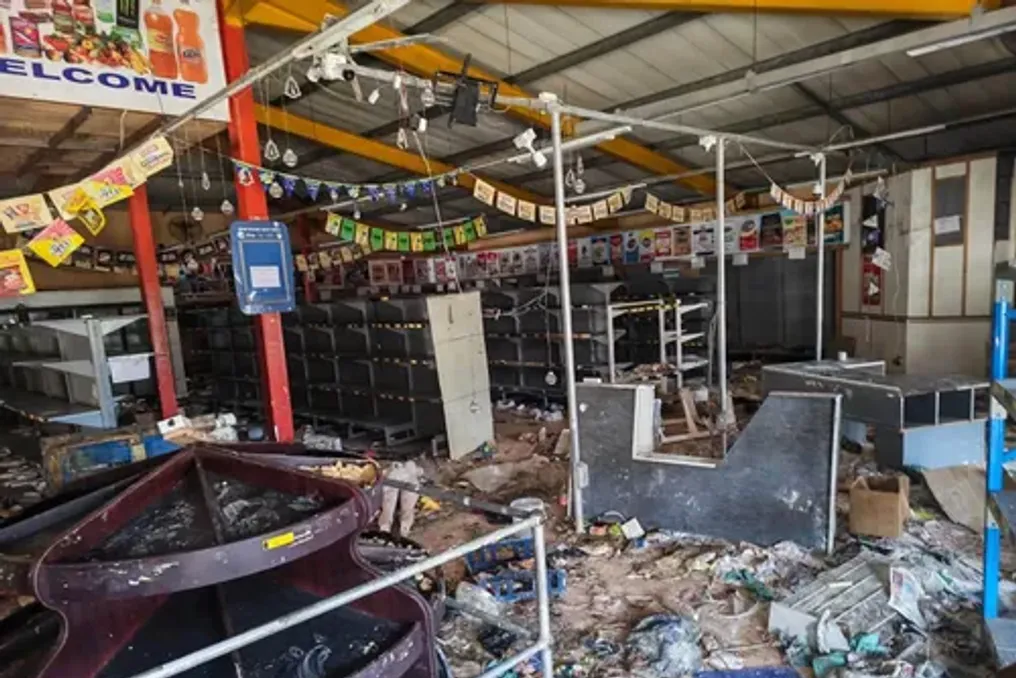
Economists believe that the greatest damage caused on June 30 may not have been related to the protests themselves, but rather to the millions of rands lost in trade as businesses opted for safety by closing their doors.
Although widespread violence during the anti-immigrant marches on June 30 was largely prevented, economists and business leaders note that the uncertainty caused by these demonstrations came at a high cost to the South African economy. Millions of rands in trade were lost as companies decided not to take risks and closed down.
Across Cape Town, shopping centers, businesses in townships, wholesale warehouses, clothing retailers, furniture showrooms, and informal traders either remained closed for the day or operated at reduced capacity due to fears of violence and looting.
Bobby Jordan, a representative of the Cape Town Chamber of Commerce, stated that while coordinated security partnerships between business, law enforcement, and government prevented a major disruption to the broader regional economy, small businesses ultimately suffered losses. Jordan noted: 'While coordinated security partnerships protected the wider regional economy from widespread paralysis, the threat of unrest still placed a financial and operational burden on SMEs. We received numerous reports of small businesses closing.'
He emphasized that the financial consequences were particularly severe for businesses dependent on daily revenue for survival. Jordan clarified that while the exact total cost of the June 30 closures cannot be calculated without data on the actual closure rate, the scale of the risk is enormous. He added that small and informal businesses in Cape Town generate an estimated R650 million in economic value daily.
In Jordan's view, even if only a portion of these businesses remained closed, the financial losses would amount to millions of rands. He explained that when fear paralyzes even a small part of this ecosystem, forcing traders and retailers in townships to close, millions of rands of unearned daily cash flow disappear from the communities that need them most. Unlike large corporations with reserves to mitigate temporary setbacks, many SMEs simply cannot recover the income lost on that day.
Jordan also pointed out that uncertainty itself incurs economic costs. This situation forces township economies and informal traders to adopt an extremely cautious approach, which severely suppresses daily trade and disrupts regular attendance at work, as employees stay home fearing for their safety. However, Jordan welcomed the coordinated response that kept most of the province calm but insisted on the need for long-term solutions.
He called on the government to move beyond short-term management and decisively address the root causes—namely public discontent over crime, immigration regulation, and lack of labor law compliance through strict enforcement across all sectors—to restore long-term trust.
Economist Ulrich Jobert stated that the consequences extend far beyond small businesses and affect the entire economy. He stressed that not only SMEs but also large businesses suffer because such events cause disruptions. Jobert noted that marches in townships, suburbs, and city centers interrupted normal economic activity across various sectors.
Although some consumers might postpone purchases until the next day, Jobert believes that businesses as a whole do not compensate for the income lost during disruptions, suggesting that this money is lost forever. He warned that repeated demonstrations and uncertainty could have a lasting impact on consumer behavior, negatively affecting overall consumer confidence. Furthermore, Jobert expressed concern about the message such disruptions send to international investors, pointing to a general negative effect on small and large businesses, as well as consumers and investment.
Jobert also highlighted the economic contribution of skilled foreign nationals, noting that many foreign workers bring valuable skills, taking up positions that South African citizens are unwilling to fill, and bringing experience beneficial to the economy. From an economic perspective, skilled foreign labor is an asset, as the country benefits from these skills without having to fund the education of these individuals.
Economist David Rudt agreed that the day undoubtedly affected business, especially small enterprises reliant on daily income, although he believes some immediate losses can be offset. Rudt expressed greater concern about the broader economic consequences of growing hostility towards foreigners. He noted that immigrants in South Africa are significant contributors to the economy, often creating jobs, and that xenophobia will incur economic costs for a long time.
Statistics South Africa (Stats SA) released its Quarterly Employment Statistics for March 2026 on Tuesday, revealing a decrease in overall employment. The total number of employed individuals fell by 80,000, representing a quarter-on-quarter reduction of 0.8%, moving from 10,548,000 in December 2025 to 10,468,000 in March 2026.
Stats SA specified that reductions were observed in the public services sector (a decrease of 53,000 people), trade (a drop of 40,000 people), transport (a fall of 3,000 people), and electricity generation (a reduction of 1,000 people). Meanwhile, some industries showed growth: manufacturing increased by 7,000 people, business services by 7,000 people, mining by 2,000 people, and construction by 1,000 people. Overall, the total decline in employment amounted to 121,000 people, corresponding to a year-on-year decrease of 1.1% between March 2025 and March 2026.
According to Stats SA, full-time employment decreased by 24,000 people, or 0.3% compared to the previous quarter, falling from 9,433,000 in December 2025 to 9,409,000 in March 2026. This decline was caused by reductions in the trade sector (-27,000), public services (-3,000), transport (-2,000), construction (-1,000), and manufacturing (-1,000), while the electricity generation sector remained unchanged. However, growth was noted in business services (an increase of 8,000 people, or 0.4%) and mining (an increase of 2,000 people, or 0.4%).
Part-time employment contracted by 56,000 people, which is a 5.0% drop quarter-on-quarter, decreasing from 1,115,000 in December 2025 to 1,059,000 in March 2026. The main reasons for this decline were cuts in public services (-50,000), trade (-13,000), business services (-1,000), transport (-1,000), and electricity generation (-1,000). Nevertheless, manufacturing showed an increase of 8,000 people (or 10.5%), and construction saw an increase of 2,000 people (or 3.4%).
The total income paid to employees decreased by 43.4 billion rand, equivalent to a 4.0% reduction compared to 1.08 trillion rand in December 2025, reaching 1.04 trillion rand in March 2026. This fall is linked to contractions in manufacturing, public services, trade, construction, electricity generation, and transport, although business services and mining recorded growth. Dr. Lerato Ntuli, an economist at Anchor Capital, noted that the latest QES data indicates a moderate deterioration in local labor market conditions in the first quarter of 2026, as overall employment fell to 10.468 million people (compared to 10.548 million in the fourth quarter of 2025), reflecting a 0.8% contraction.
Ntuli added that these losses were only partially offset by modest growth in more cyclical and externally supported sectors, such as manufacturing (+0.6% QoQ), business services (+0.3% QoQ), mining (+0.4%), and construction (+0.2% QoQ). It is projected that employment conditions in the second quarter of 2026 may be further weakened by the consequences of the Middle East conflict, which has pressured global demand and increased uncertainty. She concluded that the combination of this factor with already subdued domestic activity limits opportunities for significant job creation, reinforcing the perception of labor market fragility.