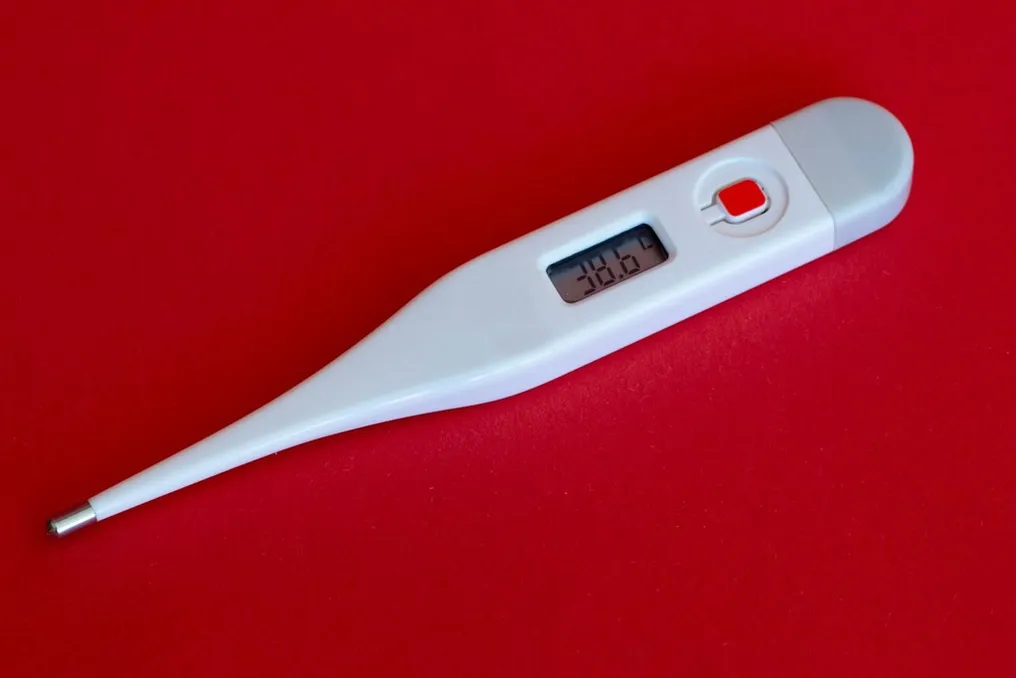
The sensation that fever worsens at night has explanations based on various biological mechanisms. The human body naturally raises its temperature in the early hours of the night, and the infectious process follows this pattern.
The sensation that fever worsens at night has explanations based on various biological mechanisms. The human body naturally raises its temperature in the early hours of the night, and the infectious process follows this pattern.
Body temperature follows the thermal circadian rhythm, reaching its lowest point in the early morning hours, between 4 am and 6 am. Conversely, it reaches its peak in the late afternoon and early evening, usually between 4 pm and 8 pm, showing a variation of up to 1 °C. This cycle repeats when a person has a fever, although at a higher level.
Marco Aurélio Sáfadi, a professor at the Faculty of Medical Sciences of Santa Casa de São Paulo, points out that a mild fever, such as 37.8 °C in the afternoon, can rise to 38.8 °C or 39 °C during sleep, even without a real deterioration of the clinical condition.
During the night, there is a decrease in cortisol levels, a hormone with anti-inflammatory properties, which tends to intensify symptoms such as fever. Simultaneously, there is an increase in the production of pro-inflammatory cytokines, including IL-6, IL-1, and TNF-α, substances that help raise body temperature.
Additionally, fever functions as part of the body's defense, boosting the immune response while the person sleeps. The increased temperature hinders the proliferation of viruses and bacteria. According to Dr. Luiz Fernando Degrecci Relvas, Medical Supervisor of Infectology and Internal Medicine at Santa Marcelina Hospital, the presence of fever signals an abnormal immune activation process.
Another relevant aspect is that, in the absence of distractions or nighttime activities, the perception of discomfort can be amplified. Furthermore, being immobile, perspiration decreases, preventing the skin's heat from dissipating adequately, which contributes to the feeling of more intense fever.
It is important to note that this does not always imply disease worsening. In common cases, such as colds and viral infections, fever should only be a concern if it exceeds 39.5 °C or is accompanied by other signs, such as excessive sweating and unintentional weight loss.
Dr. Relvas clarifies that certain medical conditions have distinct fever patterns. He mentions that tuberculosis frequently causes fever predominantly in the late afternoon and early evening, as do some chronic infections and certain types of neoplasia, such as lymphomas.
Although all fever warrants observation, it is not necessary to constantly monitor it with a thermometer. The main focus should be on associated symptoms, such as abdominal pain, confusion, vomiting, or difficulty breathing. Dr. Sáfadi concludes that the clinical context is more relevant than the time, with factors such as age, health history, medication use, recent travel, and symptom duration being more important than the clock hand.