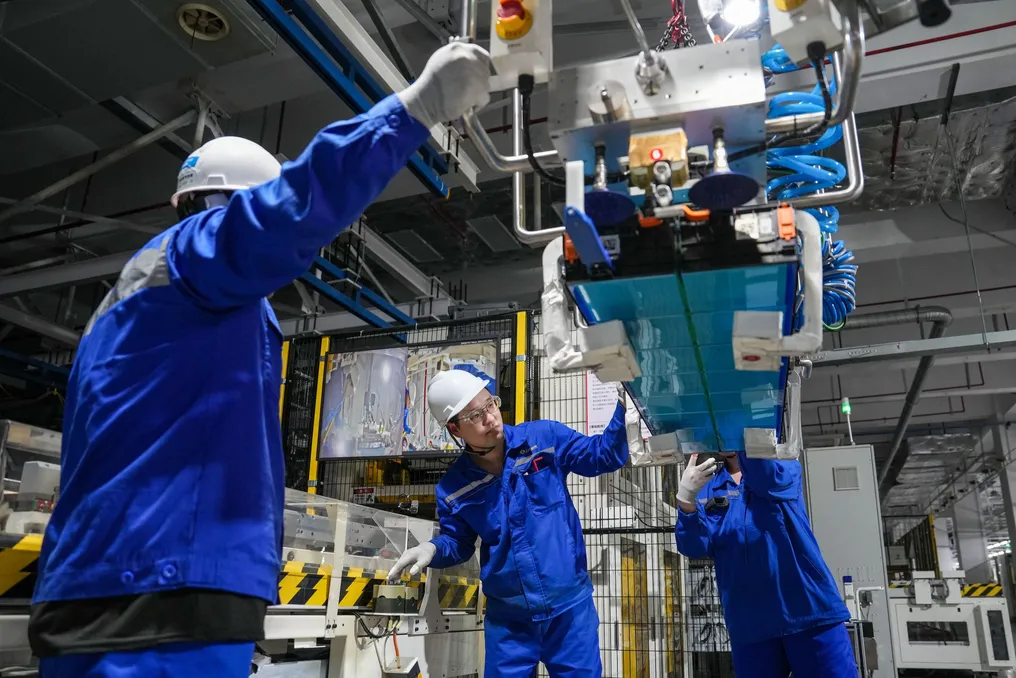
China is facing a wave of end-of-life electric vehicle batteries in the near future. Since EV sales in China surpassed one million units in 2018, this figure has steadily increased. Most batteries in these vehicles use lithium technology and have a service life of about eight years, meaning huge volumes are approaching the end of their useful life.
Popular
Forecasts and Current Disposal Methods
According to the China Electronics Energy Saving Association, approximately four million tons of EV batteries will be decommissioned annually starting around 2028. These spent batteries do not follow a single path; some are reused in second-life applications, such as backup power for telecommunications. However, this option was limited by a mandatory national standard introduced in 2024 for safety reasons. The dominant disposal method remains dismantling and material recycling, which is the focus of this study.
Challenges in Recycling
In late 2025, China published an experimental method for managing EV battery recycling, clearly defining responsibility for this process for both EV manufacturers and the batteries themselves. Nevertheless, numerous difficulties persist. An analysis of several battery manufacturers and recyclers showed that official recycling firms are struggling to make a profit. Many batteries end up being recycled by small, unofficial enterprises that lack equipment for environmentally safe processing, creating risks to health and the environment.
Currently, there is no unified national subsidy for EV battery recycling. Although China's typical approach to industrial policy involves the possibility of providing such support either to EV buyers or to official recyclers, the study indicates that subsidies alone will be insufficient, and a new approach is necessary.
Problems: Unprofitability, Informality, and Uncertainty
One leading battery manufacturer interviewed established a recycling subsidiary. Waste from the parent company's production lines provides a stable source of raw materials, and the company has over 200 collection points across the country. Despite this company holding an unusually advantageous position in the industry, an official representative admitted that 'if we only recycled lithium, the math wouldn't add up.'
To ensure profitability, iron, phosphorus, copper, and aluminum contained in the battery must also be recycled. The reason lies in the chemistry used in Chinese EV batteries. Over 80% of them are lithium iron phosphate batteries, which have significantly lower recoverable value compared to ternary lithium batteries often used abroad. Ternary batteries contain valuable cobalt, nickel, and manganese. One kilogram of cobalt from a ternary battery costs more than dozens of kilograms of materials extracted from a lithium iron phosphate battery.
If a large company faces such problems, one can imagine how much more difficult the situation is elsewhere. Official recyclers also struggle to obtain a sufficient quantity of batteries for recycling. The Ministry of Industry and Information Technology regularly publishes a list of compliant recyclers, known in the industry as the 'white list.' Five editions of this list have been released, naming 156 companies. However, compliance with standards requires expenditure. Non-compliant informal recyclers can afford to pay more for old batteries and thus purchase over 70% of this raw material.
Even with over 200 collection points nationwide, the collected spent batteries constitute only a small fraction of the waste generated by the parent company's production lines, an official representative reported.
Financial Instability of the Market
The insufficient supply of old batteries is another problem, but converting them back into usable compounds can be a costly risk. Between 2022 and 2025, the price of lithium carbonate dropped from 600,000 yuan ($88,000 USD) per ton to less than 70,000 yuan. The market could change entirely even during the battery recycling process. This uncertainty makes it impossible to manage inventory of recycled products, provide stable prices to customers, or develop long-term operational plans.
To support official recyclers, the government has increased supervision over the sector, and some local authorities are also providing subsidies to help them compete with informal competitors. For example, since 2023, Jingmen in Hubei Province has paid a subsidy of 50 yuan per ton of recycled batteries.
Lessons from Other Industries
Subsidizing recyclers may seem like a simple solution, but it could be a trap. In 2012, the Chinese government established a fund to stimulate the recycling of household appliances. Manufacturers were required to contribute to this fund, which the government then used to subsidize approved household appliance recycling companies. Essentially, manufacturers paid for recycling by professional firms through government mediation. This system made sense and is used worldwide.
Since 1990, California has implemented a similar tire recycling scheme: every new tire purchase includes a $1.75 fee collected by the government and passed on to recyclers. However, the initial Chinese scheme for household appliances did not collect enough funds, receiving between 2.5 and 3.5 billion yuan annually, yet always falling short of what recyclers were owed. An expert in waste management explained the initial design of the scheme: money was collected from manufacturers proportional to the amount of equipment they sold that year, whereas the equipment entering the recycling system had been sold two or three decades earlier. Billions of such old items existed in homes and recycling centers for which no recycling surcharge was ever collected. It was like expecting a pension fund replenished only by current workers to suddenly start paying all retirees. By the end of 2022, the fund owed recycling firms a total of 19.98 billion yuan, according to the China National Recycling Resources Association.
Concerns were also raised about fund expenditure. Subsidies from the fund accounted for about half of the recyclers' profits. Theoretically, these funds should have been invested in improving technology and equipment to reduce environmental damage. But in reality, most was not spent on modernization: 'Subsidies were used to buy more recycling equipment,' noted the expert. Since subsidies were paid based on the volume of recycled material, companies were motivated to compete in the old equipment market to receive the next subsidy payment. Firms competed with other recyclers, both formal and informal, as well as intermediaries trading in old equipment. Thus, the more subsidies were paid, the fiercer the competition became, and the financing mechanism intended to improve recycling systems ultimately fueled competition for raw materials. Ultimately, companies competed not on technology or the ability to produce better recycled materials, but on the ability to procure raw materials.
As of January 2024, manufacturers are no longer required to contribute to the fund, and the mechanism is effectively concluded. California's tire recycling scheme has also not achieved expected results. Unwanted tires are no longer piling up, but in 2023, only 35.1% of old tires entered the recycling system, which has barely changed from 36.6% in 2018, according to data from the California Department of Recycling and Recovery (CalRecycle). The rest was sent to landfills, used as fuel, burned in cement kilns or power plants, or exported abroad as fuel. This is because there is simply no demand for recycled rubber in higher-value products.
From Subsidies to Secondary Content Requirements
The EU's 2023 battery regulation may offer an alternative approach. Instead of providing subsidies to recyclers, it sets minimum requirements for the use of recycled materials in EV batteries sold on the EU market: 16% cobalt, 6% lithium, and 6% nickel starting in 2031, which will increase to 26%, 12%, and 15% respectively by 2036.
This approach uses a completely different logic. When battery manufacturers know that their products must contain recycled materials, they seek recycling partners offering stable and high-quality supplies. Some may even invest in their own recycling operations. This provides recyclers with a long-term and predictable market and eliminates dependence on subsidies. It also means they are forced to compete on the quality of their products. Instead of money flowing from the government to recyclers, it flows from battery manufacturers to those recyclers who can best provide the required product. The incentives change.
However, for this to work, certain conditions must be met. Purified recycled lithium carbonate is chemically identical to virgin material, and no test of the compound itself can distinguish them. Therefore, proving that the material is recycled means tracking it through the production chain, not testing it. Neither the EU nor China currently has such a mechanism. The EU's mandatory digital battery passport, which will register the origin of the material and the content of recycled components, comes into force in February 2027; the verification methodology is still being developed. Meanwhile, in April 2026, the Tianjin Automotive Database in China launched a voluntary industry platform, which is an early step toward any mandatory system.
Chemical identity does not mean the finished battery will perform identically. Purified recycled lithium may meet specification levels at the compound level, but as cathode designs move towards higher energy density and faster charging, tolerances become stricter. Trace impurities, morphology, and batch-to-batch variability that pass on paper can still manifest as increased impedance or accelerated degradation after cell cycling. Industrial qualification is increasingly based on cell-level testing, not just chemical analysis. This is a practical gap that battery manufacturers consider when deciding how much recycled raw material to use.
Furthermore, as mentioned, lithium iron phosphate batteries are much less economical to recycle than ternary batteries containing valuable cobalt and nickel. If China adopts the European approach with mandatory recycled content, it will need to develop a set of rules that account for the actual circumstances.
Necessity: Responsibility, Mandate, and Carbon Pricing
EV recycling in China will require a mandate for recycled content, regulatory strengthening, and carbon pricing. The recycling policy, effective in April, included EV batteries under the framework of extended producer responsibility, meaning manufacturers must establish collection points and tracking systems. This determines who will recycle the batteries. The next question is who will use the recycled materials? Recycling mandates ensure the operation of compliant formal recyclers; recycled content requirements guarantee a market for the final product of the process. Carbon pricing, in turn, ensures that low-carbon recycled materials will be competitively priced. If a fee is charged for every ton of carbon, using recycled materials becomes cheaper—an added advantage. For batteries with low recoverable value, such as lithium iron phosphate, higher carbon costs mean that recycled materials will be more competitive compared to primary counterparts. Only the combination of these three approaches will enable formal recycling companies to find profitable markets and create a healthy EV battery recycling industry.