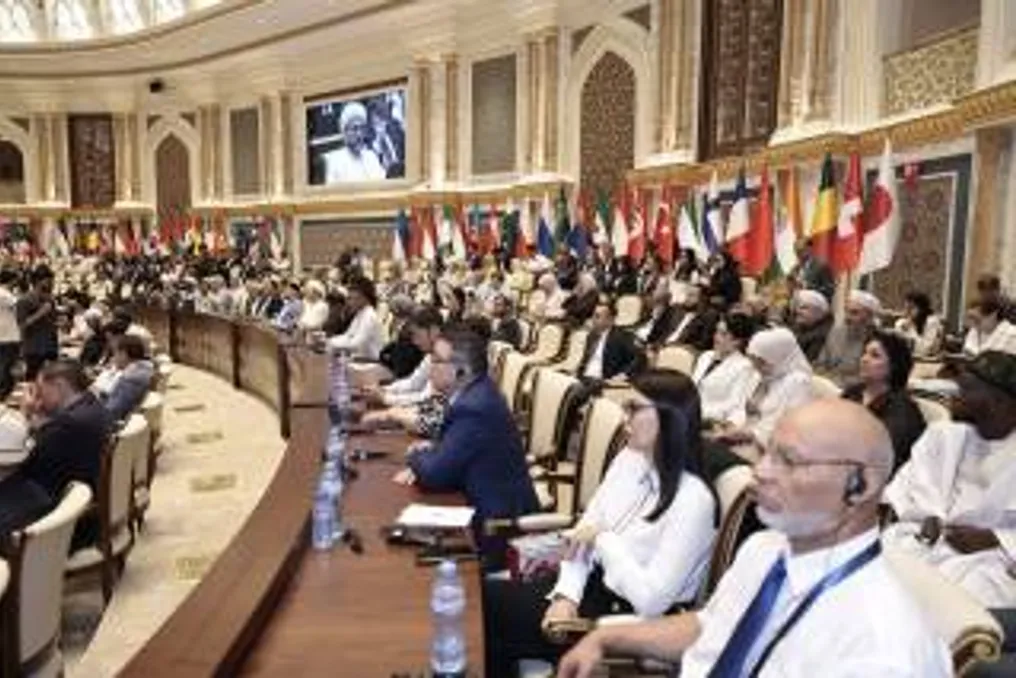
Participants of the 'I International Forum of Islamic Civilization: The Path of Peace, Tolerance, and Knowledge' arrived in Samarkand, where this international forum is being held for the first time in the country.
Participants of the 'I International Forum of Islamic Civilization: The Path of Peace, Tolerance, and Knowledge' arrived in Samarkand, where this international forum is being held for the first time in the country.
This authoritative summit was organized in cooperation with the Center for Islamic Civilization of Uzbekistan, the Committee for Religious Affairs of the Republic of Uzbekistan, the international scientific research centers named after Imam Maturidi, Imam Bukhari, and Imam Tirmidhi, the Administration of Muslims of Uzbekistan, the Academy of Islamic Sciences of Uzbekistan, as well as ICESCO—the organizer dealing with education, science, and culture in the Islamic world.
Representatives of state and public structures from more than 50 countries took part in the event, including ministers, muftis, prominent ulama, academics, researchers, museum and library directors, as well as representatives of international organizations and mass media.
Over two days, the opening of the international forum and a number of other events took place in Tashkent. Important documents were adopted, such as the 'Tashkent Declaration of the I International Forum of Islamic Civilization' and the 'Roadmap' of the Center for Islamic Civilization of Uzbekistan for the period 2027–2030.
As part of the forum, on July 9, a conference will be held at the complex of monuments of Imam Bukhari in Samarkand on the topic 'The Work of Imam al-Bukhari 'Al-Jami as-Sahih' — The Book of the Ummah'. The scientific heritage of Imam Bukhari, the criteria for selecting hadiths, as well as the place and significance of the work 'Sahih al-Bukhari' in world science are being discussed.
A summit on the topic 'The Legacy of Imam Maturidi — The Foundation of Moderation and Reason in Islamic Civilization' is also planned, where discussions are expected on the teachings of Imam Maturidi, the scientific heritage of Maturidi school scholars, and the relevance of this teaching today.
Participants of the authoritative summit visited the complex of monuments of Imam Bukhari and other historical and cultural monuments and sacred sites in Samarkand.
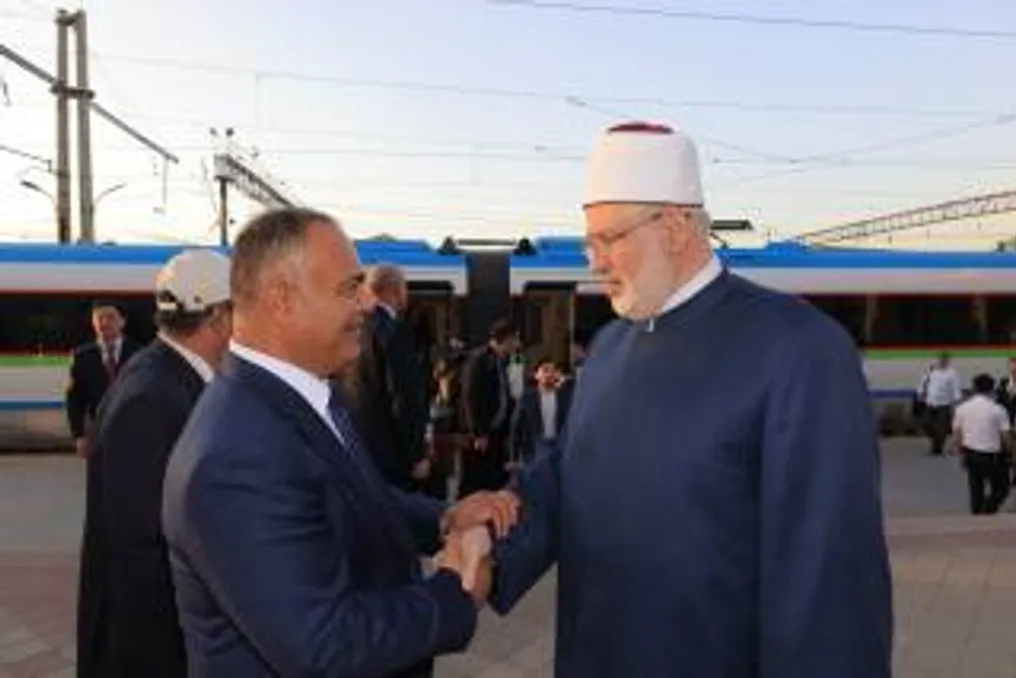
The arriving participants of the forum in Samarkand were met by the Deputy Head of the Region, Adiz Boboev, and other responsible persons at the Samarkand railway station.
On the second day of the International Forum on Islamic Civilization, held from July 7 to 11 in Tashkent, Samarkand, and Termiz, numerous interesting presentations and diverse events took place.
This forum was organized with the assistance of the Center for Islamic Civilization, the Committee of the Republic of Uzbekistan for Religious Affairs, the international scientific research centers named after Imam Mutaridiyya, Imam Bukhari, and Imam Termizi, the Administration of Muslims of Uzbekistan, the Academy of International Islamic Studies of Uzbekistan, as well as ICESCO—an organization for education, science, and culture in the Islamic world. The issues discussed at the forum acquired significant relevance.
The main goal of the event was to reveal the true essence of Islamic civilization, demonstrate its enormous contribution to scientific, cultural, and spiritual development, and to widely promote the ideas of peace, tolerance, and knowledge in the modern world.
One of the events on the second day was media events and presentations. A presentation titled 'Center for Islamic Civilization in Uzbekistan: Global Platform for Heritage, Science, and Knowledge' was presented by Rustam Jabborov, a researcher at the Center for Islamic Civilization in Uzbekistan. This presentation emphasized that this Forum is an important international platform for studying the rich scientific and spiritual heritage of the Islamic world, presenting it to the global community, and further developing dialogue and cooperation between civilizations.
Another key event of the day was the presentation of the photo album 'Shavkat Mirziyoyev - Enlightened Leader,' published in collaboration with IRCICA. It was noted that the initiatives of the President of the Republic of Uzbekistan, Shavkat Mirziyoyev, presented at the UN General Assembly, marked a new stage in the study and wide promotion of the rich scientific and spiritual heritage of Islamic civilization. It was emphasized that efforts to implement such initiatives, aimed at demonstrating the great contribution of scientists of the Central Asian era to world civilization, as well as preserving and studying the scientific heritage of great sages such as Imam Bukhari, and promoting the principles of knowledge and religious tolerance internationally, are being carried out consistently.
Within the framework of the event, publications were presented that the Center for Islamic Civilization in Uzbekistan is implementing in cooperation with the World Society (WOSCU) for the preservation of Uzbekistan's cultural heritage. Among them are the publications 'Rare Manuscripts of the Quran in Uzbekistan,' '114 Rare Manuscripts of the Quran Worldwide,' and 'The Great Langar Quran: History and Truth.' These publications are an important result of a large-scale scientific and educational process.
The essence of these publications is that they study the manuscripts of the Holy Quran not only as sacred monuments but also as sources of history, calligraphy, book art, papyrology, parchment science, cultural connections, and civilizational memory.
The first book, 'Rare Manuscripts of the Quran in Uzbekistan,' aims to systematically catalog the manuscripts of the Holy Quran stored in the country's archives for the first time. It collects information about copies located in museums, libraries, scientific institutions, and religious organizations, including their history, period of writing, writing style, paper or parchment features, decorations, place of storage, and scientific description.
The second book, '114 Rare Manuscripts of the Quran Worldwide,' covers the history of Quranic manuscripts on a global scale, extending beyond Uzbekistan. It presents information on rare Quranic manuscripts housed in the world's most famous museums, libraries, and scientific centers. These include Ottoman Mus'hafs, the Sanho manuscript, the Paris Codex, the Birmingham Fragments, the Topkapı Mushaf, the Blue Quran, the Quran of Ibn al-Bawwab, as well as the Katta Langar Quran, related to the country's history—the most important examples of Islamic manuscript culture.
The third book, 'The Great Langar Quran: History and Truth,' holds special significance because it is not just a book about one manuscript, but a study of the fate of one rare Mushaf, including its lost and found pages, scholarly debates, radiocarbon dating, places of storage, and the restoration of its historical truth. The most important feature of this publication is that it first gathers all known pages in a single order, scientifically illuminating where each page is stored, which surahs and verses it contains, the writing style, material integrity, text corrections, and preservation history.
Furthermore, on the second day of the forum, there was a presentation of the photo album 'New Uzbekistan: Land of Peace, Humanism, and Tolerance' by Ahmad Jasim Zubaydi, a writer from Iraq; a presentation of the photo album 'Shavkat Mirziyoyev – State Figure and Global Policy Maker' by journalist Valery Biryukov; and a presentation of the work 'Uzbekistan: Concept of the Third Renaissance' by Muhammad Abbas Khan, a journalist from Pakistan. These events made a great impression on the participants.
The significance of the forum as a platform for cultural dialogue was further enhanced by a presentation from the modern analytical laboratory of the Center for Islamic Civilization in Uzbekistan—a presentation titled 'Return of Heritage: Program for Repatriation of Cultural Property with UNESCO.'
At the end of the second day of the forum, memoranda and agreements were signed between international organizations, scientific research centers, and cultural institutions with the aim of expanding international cooperation in the field of studying and promoting the heritage of Islamic civilization, as well as strengthening ties between scientific institutions and the preservation and digitization of manuscripts.
Important documents were also adopted, such as the 'Tashkent Declaration of the I International Forum on Islamic Civilization' and the 'Roadmap' of the Center for Islamic Civilization in Uzbekistan for development through 2027–2030. The culmination of the forum was the delegates' address to the President of the Republic of Uzbekistan.
Thus, the I International Forum on Islamic Civilization is transforming into an important international platform that contributes to the wider presentation of Uzbekistan's rich historical and scientific heritage to the global community, strengthens intercivilizational dialogue, and promotes the noble values of Islam based on peace, tolerance, and knowledge.
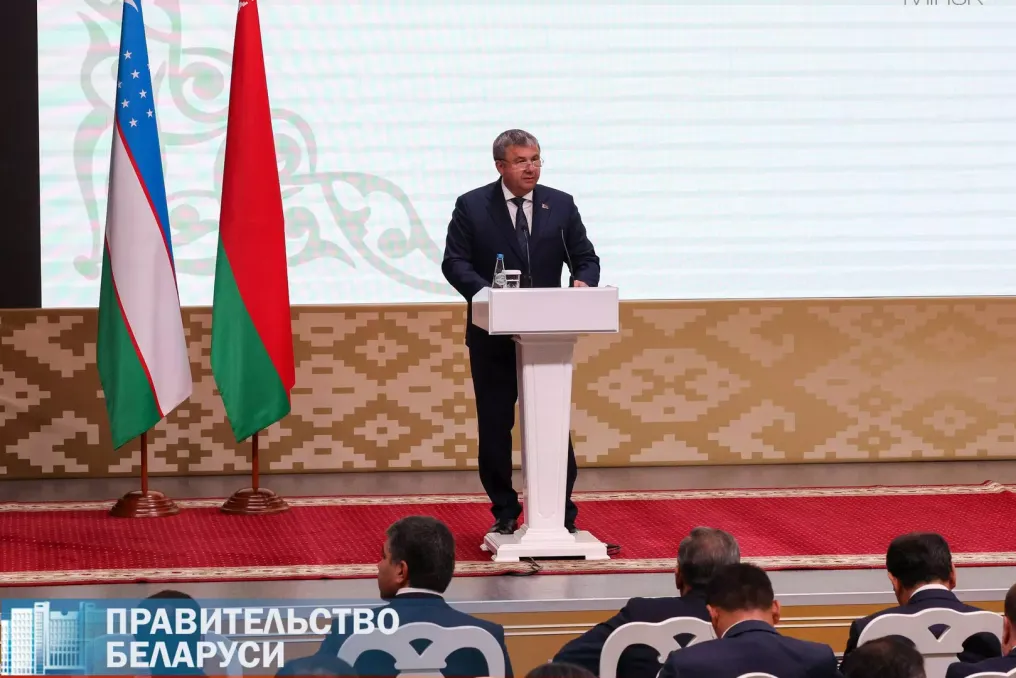
The Third Forum of Regions of Uzbekistan and Belarus has started in Minsk. Participants are discussing issues of expanding trade, industrial cooperation, and interregional interaction.
The forum, dedicated to the theme 'Regional Cooperation – The Engine of Economic Cooperation between Belarus and Uzbekistan,' opened in Minsk. This was reported by the press service of the Government of Belarus. Deputy Chairman of the Government of Belarus Yuri Shuleiko and Deputy Chairman of the Government of Uzbekistan Jamshid Khodjayev took part in the plenary session.
According to Shuleiko, systematic partnership between the two states ensures stable growth in mutual trade. He noted that over the past ten years, the volume of trade turnover has increased by more than 13 times, and in the first five months of the current year alone, it grew by almost 40 percent. Shuleiko expressed confidence that this year they will overcome the historical ceiling of trade turnover, exceeding 1 billion dollars.
The Presidents of Belarus and Uzbekistan set the goal of reaching a mutual trade volume of 2 billion dollars in the coming years. Shuleiko reported that there are 30 agreements between the regions, and another 12 documents may be signed within the framework of the forum. The parties are also considering opportunities to deepen cooperation in areas such as agricultural machinery, light industry, agro-industrial complex, wood processing, and furniture production.
Jamshid Khodjayev called the forum one of the most effective platforms for economic cooperation between the two countries. He emphasized that direct contacts are being established between the regions on this arena, and the agreements reached are transforming into real investments and joint production. Khodjayev confirmed that Belarus remains one of Uzbekistan's key strategic partners. Last year, trade turnover grew by 25 percent and approached 1 billion dollars.
A military-patriotic forum for participants of the 'Vatan Tayanchi' movement took place in the Syrdarya region, dedicated to nurturing youth in the spirit of love for the Motherland, respect for national values, and a sense of responsibility for the country's fate.
The event was organized by the Department of Defense Affairs of the Syrdarya Region. Representatives from the Department of Defense Affairs, the Committee of Youth of Uzbekistan for the Syrdarya Region, the Public Council of the Ministry of Defense, the Emergency Situations Department, the Department of Preschool and School Education, as well as instructors for basic training before conscription and members of the 'Vatan Tayanchi' movement participated.
The forum discussed issues of strengthening the military-patriotic spirit among young people, improving their knowledge and skills, and raising worthy defenders of the Fatherland. Additionally, an open discussion was held with participants, during which suggestions and initiatives from young people were heard.
It was emphasized that ensuring the active participation of youth in the reforms being carried out in the country, fostering a sense of belonging to the fate of the Motherland, and increasing interest in military service are among the most important tasks.
At the end of the forum, active and exemplary members of the 'Vatan Tayanchi' detachment were recognized. They were also solemnly awarded recommendations providing benefits when enrolling in higher educational institutions.
Fakhriddin Nazarov, a member of the 'Vatan Tayanchi' movement from Gulistan, shared his impressions, noting that the forum left a deep impression on him. He stated that he learned a lot about how honorable and responsible military service is, and how great the role of youth is in ensuring the peace and security of the country. Communication with experts prompted him to set clear goals for himself in the future. Nazarov added that such meetings help strengthen youth patriotism and deepen their understanding of their duty to the Motherland, and he intends to work for the good and peace of the country while constantly improving his knowledge and abilities.
Thus, this military-patriotic forum held in Syrdarya contributed to strengthening the youth's love for the Motherland, respect for national values, and sense of responsibility for the country's fate, becoming an important stage in educating patriotic youth who will contribute to the peace and development of the state.