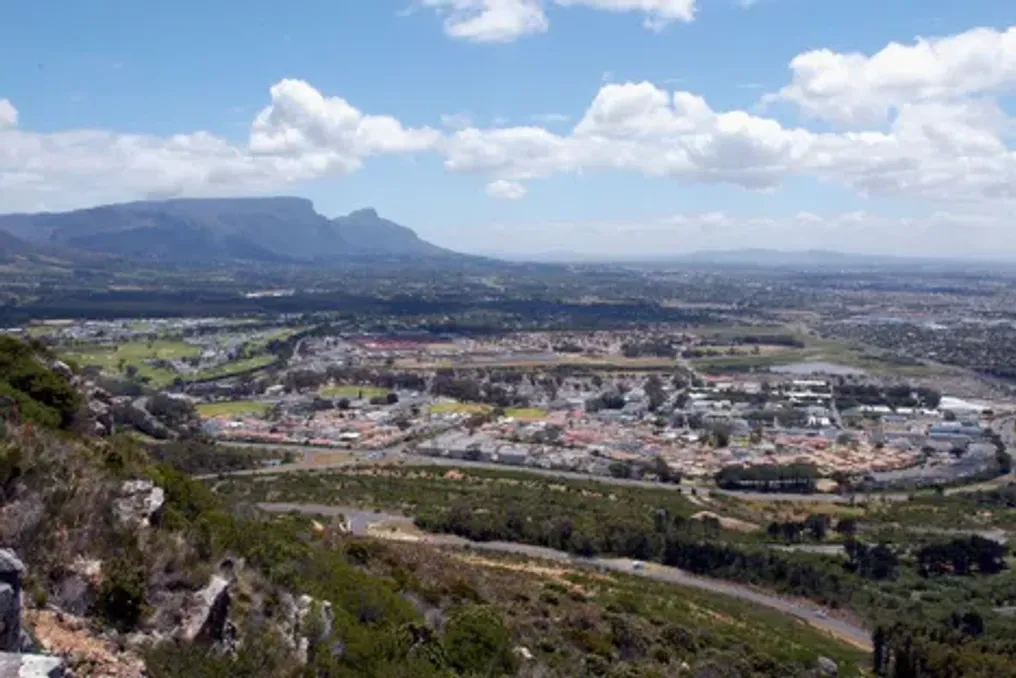
In South Africa, urban planners play a key role in changing the spatial landscape, addressing historical inequality, improving access to opportunities, and guiding development to benefit both people and the environment.
Focus on the Elite Segment
Cape Town is witnessing active construction of exceptional homes in the high-end price segment, while insufficient housing is offered for the middle class. Julia Finnis-Bedford, founder of Amazing Spaces, noted that she develops luxury homes in Constantia, primarily targeting emigrants and foreign buyers, as this is where demand and market support exist. However, she admitted that this topic causes her discomfort, as she was once part of this sphere.
According to Amazing Spaces, the region is not building enough housing for people who live and work there permanently, especially for families without access to foreign currency or emigration budgets. Finnis-Bedford explains this due to the high cost of development: land, construction costs, and time are expensive. Delays in plan approval can make maintenance costs too high, forcing developers to focus on higher price segments where margins can compensate for such delays, often driven by economic viability rather than vision.
Construction Cycle and Need for Change
Amazing Spaces asserts that this cycle continues: developers build where financial indicators allow, leading to limited supply in the middle segment and rising prices. The company insists that a shift in approach is necessary. While investment and elite construction are important, faster and more efficient plan approval is also required to broaden construction. Finnis-Bedford emphasized that, as a global city, Cape Town must remain a city that works for its residents, and to achieve this, the construction process needs simplification at all levels, not just the highest.
Impact of Court Decisions on the Market
Meanwhile, Finella Botes, a high-end real estate consultant at Seeff Atlantic Seaboard, pointed out that the Constitutional Court's decision regarding the Tafelberg site has broader implications than just one property. She stated that the court ruled the sale of the site in Sea Point illegal and ordered both the City of Cape Town and the Western Cape Government to report on how they intend to fulfill their constitutional obligations regarding affordable housing in the city center and surrounding areas. Botes believes that despite disagreements over the ruling, it is clear that well-located land has become one of Cape Town's most valuable and debated assets.
She added that this ruling will not change the luxury real estate market overnight, as the demand for quality housing in areas like Waterfront, Clifton, Bantry Bay, and Fresnaye remains exceptionally high. However, in her opinion, this decision will draw much more attention to how strategically located land will develop in the future. Botes notes that real estate markets do not exist in isolation; planning decisions, infrastructure, housing policy, and development influence long-term land value.
Role of Urban Planning and Investment
Previously, Zinhle Nkongwane, an urban planner, stressed that urban planning goes beyond zoning regulations or designating building sites. In her view, it is about creating inclusive, sustainable, economically viable, and resilient communities for future generations. Nkongwane reiterated that urban planners in South Africa play a significant role in transforming the spatial landscape by eliminating historical disparities, improving access to opportunities, and directing development in the interest of society and the environment.
She also noted that every urban planning decision affects how people live, work, travel, and interact with the environment. The task is to find a balance between growth, environmental sustainability, infrastructure, and community needs as cities evolve. Ayanda Xaba, an investment analyst at the Development Bank of Southern Africa (DBSA), speaking at the SAIBPP conference, highlighted the importance of expanding markets through reviewing property registers. She believes that transformation should lead to the creation of an industry where opportunities are sustainable. Xaba stated that participation opens doors, but ownership creates sustainability, wealth, and long-term inclusivity, and the industry's task for the next decade is to ensure that more South Africans not only participate in the real estate sector but also build, own, and grow within it.
Real Estate Market Statistics
Nathan Scott, a Cape Town real estate strategist, reported last week that the average property price in the Western Cape in the first quarter of 2026 was R3,357,917, which is 72% higher than the national average of R1,951,230. He also noted that Gauteng now accounts for 50.8% of all national property transactions. The strategist added that to secure a mortgage for a R2.5 million property—a standard three-bedroom family home in Bellville, Durbanville, or the Wynelands corridor—a household would require a net income of approximately R55,000 to R60,000 per month.