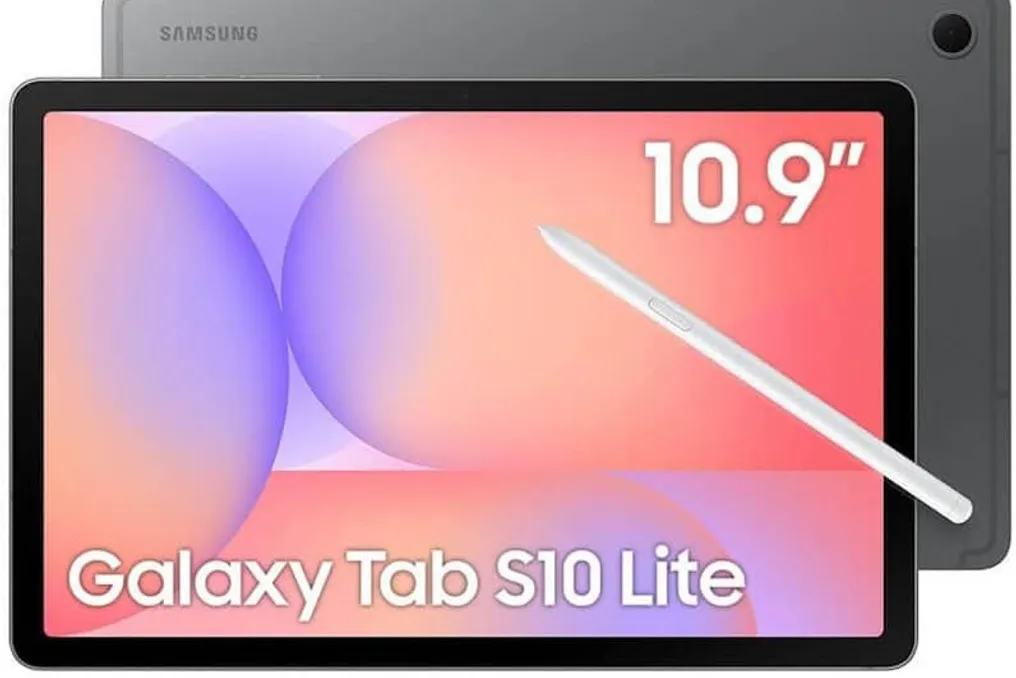
The Samsung Galaxy Tab S10 Lite presents itself as a viable alternative for users seeking a more robust tablet without incurring the costs of top-tier market models. A detailed analysis of the device reveals its technical specifications and its strengths and weaknesses.
Tablet Technical Specifications
This tablet features a 10.9-inch LCD screen with a resolution of 2304 x 1440 pixels, a 90 Hz refresh rate, and a maximum brightness of 600 nits. In terms of memory, it is available in 128 GB or 256 GB internal storage versions, which can be expanded via a microSD card up to 2 TB. RAM options are 6 GB or 8 GB. Processing is handled by the Samsung Exynos 1380 (octa-core), and the battery has a capacity of 8,000 mAh, supporting charging up to 25W. The cameras include an 8 MP rear camera and a 12 MP ultra-wide front camera.
Design and Screen Quality
Structurally, the Galaxy S10 Lite has a metallic body with a thickness of 6.6 millimeters and weighs 524 grams, which may cause discomfort during prolonged use without support. Visually, it features a considerably thick black bezel around the screen, distinguishing it from premium devices that usually display screens covering the entire front of the device. Although the display offers good sharpness for reading and watching videos, the use of LCD technology results in less vibrant colors compared to more expensive models. The 90 Hz refresh rate contributes to smoother navigation and application operation, despite the brightness not being ideal, making use difficult under direct sunlight.
Performance and Hardware Capabilities
Despite the finish suggesting a lower-cost product, the hardware set provides a differentiated experience. Thanks to the Exynos 1380 processor and 6 GB or 8 GB of RAM configurations, it efficiently handles daily tasks such as browsing the web, watching videos, and using social media. It can also handle some more demanding games, although it is not suitable for running the most advanced titles available in the Android ecosystem. With 128 GB or 256 GB of storage, the possibility of adding a microSD card up to 2 TB ensures ample space for media and applications, positioning it as a superior tablet to basic ones, even if it does not match the most expensive models.
Software Features and S Pen
One of the biggest attractions of the model is the inclusion of the S Pen stylus in the Galaxy Tab S10 Lite box. This accessory operates without needing a battery and allows the user to take notes or draw directly on the screen, recognized by the tablet's software. Furthermore, the device is compatible with Samsung DeX mode, allowing it to function almost like a complete computer when connected to an external monitor, keyboard, and mouse, although its functionality remains limited. Samsung has also guaranteed up to seven years of updates for the model, offering longevity in receiving new Android versions.
Battery Life and Charging
The Galaxy Tab S10 Lite battery has a capacity of 8,000 mAh, which estimates about eight hours of uninterrupted use, whether browsing or watching videos. This autonomy is sufficient to cover a day of work or study away from home, depending on the screen brightness conditions. However, the recharging process is a negative point, as it is restricted to 25W power. Additionally, the charger provided in the package is even slower, causing the tablet to take almost three hours to reach 100% charge, which requires patience from the user.
Summary of Advantages and Disadvantages
The main benefit of the Galaxy Tab S10 Lite lies in its excellent cost-benefit ratio for students and professionals, as it combines a smooth 90 Hz screen with the included S Pen stylus at no extra cost. Samsung's commitment to seven years of updates is another relevant factor. On the other hand, performance is limited for heavy tasks, the design is hampered by the very wide bezels around the screen, and the excessively long charging time completes the list of disadvantages, indicating that the device requires certain concessions from the consumer to maintain a more accessible price.