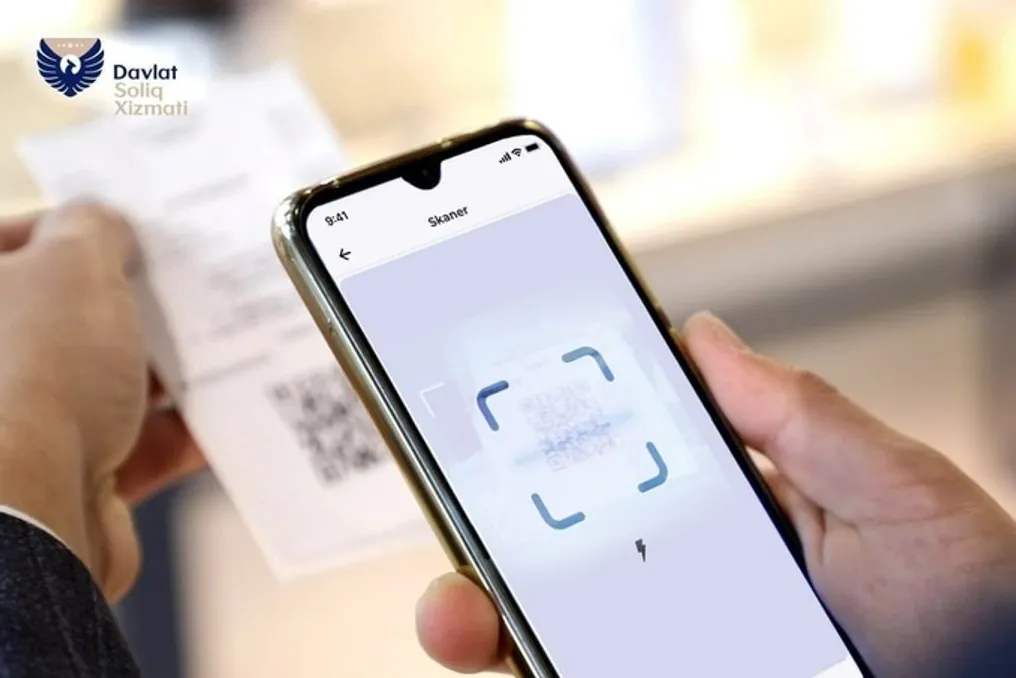
A proposal has been put forward in Uzbekistan to abandon the large-scale tax cashback provided for purchasing receipts and transition to more targeted support methods. This initiative is presented in an analytical material prepared by the Institute for Reducing the Shadow Economy and Fiscal Analysis at the Ministry of Economy and Finance.
Initially, the tax cashback was introduced as a temporary tool to form a tax culture. Its main goal was to encourage consumers to demand fiscal receipts, thereby increasing the transparency of retail trade. The state effectively involved the population in public tax supervision by returning 1% of the purchase amount to citizens.
The document's authors believe that the set task has been largely achieved: the habit of presenting a receipt has taken hold, and tax authorities have gained modern digital control tools over the past years, including online POS terminals, electronic invoices, digital marking, identification of goods and services, as well as big data analysis and information exchange capabilities between systems.
Rising Budget Costs
Despite achieving its goals, government budget expenditures for paying out the cashback are continuously increasing. According to the data presented, 820 billion soms were allocated for this purpose in 2022, 1.24 trillion soms in 2023, and 1.05 trillion soms in 2024. The forecast for 2025 is 1.51 trillion soms, and for 2026, calculated based on payments for January-May, it may reach 1.81 trillion soms.
For comparison, only 900 billion soms are planned for the construction of preschool institutions in 2026, which is approximately half of the projected spending on tax cashback.
Economic Arguments Against Cashback
The analytical report indicates that the increase in budget expenditures is no longer accompanied by a proportional increase in tax revenues. For example, turnover tax revenues grew from 1.65 trillion soms in 2021 to 3.07 trillion soms in 2025, but the growth rate slowed down after the initial period of implementing digital systems.
Another argument against mass cashback is that a significant portion of payments goes to purchases made in large retail chains, which already operate in the legal sector. Thus, the budget is effectively subsidizing operations that would have occurred regardless of the existence of cashback.
In May 2026, the total amount of tax cashback was 146.6 billion soms. Of this amount, 15.7 billion soms, or 10.7%, were credited to the top ten retail brands. Korzinka received the largest volume of cashback in May with 9.4 billion soms across 6.87 million receipts. This was followed by Havas with 1.24 billion soms, Olma with 1.2 billion soms, UNG Petro (Carvon) with 824 million soms, Safia with 820 million soms, Afsonalar vodiysi with 761 million soms, KFC with 453.3 million soms, Cheese Day with 349.4 million soms, Makro with 336.5 million soms, and EVOS with 292.9 million soms.
Alternative Proposals
The authors insist that the long-term sustainability of the tax system should be based not on constant material rewards for compliance with the law, but on ensuring the transparency of economic processes, a high level of digitalization, and the inevitability of detecting violations.
Furthermore, mass refunds have begun to facilitate the improper use of the mechanism, as cases of issuing fiscal receipts without actual sales of goods solely for receiving budgetary compensation are being recorded.
As an alternative, it is proposed to shift the focus from the principle of 'every receipt is encouraged' to the principle of 'control is encouraged in the most risky sectors of the economy.' One such option is state lotteries for buyers who register receipts in sectors with high tax risks, such as the catering industry and small retail stores.
It is estimated that up to 100 billion soms annually can be allocated for such lotteries with major prizes, such as cars, tour packages, and other valuables worth over 5 million soms. According to the document, this would reduce budget expenditures by almost twenty times.
Delineation of Support Mechanisms
It is important to note that the authors distinguish between mass cashback and targeted VAT refunds for citizens included in the social registry. The latter mechanism has a social orientation—reducing the tax burden for vulnerable segments of the population, rather than stimulating consumer activity.
In conclusion, it is emphasized that tax cashback played an important role in forming a modern tax administration system, contributing to the development of a receipt culture and increasing trade transparency. Nevertheless, the development of online cash registers, marketplaces, digital marking, artificial intelligence, and big data allows for a gradual transition to an 'intelligent model' of tax control, minimizing the need for constant mass budgetary stimulation.
According to the Central Bank, as of July 1, Uzbekistan's international reserves amounted to $63.76 billion. During this month, this figure decreased by $6.8 billion.
Change in Reserve Composition
According to information from the Central Bank, the reduction in reserves occurred due to the decrease in gold prices on the global market. The value of gold in the reserves fell from $61.4 billion to $55.75 billion.
Physical Volume of Gold
Despite the decrease in value, the physical volume of gold increased: it rose from 13.6 million troy ounces to 13.88 million troy ounces.
Structure of International Reserves
Currently, gold accounts for almost 87.4 percent of total international reserves. The remaining part of the reserves is formed by foreign currency reserves and other assets.