In an era where glossy tiles, designer rugs, and imported decor are popular, many ancient crafts are gradually disappearing from daily life. In the Kashmir region, homes that previously relied on handmade items for floor coverings are increasingly switching to modern alternatives.
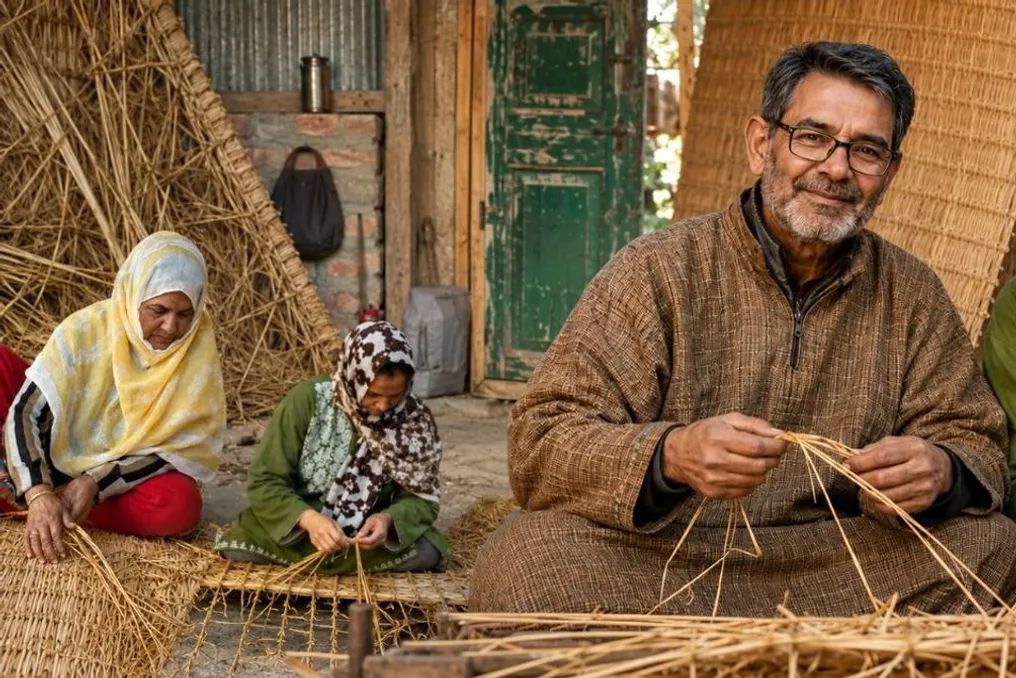
This change affects not only interior design but also leads to a gradual loss of skills and traditions that shaped life in the valley. For many generations, Kashmiri homes were familiar with Vaguv mats (also known as Vagve or Uguv). These items were woven by hand from dry rice straw and marsh reeds, providing warmth in winter and coolness in summer.
Before the early 2000s, it was difficult to find a home without such a mat. However, changing lifestyles and the emergence of cheaper factory substitutes pushed this craft to the background. As demand decreased, artisans abandoned their looms and sought work in other fields, and the age-old tradition began to fade.
Challenges for Kashmiri Crafts
Kashmir has long been renowned for its craftsmanship—from pashmina shawls to walnut wood carving and papier-mâché. While some of these crafts continue to thrive, many lesser-known traditions struggled to survive. Uguv weaving was one such tradition. As the younger generation shifted focus to education, urban employment, and digital careers, fewer people were interested in learning the craft. Without masters to pass on knowledge, the future of Uguv looked uncertain.
Family Initiative to Preserve Culture
Nevertheless, in Srinagar, one family decided not to let this craft disappear. Ghulam Hassan and his daughter Tanzila spent recent years trying to revive Uguv weaving—not only as a cultural tradition but also as a source of livelihood for local families. What started as a small effort in their own home gradually turned into a community initiative.
Tanzila, a 24-year-old college student from Dalgate, learned the craft by watching her father work. By the early 2000s, very few artisans still practiced Uguv weaving due to the continued drop in demand. Concerned that the craft might completely vanish, Ghulam Hassan began its revival after 2020. As interest slowly returned, neighbors and local women started approaching the family to learn the skill.
Tanzila soon joined her father's efforts, helping to expand production, establish connections with buyers, and attract young artisans to the trade. She told The Better India: 'I sat with my father and watched him work. I slowly mastered this art.' She added: 'What started as a way to support my family became both my hobby and a source of income for my education.'
Today, their home functions as a training center where artisans gather to learn and work together. Their efforts help revive not just a craft, but an entire ecosystem of knowledge that was once an important part of Kashmiri cultural life.
Mat Making Technology
The process begins with local herbs and reeds collected from the marshes of Kashmir. The materials are dried, sorted, and prepared before all the weaving work is done by hand. A standard mat usually takes about four days to complete and is often made jointly by two artisans.
Although the basics can be learned relatively quickly, artisans note that creating complex patterns requires patience and many years of practice.
Role of Women in Craft Revival
The revival of Uguv is closely linked to the participation of women. Traditionally, weaving herbal mats was done by women in rural Kashmir, and the return of this craft reopens opportunities for them to earn while staying at home. According to the family, more than 20 women have been trained in Uguv weaving in recent years.
Many of them now contribute to household income by working from home, thereby helping to preserve a craft that was on the verge of extinction. Among them is 43-year-old Shameema. She notes that the increased demand for Uguv has changed her life. 'Demand has increased both within the Valley and from other parts of India in recent years. This has created opportunities for women like me,' she told The Better India.
Shameema, a mother of three, now teaches about a dozen women in her neighborhood after fulfilling her daily chores. Working about five hours a day from home, she earns between 10,000 and 12,000 rupees monthly. She says: 'This work makes me proud. I don't have to leave my home, and I can still earn and support my family.'
For many women, Uguv weaving offers more than just income; it provides flexibility, financial independence, and a chance to preserve a skill passed down through generations.
Craft's Place in Modern Life
As demand grows, so do incomes. Depending on the size and complexity of the item, artisans earn from 300 rupees for small items like doormats to 2,000 to 3,000 rupees for larger, intricately woven rugs. For families engaged in this full-time, the craft has become a reliable source of income, especially when orders come from outside Kashmir.
Demand often increases during tourist seasons and festive periods, giving an extra boost to earnings. The products are no longer limited to local markets. Uguv mats are now shipped to cities like Delhi, Mumbai, and Bangalore through craft exhibitions, fairs, and social media orders. Hotels, cafes, and boutique guesthouses have become among the biggest buyers, attracted by the natural texture and eco-friendliness of the products.
What was once a dying craft is gradually finding new life as a small but growing rural enterprise. If Vaguv was once valued primarily as a household necessity, today these mats are increasingly used as decorative elements in cafes, restaurants, and hotels, where their rustic charm attracts customers looking for a handmade and sustainable alternative.
Innovation and Heritage Preservation
Nazir Ahmad, a resident of Budgam, switched to Uguv mats after many years of using synthetic alternatives. He shares: 'I used modern mats for years, but Uguv feels more comfortable and natural. It gives a sense of warmth and reminds us of our traditions.'
Artisans are also adapting to changing tastes. In addition to traditional floor mats, they now make doormats, tablecloths, wall hangings, and decorative elements. Tanzila explains: 'We used to only make herbal mats. Now customers ask for new designs and products. The younger generation wants creativity in everything.'
This willingness to innovate has helped keep the craft relevant to modern consumers without losing its traditional essence.
Persistent Challenges
Despite the revival, Uguv weaving continues to face difficulties. One of the most serious is the decreasing availability of raw materials. The marshes around Srinagar, once rich in reeds and herbs used for weaving, are shrinking due to pollution and land encroachment. Tanzila notes: 'Sometimes, when we get large orders, we have to search for grass in rural areas, which increases our costs.'
The problem goes beyond rising costs. Artisans believe that the future of Uguv is closely tied to the future of Kashmir's wetlands. Without access to these natural resources, long-term maintenance of the craft could become increasingly difficult.
Personal Mission and Support
For Ghulam Hassan, the revival of Vaguv is deeply personal. Having learned the craft in childhood, he personally witnessed its decline. Today, he is beginning to see signs of hope. Thanks to growing awareness, participation in exhibitions, and wider reach through craft events, interest in Uguv is slowly returning. He says: 'Before, this work was limited to our home. Now almost every house around us is involved. We work as a family to preserve this art.'
Tanzila played a vital role in this process, bringing fresh ideas, establishing connections with new markets, and encouraging young artisans to learn the skill. Together, father and daughter transformed a fading tradition into a shared endeavor.
Their story serves as a reminder that preserving heritage does not always mean freezing things in time. Sometimes it means finding new ways for old traditions to survive. Although there are currently no specific government training programs for Uguv artisans, the artisans report receiving support through craft exhibitions and fairs, where they can display and sell their products. These opportunities have helped them reach new customers, secure orders, and present the craft to audiences outside Kashmir.
The renowned actress Himani Shivapuri, whose name is well-known in both the Hindi film and television industries, is now spending time in the tranquility of a village, far from the hustle and bustle of Mumbai. She regularly shares videos from her village, delighting her fans.
Strolls through Mountain Landscapes
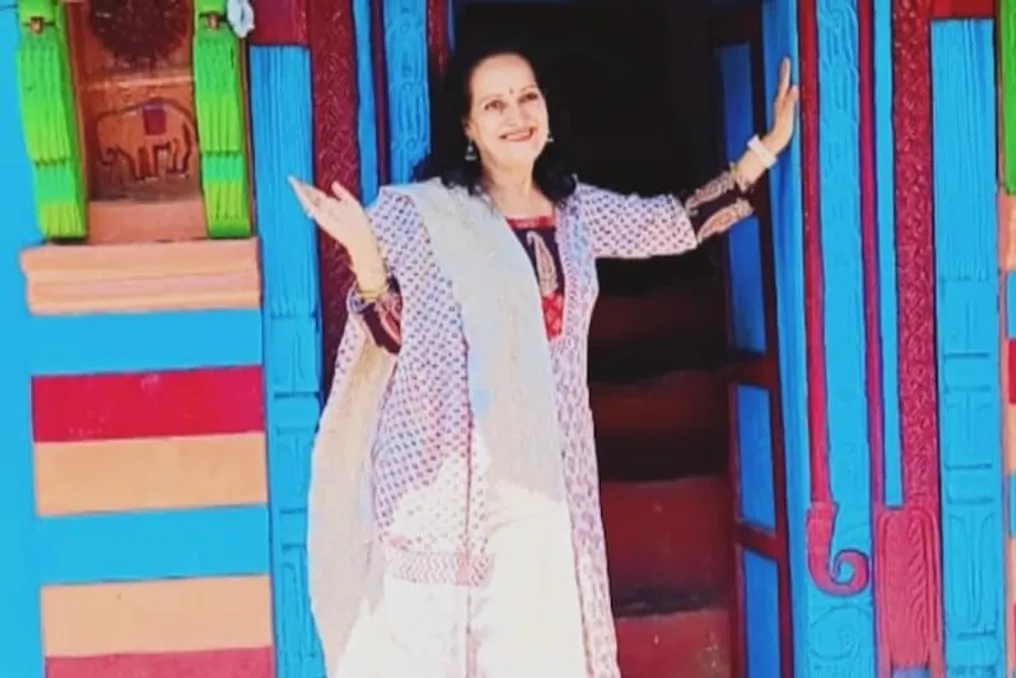
Currently, Himani Shivapuri is in the village of Bhatwari, located in the Uttarkashi district of Uttarakhand state. Here, she is enjoying a peaceful life amidst the mountains and has shown her fans the beauty of her hometown. She also introduced her followers to her relatives.
The actress shared a video filmed during a walk in the mountains. The clip featured fields that are currently in decline, as well as various types of trees. Among the plants shown by Himani were a view of a payan tree, as well as special fruits and wild pears growing in the mountains. In the video caption, Himani wrote that she was walking in the mountains with her aunt, who told her about various fruit trees in the region, such as kafle.
Showcasing the Ancestral Home
Himani also posted photos of her ancestral home located in the village. In the pictures, she looks very happy. In the caption for the photos, she wrote: “Good morning. Village peace, fresh air, love of loved ones, vegetables from the garden, sema beans, water from the mountain waterfall, absolutely pure spring water... What else can one list?”
Despite her high status as an actress, Himani leads a simple life in a mountain village, enjoying happy and peaceful moments like ordinary people. Fans expressed joy upon seeing her photos and videos, and the sight of the beautiful mountain village became a real gift for them.
Actress's Activities and Career
It should be noted that in 2025, Himani Shivapuri took on the responsibility of caring for her village of Bhatwari and is constantly working on its development. In terms of professional activities, the actress has acted in popular films such as 'Hum Aapke Hain Koun', 'Jodi No. 1', 'Dilwale Dulhania Le Jayenge', 'We Together', 'Dulhan Hum Le Jayenge', and 'Haad Kar Di Apne'.
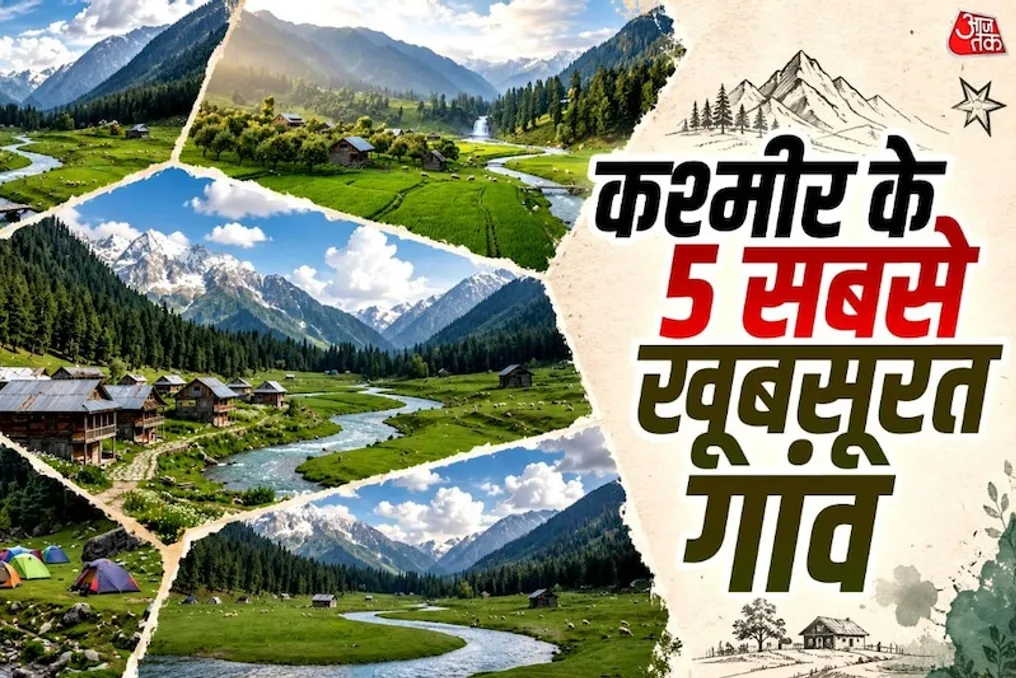
Kashmir is known as paradise on earth due to its snow-capped peaks, green valleys, and tranquil lakes, which attract millions of tourists annually. However, most visitors stick to popular spots such as Gulmarg, Pahalgam, Sonamarg, Yusmarg, and Srinagar. The true beauty of Kashmir is hidden in small, less-explored villages and valleys that can capture travelers' hearts with their natural charm.
Cupwara and Anantnag Valleys
The Bangus Valley, located in the Kupwara district, is one of the least explored areas. The valley's beauty is complemented by dense pine forests, high mountains, and picturesque streams like Tilwan Kul, Dauda Kul, and Roshan Kul. This area, rich in flora and fauna, is ideal for nature lovers, with the best time to visit being from April to October.
In the Anantnag district, Chatpal is situated, considered one of the quietest and most scenic places. Surrounded by dense forests and lush mountains, Chatpal is perfect for relaxing in nature. Visitors can take short hikes through the surrounding forests. It is pleasant to be there in the summer, and for enjoying the snow, it is recommended to come in December or January.
Adventures in the Valleys
The Daksum Valley, located on the banks of the Bhringi River, presents a wonderful combination of natural landscapes and opportunities for active recreation. Here, one can engage in trekking, fishing, camping, and picnics. This place is especially valued by families, couples, and adventure enthusiasts. The best time to visit is summer, while November to February is suitable for snow viewing.
The Karnah Valley, also in the Kupwara district, is famous for its green valleys and snow-capped peaks. The beauty of this valley is enhanced by villages such as Tangdar, Tithwal, Amrohi, and Saidpura. Summer is best for enjoying the green scenery, while winter is ideal for winter sports.
Lolab Valley and Wildlife
The Lolab Valley, also known as 'Wadi-e-Lolab', is distinguished by its apple orchards, waterfalls, and lush rice fields. This valley is unique because it is home to wild animals, including the Himalayan brown bear, the Kashmiri oryx, and the snow leopard. The most favorable period for visiting Lolab Valley is from April to June.