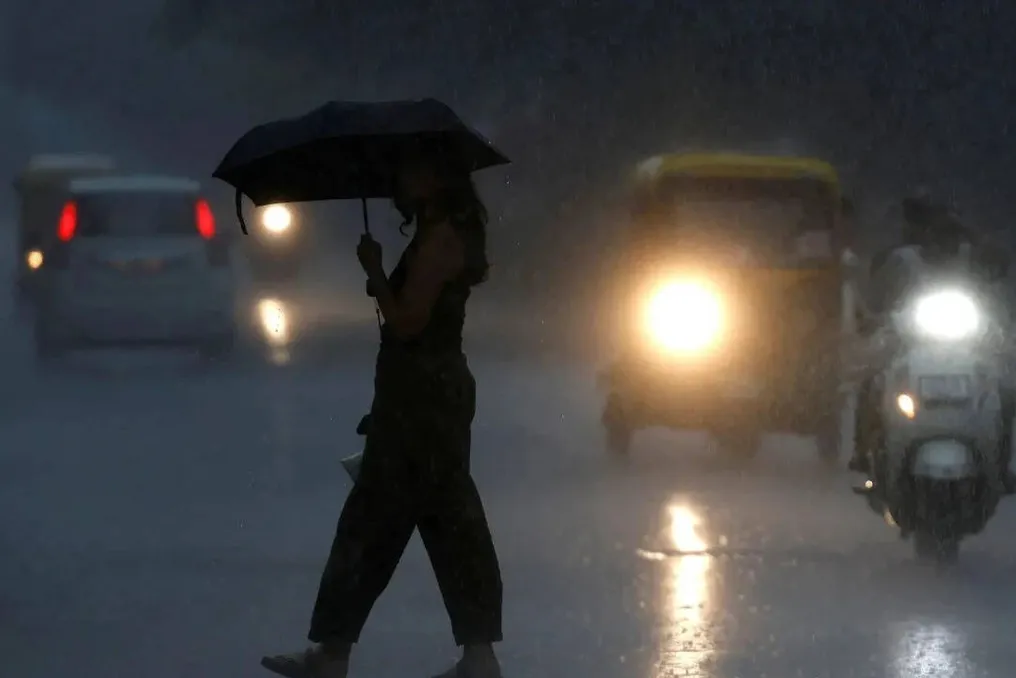
Recent rains, caused by the monsoon's recovery over the past seven to eight days in different parts of the country, have brought some relief to farmers. However, given the uncertainty related to the potential impact of El Niño and uneven precipitation, the Ministry of Agriculture has activated its ground operations. These measures include ensuring an adequate supply of seeds and other steps to guarantee the uninterrupted execution of sowing activities.
Crop and Rainfall Status
Although the overall rainfall deficit decreased from 40% on June 30th to 15% on July 8th, the area sown with summer (Kharif) crops was 21% less as of Monday compared to the same period last year. Due to low rainfall levels and the slowdown of the summer monsoon, sowing was completed on an area of about 351 lakh hectares, which is 92 lakh hectares less than 443 lakh hectares in 2025.
The area sown with the most popular Kharif crop—rice—decreased by 14%, reaching 60 lakh hectares as of July 6th, compared to 70 lakh hectares the previous year. The largest decline was seen in the sowing area of oilseeds (nearly 40%), which amounted to 66 lakh hectares versus 109 lakh hectares last year. The area sown with cotton also reduced to 63 lakh hectares from 82 lakh hectares in the previous year.
Forecasts and Government Response
This week, the IMD predicted a 'significant reduction' in rainfall activity over central India starting Thursday, portending new difficulties. Furthermore, the IMD had already warned of 'below normal' rainfall in July due to El Niño—a natural climatic phenomenon characterized by elevated sea surface temperatures in the central and eastern equatorial Pacific Ocean, which is linked to a weak monsoon in India.
Highlighting this issue in light of the forecasts, Union Agriculture Minister Shivraj Singh Chouhan stated on Wednesday that the Centre is closely monitoring the situation in 13 states: Maharashtra, Madhya Pradesh, Gujarat, Uttar Pradesh, Rajasthan, Karnataka, Bihar, Jharkhand, Telangana, Andhra Pradesh, Punjab, West Bengal, and Odisha, where Kharif sowing has been affected by the late arrival of the monsoon.
Farmer Support Mechanisms
As of Wednesday, the number of districts with rainfall deficits decreased from 262 to 178. Nevertheless, many districts received a very large amount of rainfall in a short period last week, caused by the formation of a low-pressure area over the Bay of Bengal, which caught farmers off guard. Chouhan reported that efforts to increase farmer participation in the 'Pradhan Mantri Fasal Bima Yojana' crop insurance scheme are being intensified, providing them with financial protection in case of crop losses due to adverse weather conditions.
Referring to the government's preparedness, the minister noted that an extensive monitoring system has been established considering the potential impact of El Niño. He added: 'The entire system was activated in advance and is working proactively... The El Niño monitoring cell, Crop Weather Observation Group, regional control rooms, and designated staff are continuously tracking monsoon progress, crop sowing, crop condition, and market trends.'