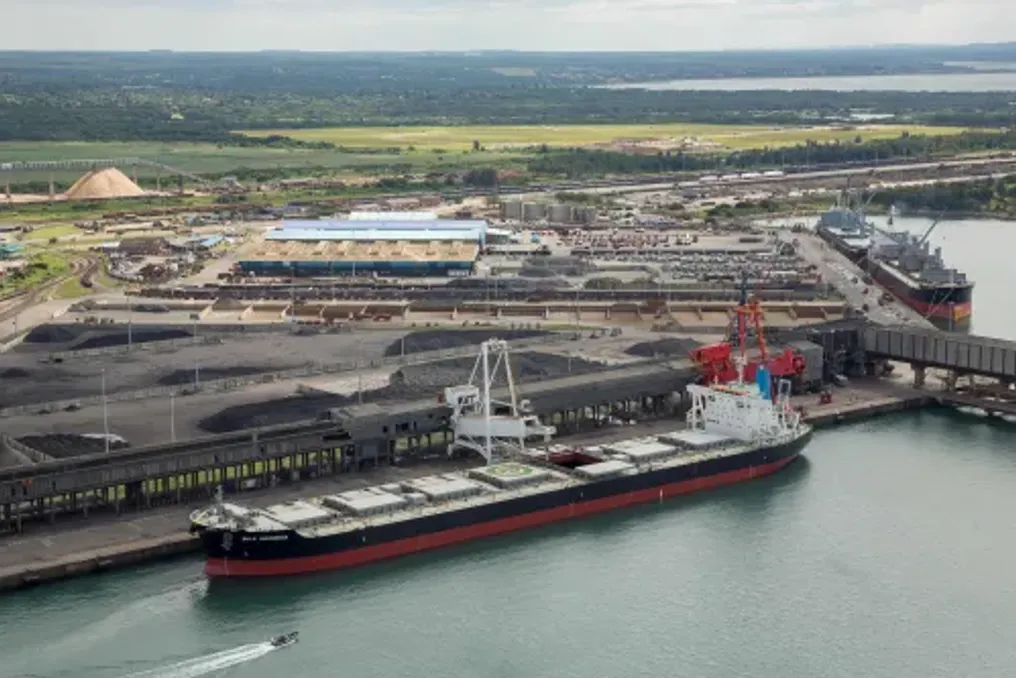
As South Africa invests billions in upgrading its port facilities, cybersecurity specialists emphasize that protecting digital infrastructure is as crucial a task as modernizing physical assets.
Digitalization and Port Vulnerabilities
South African ports are becoming increasingly digitized due to operator investments in modern technologies aimed at improving efficiency, reducing delays, and strengthening the national logistics network. However, cybersecurity experts caution that the smarter the ports become, the more susceptible they are to cyberattacks capable of disrupting trade and causing billions in economic damage.
Martin Fernandes, Business Development Manager for Operational Technologies in Africa at Fortinet, noted that modern ports have ceased to be merely physical entities, transforming into complex digital ecosystems where the functioning of every connected system is critical for uninterrupted cargo transport. He stated that a modern port is part of an extensive digital trade ecosystem requiring the coordinated operation of all systems, and a failure in one area can quickly spread across the entire supply chain.
Investments and Partnerships
These warnings come against the backdrop of South Africa's ongoing massive investments in port modernization. Transnet has announced plans to allocate R127 billion over five years to improve railway infrastructure and ports, including the Pier 2 container terminal in Durban and the dry bulk terminal in Richards Bay. Furthermore, in December 2025, Transnet signed a 25-year concession agreement with ICTSI to modernize the Pier 2 container terminal in Durban, which handles over 40% of South Africa's container traffic.
Fernandes believes that such technological breakthroughs can significantly enhance South Africa's competitiveness in the global market. He explained that yard stacking algorithms and APIs allow for more efficient linking of shipping lines, forwarders, customs, terminal operators, and logistics partners, while the security of these systems remains paramount.
New Risks and Defense Strategy
Despite promises that automation and digital connectivity will accelerate cargo processing, they also generate new risks. According to the World Bank's Port Reform Toolkit for 2025, ports are rapidly turning into interconnected infrastructure where operational technologies, cloud platforms, logistics systems, and external partners are linked via digital networks. Fernandes stressed that protecting just one network is no longer sufficient.
He emphasized that the key issue lies in identifying, monitoring, and securing every connected system, including yard systems, gate automation, remote access, operational equipment, contractor connections, and platforms linking the port to road, rail, and warehouse operations. For the safe implementation of new maritime industry technologies, the cybersecurity strategy must be revised, moving towards a comprehensive Zero Trust strategy.
Cybersecurity as Business Continuity
Cybersecurity is increasingly viewed not just as an IT problem, but as a matter of ensuring business continuity. Fernandes explained that failures in digital systems can rapidly propagate throughout the entire logistics chain. When organizations have a full view of their connected assets, can properly control access, and respond promptly to unusual activity, security acts as a factor ensuring port productivity because it supports operational movement and reduces the likelihood of failures.
South African ports remain vital for the movement of minerals, agricultural products, industrial goods, fuel, auto components, and consumer goods. Any prolonged disruption can affect exporters, retailers, manufacturers, and consumers. Fernandes insisted that improvements in the country's logistics must be accompanied by equally robust cyber resilience. He added that integrating this type of capability is both a catalyst for unprecedented benefits and a source of new threats, so cybersecurity must develop parallel to the digital protection of this critical element of the economy.
Fernandes also noted that governance must be at the center of digital transformation. Operators are obligated to develop precise asset and risk management strategies to maintain a clear overview of connected devices, systems, users, and data flows in both IT and OT environments. Once governance, workflows, and accountability are clearly defined, technology can be effectively applied to ensure necessary security measures such as network security, identity and access management, privileged access management, Zero Trust Network Access, secure remote access, and automated threat detection and response.