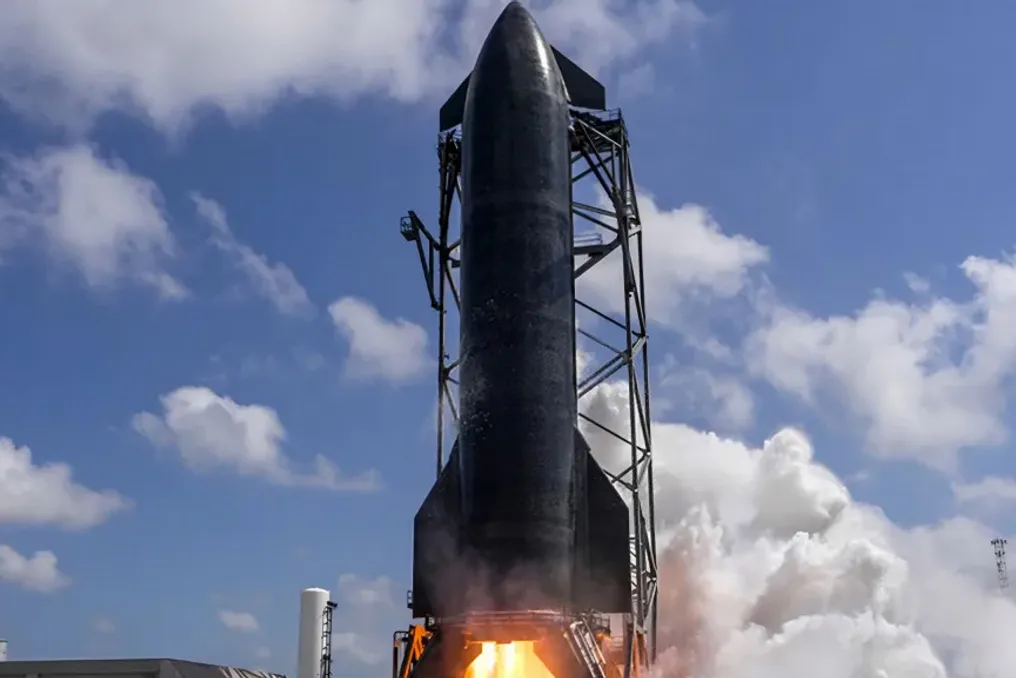
The Japanese company ispace announced on Wednesday (8th) a collaboration with SpaceX aimed at establishing a new cargo transport service to the Moon using the Starship spacecraft. This initiative is planned to begin operations in 2030 and aims to provide a lower-cost option for clients wishing to send equipment to the celestial body.
Partnership Details and Capacity
Under the established agreement, ispace, headquartered in Tokyo, secured capacity to transport up to 500 kilograms in a future Starship mission destined to land on the lunar surface. Additionally, the company will develop a vehicle designed to receive cargo from multiple clients in a single trip.
This strategy strengthens ispace's presence in the lunar infrastructure market by combining its new service with the development of its own landing modules. Concurrently, SpaceX reinforces its transport offering for commercial missions focused on lunar exploration.
Business Model and Investment
The new business format was presented by ispace as a cargo consolidation service, targeted at clients looking to send equipment to the Moon without contracting an exclusive mission. The core proposal is to allow several projects to utilize the same flight available on Starship.
The company detailed that the investment secures 500 kilograms of cargo capacity in a mission scheduled to start in 2030, with the negotiated value for this capacity being US$ 50 million. ispace clarified that this new service will complement the development work of its own lunar landing vehicles.
While cargo integration expands commercial opportunities, ispace will continue to invest in its missions with the Ultra module, which aims to perform three soft landings on the Moon by 2030. One of these endeavors is part of the Commercial Lunar Payload Services program, managed by NASA.
Executive Statements
Takeshi Hakamada, CEO of ispace, commented on the initiative, stating that the partnership should significantly boost the company's growth in the lunar infrastructure sector. He declared: 'The partnership with SpaceX will exponentially accelerate our growth in the lunar infrastructure market.'
Stephanie Bednarek, Vice President of Sales at SpaceX, also highlighted the increased collaboration between the two corporations. She mentioned that the service offered by ispace increases the chances for clients interested in sending small loads to the natural satellite.
Bednarek stated in a declaration to Reuters: 'The integration services offer a valuable path for smaller loads to secure a trip to the Moon.'
Space Cooperation Context
The collaboration between the companies does not prevent them from entering into new agreements with other entities. NASA plans to use Starship in its first lunar landing mission, scheduled for 2028, within the Artemis program. Another industry company, Astrolab, has already reserved space for a future flight of the spacecraft.
Hakamada added that the concept of this cargo integration model originated with SpaceX itself. The executive observed that despite the possible entry of new competitors into the segment, few companies possess the necessary capacity to transport equipment, execute the lunar landing, and maintain services after reaching the surface.