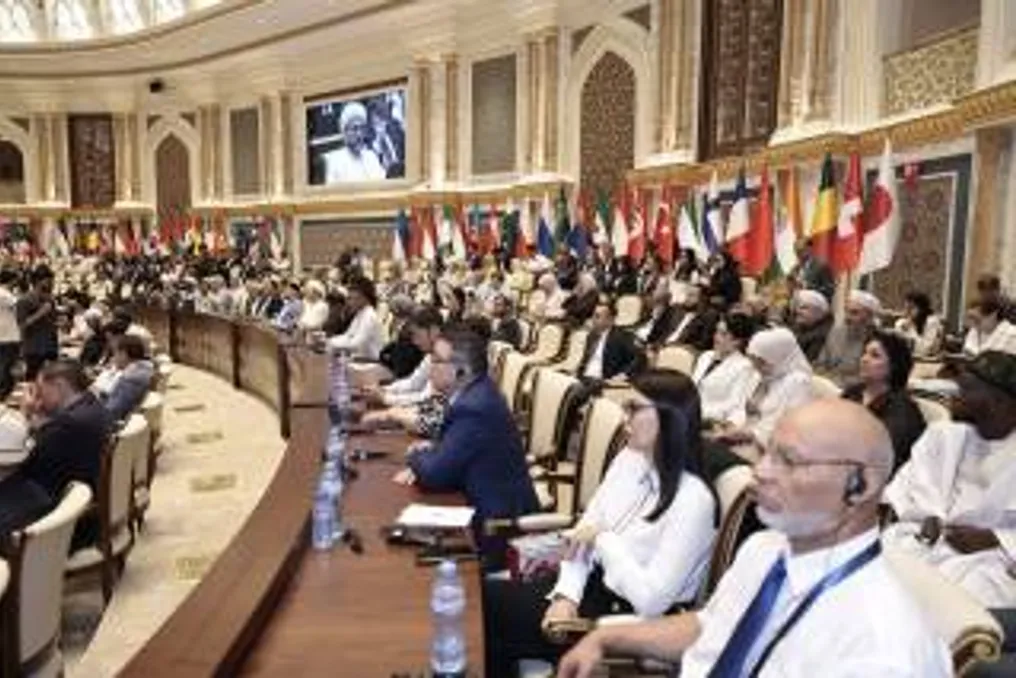
A document formalizing the I International Forum of Islamic Civilization was adopted in Tashkent. A number of international agreements were also signed during this forum.
A document formalizing the I International Forum of Islamic Civilization was adopted in Tashkent. A number of international agreements were also signed during this forum.
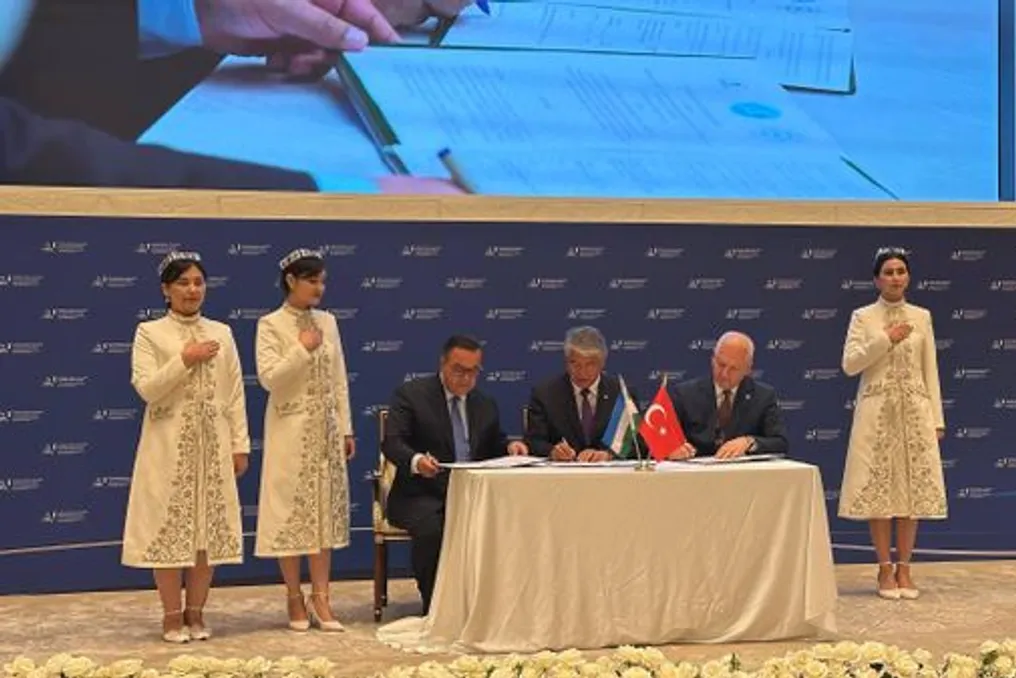
Forum participants approved a 'roadmap' for the development of Islamic Civilization in Uzbekistan for the period from 2027 to 2030. Furthermore, memorandums and cooperation agreements were concluded between international organizations, research centers, and cultural institutions.
In particular, the Islamic Civilization Center reached agreements with ICESCO to establish the Imam Bukhari International Prize, as well as with TURKSOY and the International Turkic Academy on the digitization of the history and cultural heritage of Turkic peoples. Cooperation in the field of creating a unified digital platform and AI-based analysis was also discussed.
ICESCO Director Salim bin Muhammad Al-Malik announced during the forum the creation of an alliance based on the Islamic Civilization Center. He emphasized that participants are advancing initiatives to create a unified international digital platform for Islamic civilization, a global digital library, and an international encyclopedia of Islamic civilization, as well as establishing an international prize.
Salim bin Muhammad Al-Malik called on states, international organizations, scientific institutions, universities, museums, libraries, and public associations to work together on implementing these endeavors. The forum will continue until July 11 in the cities of Samarkand and Termiz. Participants and guests were presented with silver commemorative coins issued by the Central Bank of Uzbekistan on the occasion of the forum.
On the second day of the International Forum on Islamic Civilization, held from July 7 to 11 in Tashkent, Samarkand, and Termiz, numerous interesting presentations and diverse events took place.
This forum was organized with the assistance of the Center for Islamic Civilization, the Committee of the Republic of Uzbekistan for Religious Affairs, the international scientific research centers named after Imam Mutaridiyya, Imam Bukhari, and Imam Termizi, the Administration of Muslims of Uzbekistan, the Academy of International Islamic Studies of Uzbekistan, as well as ICESCO—an organization for education, science, and culture in the Islamic world. The issues discussed at the forum acquired significant relevance.
The main goal of the event was to reveal the true essence of Islamic civilization, demonstrate its enormous contribution to scientific, cultural, and spiritual development, and to widely promote the ideas of peace, tolerance, and knowledge in the modern world.
One of the events on the second day was media events and presentations. A presentation titled 'Center for Islamic Civilization in Uzbekistan: Global Platform for Heritage, Science, and Knowledge' was presented by Rustam Jabborov, a researcher at the Center for Islamic Civilization in Uzbekistan. This presentation emphasized that this Forum is an important international platform for studying the rich scientific and spiritual heritage of the Islamic world, presenting it to the global community, and further developing dialogue and cooperation between civilizations.
Another key event of the day was the presentation of the photo album 'Shavkat Mirziyoyev - Enlightened Leader,' published in collaboration with IRCICA. It was noted that the initiatives of the President of the Republic of Uzbekistan, Shavkat Mirziyoyev, presented at the UN General Assembly, marked a new stage in the study and wide promotion of the rich scientific and spiritual heritage of Islamic civilization. It was emphasized that efforts to implement such initiatives, aimed at demonstrating the great contribution of scientists of the Central Asian era to world civilization, as well as preserving and studying the scientific heritage of great sages such as Imam Bukhari, and promoting the principles of knowledge and religious tolerance internationally, are being carried out consistently.
Within the framework of the event, publications were presented that the Center for Islamic Civilization in Uzbekistan is implementing in cooperation with the World Society (WOSCU) for the preservation of Uzbekistan's cultural heritage. Among them are the publications 'Rare Manuscripts of the Quran in Uzbekistan,' '114 Rare Manuscripts of the Quran Worldwide,' and 'The Great Langar Quran: History and Truth.' These publications are an important result of a large-scale scientific and educational process.
The essence of these publications is that they study the manuscripts of the Holy Quran not only as sacred monuments but also as sources of history, calligraphy, book art, papyrology, parchment science, cultural connections, and civilizational memory.
The first book, 'Rare Manuscripts of the Quran in Uzbekistan,' aims to systematically catalog the manuscripts of the Holy Quran stored in the country's archives for the first time. It collects information about copies located in museums, libraries, scientific institutions, and religious organizations, including their history, period of writing, writing style, paper or parchment features, decorations, place of storage, and scientific description.
The second book, '114 Rare Manuscripts of the Quran Worldwide,' covers the history of Quranic manuscripts on a global scale, extending beyond Uzbekistan. It presents information on rare Quranic manuscripts housed in the world's most famous museums, libraries, and scientific centers. These include Ottoman Mus'hafs, the Sanho manuscript, the Paris Codex, the Birmingham Fragments, the Topkapı Mushaf, the Blue Quran, the Quran of Ibn al-Bawwab, as well as the Katta Langar Quran, related to the country's history—the most important examples of Islamic manuscript culture.
The third book, 'The Great Langar Quran: History and Truth,' holds special significance because it is not just a book about one manuscript, but a study of the fate of one rare Mushaf, including its lost and found pages, scholarly debates, radiocarbon dating, places of storage, and the restoration of its historical truth. The most important feature of this publication is that it first gathers all known pages in a single order, scientifically illuminating where each page is stored, which surahs and verses it contains, the writing style, material integrity, text corrections, and preservation history.
Furthermore, on the second day of the forum, there was a presentation of the photo album 'New Uzbekistan: Land of Peace, Humanism, and Tolerance' by Ahmad Jasim Zubaydi, a writer from Iraq; a presentation of the photo album 'Shavkat Mirziyoyev – State Figure and Global Policy Maker' by journalist Valery Biryukov; and a presentation of the work 'Uzbekistan: Concept of the Third Renaissance' by Muhammad Abbas Khan, a journalist from Pakistan. These events made a great impression on the participants.
The significance of the forum as a platform for cultural dialogue was further enhanced by a presentation from the modern analytical laboratory of the Center for Islamic Civilization in Uzbekistan—a presentation titled 'Return of Heritage: Program for Repatriation of Cultural Property with UNESCO.'
At the end of the second day of the forum, memoranda and agreements were signed between international organizations, scientific research centers, and cultural institutions with the aim of expanding international cooperation in the field of studying and promoting the heritage of Islamic civilization, as well as strengthening ties between scientific institutions and the preservation and digitization of manuscripts.
Important documents were also adopted, such as the 'Tashkent Declaration of the I International Forum on Islamic Civilization' and the 'Roadmap' of the Center for Islamic Civilization in Uzbekistan for development through 2027–2030. The culmination of the forum was the delegates' address to the President of the Republic of Uzbekistan.
Thus, the I International Forum on Islamic Civilization is transforming into an important international platform that contributes to the wider presentation of Uzbekistan's rich historical and scientific heritage to the global community, strengthens intercivilizational dialogue, and promotes the noble values of Islam based on peace, tolerance, and knowledge.
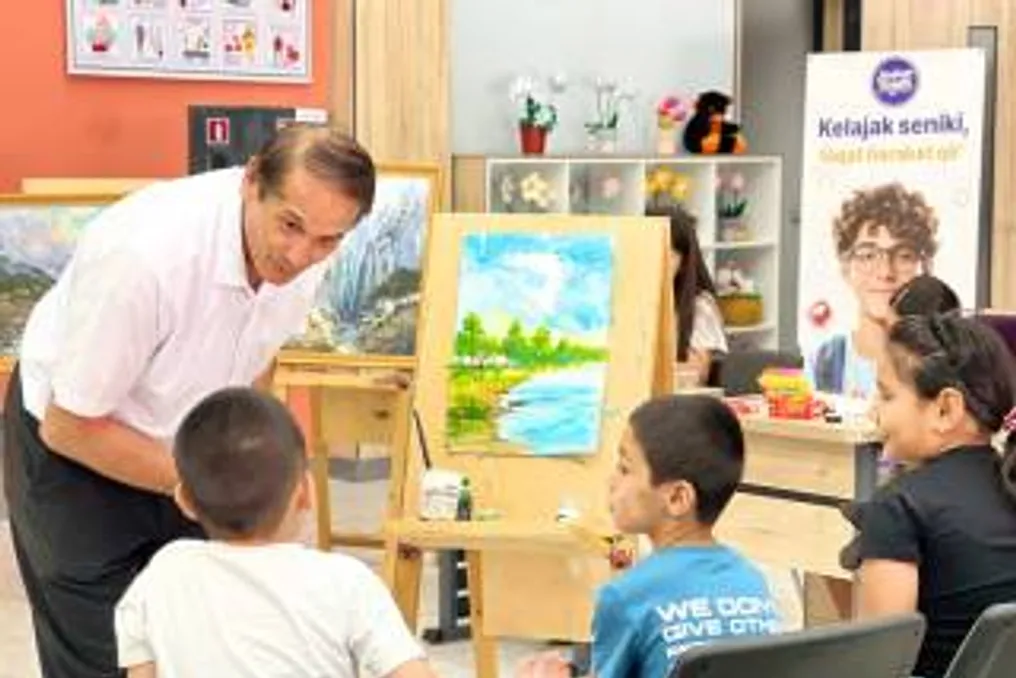
In the Syrdarya region of Uzbekistan, a drawing contest was held as part of the celebration of the 34th anniversary of the adoption of the State Emblem of the Republic of Uzbekistan. The goal of the event was to strengthen patriotic feelings among young people and increase respect for state symbols under the slogan 'State Symbols are Our Pride.'
The contest was organized with the assistance of the Regional National Guard and the regional branch of the Union of Artists of Uzbekistan at the 'Kelajak' cultural center in Syrdarya. Talented students and youth participated, presenting their creative works that embodied state symbols, the Motherland, peace, and national values.
The main objective of the contest was to strengthen the sense of belonging of young people to the fate of the Motherland, widely promote the historical and spiritual significance of state symbols, and support talented youth interested in fine arts. The participants' drawings artistically interpreted the State Emblem of Uzbekistan, the nature of the native country, life in peace and prosperity, national values, and ideas for state development.
The jury evaluated each work based on its conceptual content, artistic solution, skill of execution, and originality of the author's approach. At the end of the contest, winners and active participants were awarded diplomas, honorary certificates, and commemorative gifts.
The head of the regional branch of the Union of Artists of Uzbekistan, artist Anorboy Boibekov, spoke at the event and highly praised the creative endeavors of the youth. He emphasized that all contest participants are winners because they possess a desire for creativity, search, and self-realization. Boibekov suggested that this very aspiration will lead to the emergence of new creators for the country in the future, mentioning figures such as Academician Akmal Nur, folk artists Bahodir Jalolov and Alisher Mirzaev, as well as miniature art masters like Kamoliddin Behzod. Therefore, it was decided to encourage all participants, not just a few winners.
As participants noted, such creative contests play an important role in increasing young people's interest in fine arts, expanding their artistic worldview, and, most importantly, further strengthening the feeling of respect for state symbols and love for the Motherland.
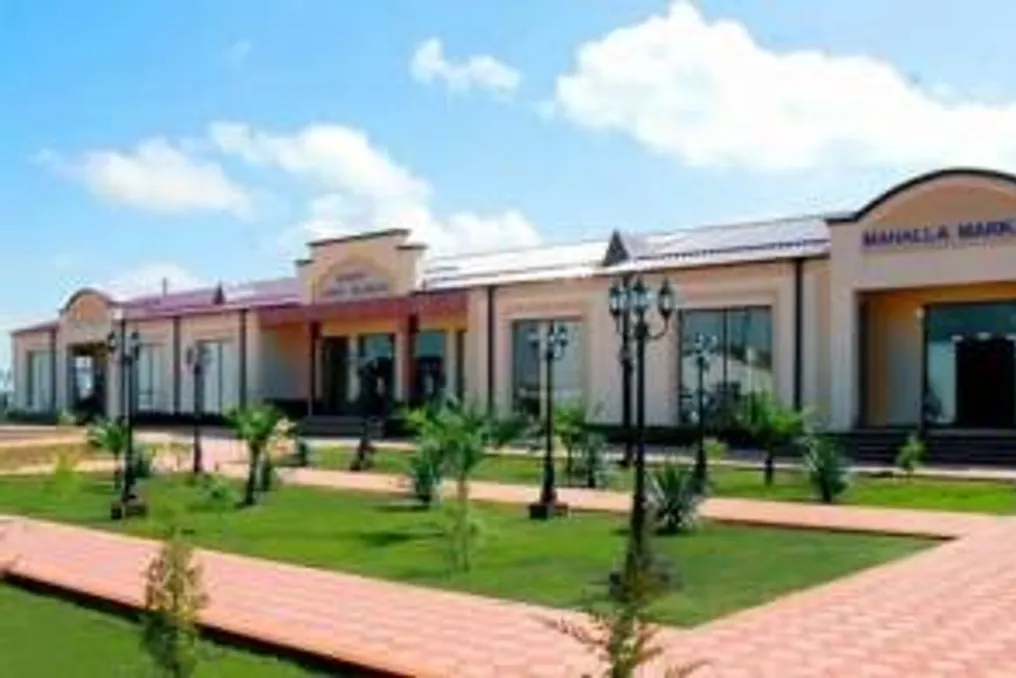
In recent years, the decentralization of state governance in Uzbekistan and the direct delivery of services to mahallas, as well as decision-making at the lowest level of society based on the principle of 'human dignity,' have become the main directions of systemic reforms.
The mahalla is no longer just a self-governing body; it has become a unique institution of civil society responsible for solving social problems of the population, supporting entrepreneurship, and defining the moral and legal environment of the region.
It is necessary to recognize the decree of the President of the Republic of Uzbekistan adopted in December 2023, titled 'On measures to fundamentally enhance the role of the Mahalla institution in society and ensure its functioning as the first link in solving people's problems,' and the resolution 'On launching the activities of the Association of Uzbek Mahallas and taking additional measures to improve the governance system in mahallas' as an important step in perfecting the mahalla system.
Based on these documents, the previous 'mahalla council' composition was expanded, leading to the emergence of the 'mahalla seven-member' institution with the inclusion of a tax inspector and a social worker. This change is a profound renewal not only in number but also in substance.
Currently, the deputy mayor under the head of the mahalla, youth leaders, women activists, prevention and tax inspectors, and social workers work as a single team. This system allows for the coordination of areas such as social protection, poverty reduction, employment provision, and encouragement of economic activity based on the 'one-window' principle. At the same time, a legal and organizational basis has been created for state services to be provided to the population in an even easier, faster, and more convenient form.
As part of the ongoing reforms, 2026 has been declared the 'Year of Developing the Mahalla and Advancing Society.' Within this year's State Program, the practice of appointing 'seven-member' members from the local population or nearby areas in 500 mahallas is increasing the popular nature of the system. Furthermore, strict rules regarding the exemption of employees from unnecessary meetings and assignments are serving to increase the efficiency of their activities.
Today, the mahalla is a technologically equipped area. The 'Digital Mahalla' electronic platform integrates all links, from the mahalla head to the deputy mayor, into a single system. Through this platform, the population can submit their appeals online and monitor their execution in real-time. This system reduces bureaucracy while creating the possibility of objectively evaluating employee performance based on key performance indicators (KPIs), which increases the responsibility of each employee.
According to data from the Association of Uzbek Mahallas, many activities were carried out in 2025 in 8,992 mahallas with over 55 thousand 'seven-member' employees and nearly 1 million participants. In the scope of these activities, 2,090 (23%) mahallas were turned into unemployment-free areas. Additionally, poverty decreased sharply in 1,435 (16%) mahallas, and the crime rate was lowered and a safe environment was created in 4,388 (49%) mahallas.
It should be specifically emphasized that the work carried out to ensure the employment and social rehabilitation of 428 thousand migrants returning from abroad demonstrates what an important social force the mahalla is.
Another strategic direction of the reforms is the financial independence of the mahallas. Based on the presidential decree, 15% of the funds collected from property and land taxes will be directed to funds for solving the socio-economic problems of the mahalla directly. Increasing transparency in the use of mahalla funds and fully delegating decision-making authority to mahalla councils is set as a priority task in the 2026 Reforms Program.