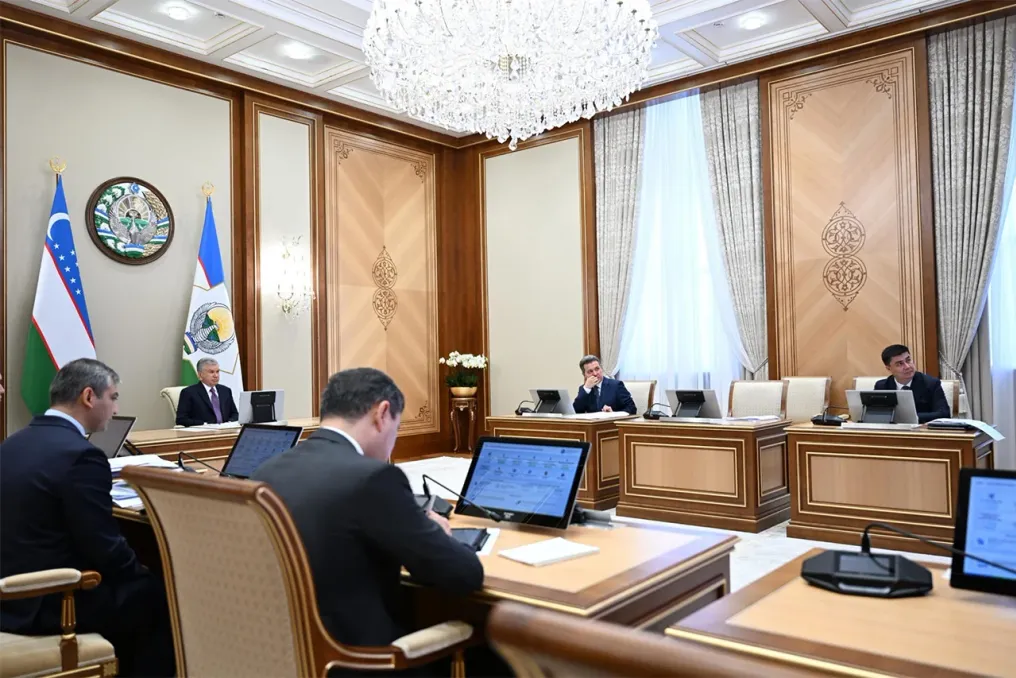
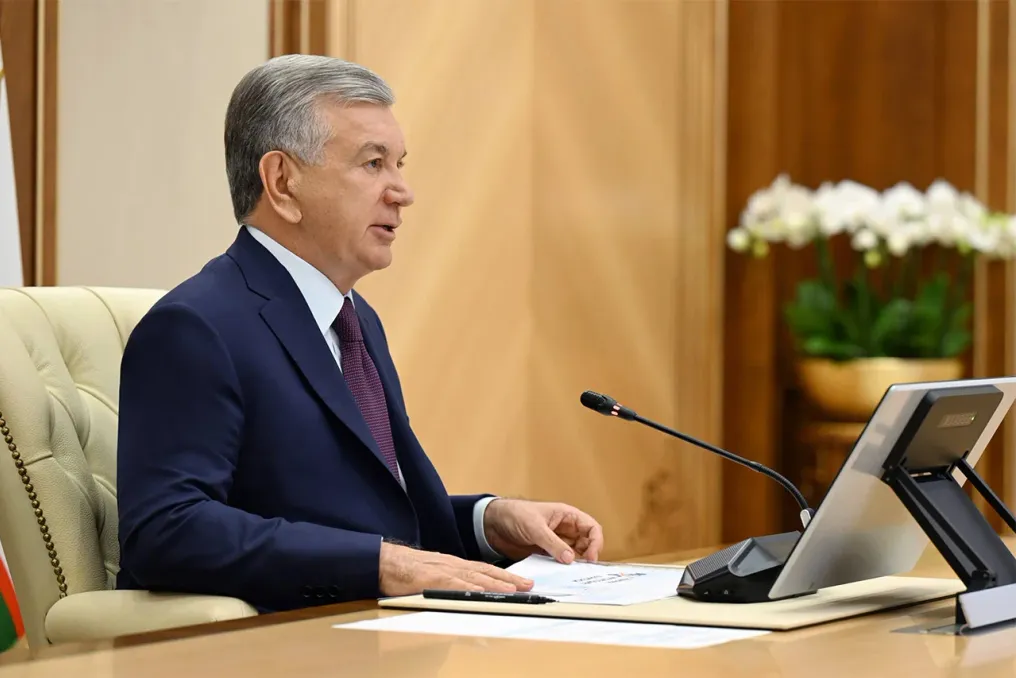
The President of Uzbekistan, Shavkat Mirziyoyev, reviewed a presentation of proposals aimed at creating a unified integrated digital platform for public administration, developing the startup ecosystem, and improving the business climate in the telecommunications sector.
Digitalization Implementation Plan
The head of state ordered the implementation of a new management system in Tashkent this year, followed by its expansion to all regions of the country starting in 2027. It was noted that Uzbekistan has significantly increased the range of public digital services in recent years by implementing modern information systems in government agencies and enhancing convenience for citizens and businesses.
Thanks to these steps, the republic advanced 24 positions in the UN E-Government Development Index, setting a goal to enter the top 30 global leaders by 2030. It is expected that by 2026, the number of such services will reach 860, serving about 15.5 million users, compared to 525 services in 2024 used by about 4 million people.
Need for Data Integration
However, officials pointed out a problem: the information systems and databases of various departments continue to operate in isolation, which hinders data analysis and administrative decision-making. To solve this problem, it was proposed to gradually introduce a single integrated digital platform for public administration.
This platform will combine data on regional economy, investments, environmental conditions, security issues, citizen appeals, and well-being at the mahalla level, as well as geospatial information and mapping materials. The integration of artificial intelligence technologies will allow the system to analyze incoming data, proactively identify problems, monitor the execution of decisions, distribute resources more effectively, and improve the overall quality of governance.
Development of Standards and Infrastructure
During the presentation, a project for creating a unified national classification system of goods and services was also reviewed. Currently, various government departments use their own classifiers, which increases the administrative burden on businesses, reduces statistical accuracy, and prevents data exchange between departments. The new system aims to eliminate these bottlenecks.
Another initiative relates to the creation of a national navigation system. Developers reported that it will allow for the formation of geospatial data according to unified standards, thereby increasing the efficiency of transport, logistics, emergency services, urban planning, and utility services.
Support for the IT Sector and Startups
Special attention was paid to the development of the IT sector. By 2030, Uzbekistan aims to increase IT service exports to 5 billion US dollars, create 5,000 active startups, and attract 2 billion dollars in investment. It was emphasized that Uzbekistan has risen to the 31st position in the international StartupBlink ranking, gaining recognition as the fastest-growing startup ecosystem in the world. Tashkent ranked first among Central Asian cities, while Samarkand and Fergana entered the top 1000 leading startup cities globally for the first time.
To further develop the industry, it was proposed to launch the 'Talent Hub' program, which will allow foreign specialists and investors to remotely register companies, open bank accounts, and receive international bank cards. It was also proposed to extend tax benefits for employees of companies registered in the IT Park until 2040 and expand the 'IT Visa' and 'Zero Risk' programs. IT service exporters will receive support through partial reimbursement of labor costs, financing for relocating foreign clients and specialists, and compensation for international certification expenses. More than 20 startup acceleration programs are planned to be organized in Bukhara and Fergana.
Telecommunications Sphere
The meeting also addressed issues of developing telecommunications infrastructure. In recent years, telecommunication coverage in settlements has increased from 41% to 98%, and the internet network bandwidth has increased 65 times. To optimize business conditions, it was proposed to merge two types of licenses for designing and constructing telecommunication networks, reducing the issuance period from 25 to 10 working days. Furthermore, new apartment buildings will be designed with mandatory infrastructure for high-speed internet access.
To support entrepreneurship in the telecommunications sector, young entrepreneurs will have access to a preferential loan of up to 530 million soms for seven years with a two-year grace period at an interest rate of 15% under the 'Kelajak Tadbirkori' (Entrepreneur of the Future) program. Special discount tariff plans will be developed for operators working in remote and hard-to-reach areas.
Meeting Conclusions
At the end of the presentation, the President approved the submitted proposals and instructed officials to ensure the integration of state information systems, improve the quality of digital services, strengthen cybersecurity and personal data protection, and create more favorable conditions for the growth of the private sector in the field of digital technologies.