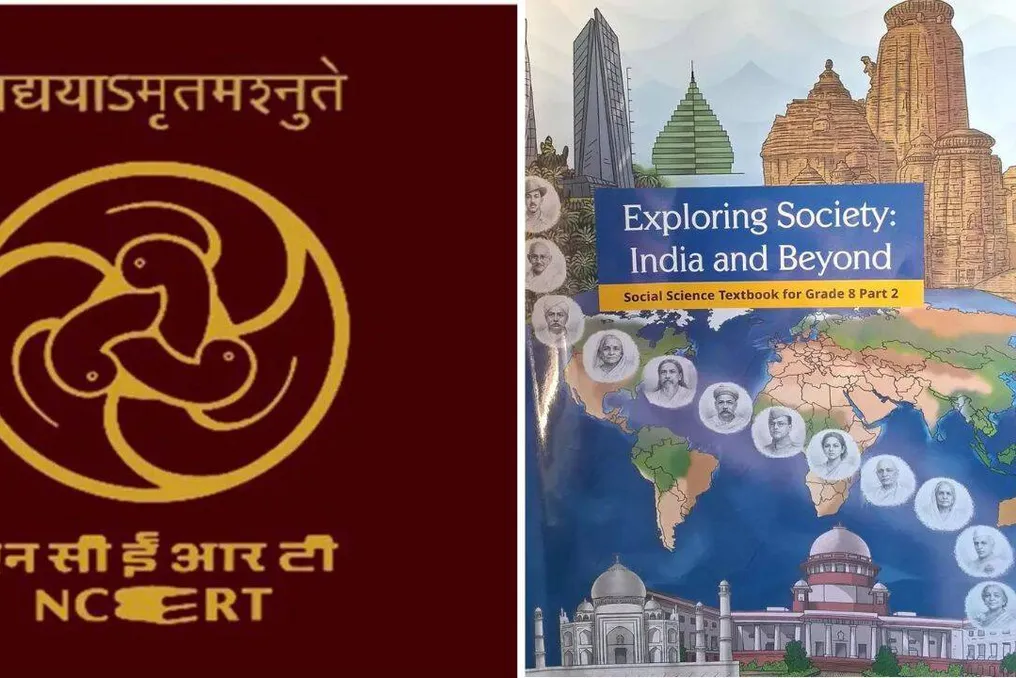
The new edition of the NCERT social studies textbook for Class 8, released after the Supreme Court ordered the withdrawal of the previous version due to a controversial chapter on the judicial system, includes several other changes. Among these are adjustments to the description of the Congress's stance regarding the 1947 Partition, as well as the exclusion of mentions of Adolf Hitler and Nazi ideology.
Changes in the Partition Chapter
The latest version of the book, titled 'Exploring Society: India and Beyond,' was published after NCERT rewrote the chapter on the judicial system in response to sharp criticism from the higher court. The court deemed the content of the previous version offensive and ordered the recall of all printed and digital copies.
The revised edition also makes changes to the historical chapter concerning India's independence and the Partition. One key change relates to the Congress's view on the Partition. The old textbook stated that while Mahatma Gandhi and most Congress leaders opposed the Partition, they 'ultimately accepted it as the only way forward.'
The updated version now asserts that the Partition 'was widely condemned even by the Indian National Congress,' and adds that the question of whether accepting this decision was the 'only way forward' remains a subject of debate. Furthermore, the old textbook's phrase stating that 'Congress leaders were powerless because mass inter-communal killings occurred during the Partition' has been removed.
Correction of Bose's Role and Hitler's Mention
Another significant change concerns the description of the efforts of freedom fighter Netaji Subhas Chandra Bose during World War II. The previous edition indicated that Bose sought support from Adolf Hitler and characterized the German leader as a 'dictator whose racist Nazi ideology and expansionist goals provoked the war.' In the new book, it is stated instead that Bose 'sought support from anti-British forces,' completely excluding any references to Hitler or Nazi ideology.
The historical chapter was also expanded by including a mention of Vinayak Damodar Savarkar, who stated that 'VD Savarkar expressed a similar demand for Swaraj in 1925' when discussing calls for complete independence.
Reaction to Supreme Court Intervention
The revised textbook was released months after the Supreme Court intervened in the chapter on the judicial system, which addressed issues of corruption, delays in court proceedings, and complaints against judges. Taking up the matter through its own initiative, the high court ordered the withdrawal of the textbook, imposed a complete ban on its publication in print and digital formats, and directed NCERT to rewrite the chapter.
After complying with the court's directives, NCERT apologized for what it called a 'misjudgment' and released the corrected edition this week. The rewritten chapter now focuses on the constitutional role of the judiciary, rather than its shortcomings. It explains the structure of courts, constitutional remedies under Articles 32 and 226, Public Interest Litigation (PIL), tribunals, alternative dispute resolution mechanisms such as arbitration and mediation, and digital initiatives, including e-filing, hybrid hearings, and live streaming of court sessions.
The notes in the revised edition indicate that it was published following a review process conducted 'in accordance with the directions of the Supreme Court' within a writ petition filed by the court suo motu. It is also noted that the judicial system chapter was rewritten by an expert committee formed by the Ministry of Education at the direction of the higher court.
Changes in Authorship
This development also led to changes in the list of authors. The withdrawn textbook listed 51 members of the development team, whereas the revised edition features 48 names. Michel Danino, Suparna Divakar, and Alok Prasanna Kumar have been excluded. These three scholars were previously associated with the controversial chapter on the judicial system.