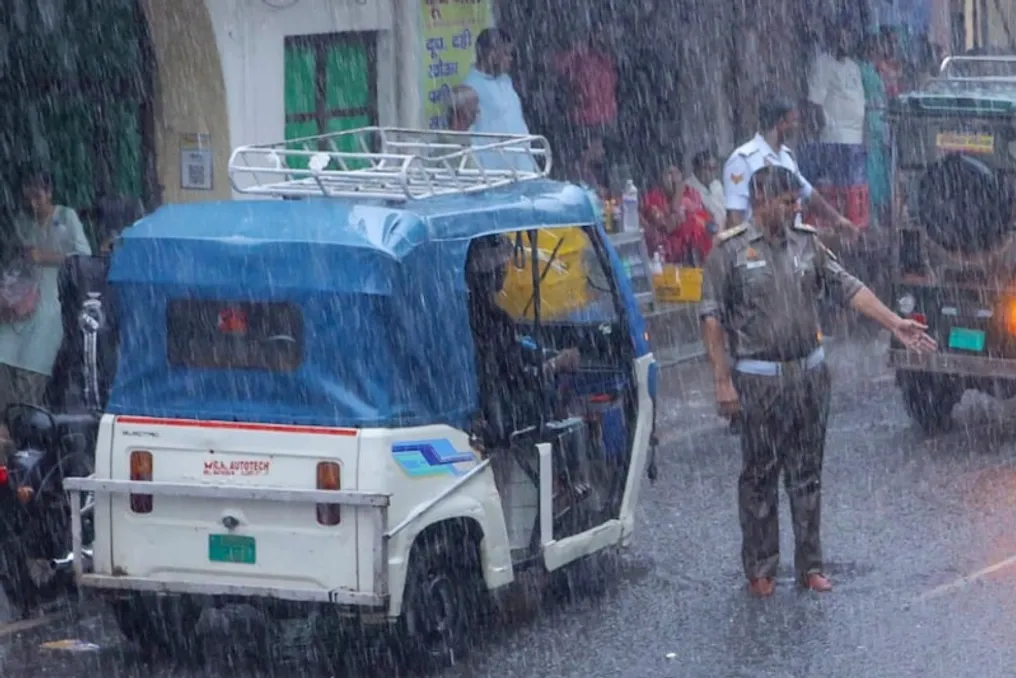
The state of Gujarat is facing a serious situation due to the simultaneous activation of four monsoon systems, which has led to heavy rainfall. Consequently, the meteorological department has issued a major warning about heavy rains for several districts over the next 24 hours.
Weather Conditions and Warnings
Over the past day, heavy rains fell in 195 talukas out of 28 districts of the state. The most severe situation is observed in South Gujarat, where record rainfall was recorded in cities such as Surat and Navsari. Nevertheless, it is expected that the intensity of rainfall in the state will slightly decrease after the next 24 hours.
Causes and Weather Forecasts
Prajit Sharma, a scientific researcher at the Ahmedabad meteorological department, explained that the cause of heavy rains in South Gujarat is the simultaneous activity of four monsoon systems: the Velmark low pressure, a tropical cyclone off the coast, and a seasonal cyclone. He added that the Velmark low pressure will begin to weaken within the next 12 hours, leading to a decrease in rainfall intensity over the next two days.
District Alert System
The meteorological department has issued an orange alert for Navsari, Dang, Valsad, Daman, as well as Dadra and Nagar Haveli in South Gujarat. A yellow alert is in effect in Surat, Narmada, Tapi, Chhota Udaipur, Dahod, Amreli, and Bhavnagar. Additionally, on July 9, a yellow alert remains in effect in some areas of South Gujarat.
Record Rainfall and Consequences
The highest amount of rainfall over the past day was registered in the Palsana district of Surat—18 inches. 17 inches were also noted in Kamaraj, 14 inches in the city of Surat itself, and 15 inches in the taluka of Navsari. In several areas of Tapi, including Valsad and Dang, rainfall ranged from 6 to 13 inches. Due to this continuous weather event, holidays were declared in schools and colleges in Surat and Navsari.
Overall Situation and Response Measures
According to data from the State Emergency Response Center, by 6 am on July 8, Gujarat had received 222.10 mm of rainfall for the current monsoon season, which accounts for about 24.44% of the annual average. This good humidity allowed the Sardar Sarovar reservoir to fill up to 65.27% of its total capacity. The water level in 206 reservoirs across the state has significantly risen, with 11 in high alert mode, 4 in alert mode, and 10 in warning mode.
The meteorological department recommended that fishermen refrain from going out to sea until July 11. The state administration has deployed 12 NDRF teams and 27 SDRF teams in various districts to combat the consequences of the situation.