The Nelson Mandela Bay Municipality has rejected fears of financial collapse after the National Treasury suspended payments for July due to inefficient financial management.
The Nelson Mandela Bay Municipality has rejected fears of financial collapse after the National Treasury suspended payments for July due to inefficient financial management.
This municipality was among 69 local government areas across all nine provinces that did not receive their fair share of allocation this month. The Treasury intervened in council operations because they failed to provide reports on billions of rands wasted.
In a statement released on Wednesday, the municipality emphasized that this intervention does not signify insolvency or an inability to provide services. It stated that the intervention is administrative and corrective in nature, which was confirmed by the National Treasury, and is not a declaration of financial distress or inability to perform its duties.
The National Treasury further reported that the temporary withholding of funds aims to promote compliance with the Municipal Finance Management Act and strengthen financial oversight. The municipality announced that it has already begun implementing a financial management reform program.
These reforms are intended to enhance compliance with MFMA requirements, improve financial control, enhance outcome management, and address unauthorized, irregular, fruitless, and wasteful expenditure in accordance with the law. The municipality assured residents, businesses, investors, and all stakeholders that it has activated necessary internal management processes to address the issues raised by the National Treasury.
The municipality noted that core services, including water supply, sanitation, electricity, waste management, and emergency services, remain its highest priority. The equitable share is a grant from the national government that helps municipalities fund basic needs such as roads, electricity, sanitation, and water.
Nelson Mandela Bay carries the highest burden of unauthorized, irregular, fruitless, and wasteful expenditure in South Africa, accumulating approximately 30 billion rands over two decades. Despite this, the metro received its second consecutive qualified audit opinion for the 2024/25 financial year, after achieving an unqualified audit for the first time in 12 years in 2022/23.
A qualified audit indicates serious issues regarding the municipality's financial records, which auditors could not fully verify. The Auditor-General pointed to R2.08 billion in irregular expenditure, R1.48 billion in power losses, and an average creditor payment period of 189 days, the longest among all metros.
Just last week, a Treasury presentation warned that the metro was on the verge of financial collapse, citing weak leadership, instability in the municipal manager's office, underutilization of grant funds, and a 2026/27 budget proposal initially assessed as unfunded. The Treasury announced on Tuesday the suspension of July transfers to compel municipalities to put their finances in order.
The National Treasury stated that the suspension of July transfers for 2026 to certain municipalities is aimed at implementing fiscal discipline and ensuring proper management of public funds. It emphasized that this is a corrective, not punitive, measure and does not foresee an impact on service delivery due to the short-term nature of the fund retention.
The decision was made after many years of unsuccessful attempts to ensure municipalities comply with financial laws. The Treasury noted that prior to the freeze, it provided support through MFMA circulars, individual consultations, and training, but many municipalities continued to violate MFMA provisions regarding the adoption of funded budgets, addressing UIFWE, and fulfilling obligations.
The Treasury reported that the affected municipalities were formally warned and given the opportunity to explain why their funds should not be frozen. It added that non-compliance with legislation threatens the financial sustainability of essential service providers (water utilities and Eskom).
Transfers will resume once the affected municipalities meet the required conditions and provide the relevant evidence. The freeze was implemented in accordance with section 216(2) of the Constitution combined with section 38 of the MFMA. The Treasury indicated that since the 2021/22 financial year, municipalities have incurred R24.12 billion in fruitless and wasteful expenditure. Irregular expenditure reached R145.21 billion over the same period, with over R40 billion spent only in 2024/25.
Furthermore, municipalities disclosed over R118 billion in unauthorized expenditure since 2021/22, and in 2024/25, 116 municipalities adopted unfunded budgets. By the end of this financial year, municipalities owed R3.4 billion in Eskom interest and R1.21 billion to water utilities. The Treasury noted that many councils failed to investigate wasteful spending, penalize responsible officials, recover losses, or refer cases for criminal prosecution.
The Auditor-General's 2024/25 local government report confirmed persistent weaknesses in municipal financial management. Nelson Mandela Bay was one of six affected municipalities in the Eastern Cape, alongside Buffalo City, Makana, Sundays River Valley, Inxuba Yethemba, and Port St Johns. Johannesburg and Mangaung metros were also listed.
To receive funds, municipalities must reduce their balances of unauthorized, irregular, fruitless, and wasteful expenditure by at least 25% in the first quarter of the 2026/27 financial year. They must also prove the existence of functional disciplinary committees and that instances of financial misconduct have been referred, registered, and investigated. Mayors of municipalities that adopted unfunded corrective budgets must formally commit in writing to the Minister of Finance Enoch Godongwana never to submit unfunded budgets again.
The local government financial crisis in South Africa has reached a critical point, prompting the National Treasury to conduct one of its most serious constitutional interventions. A decision was made to temporarily suspend the allocation of the fair share for July 2026 to 69 municipalities after discovering systematic and serious violations of public finance laws.
This unprecedented step affects municipalities across all nine provinces, covering both small rural councils and large metropolitan governments, including Johannesburg, Buffalo City, Mangaung, and Nelson Mandela Bay.
At the heart of the Treasury's decision is an alarming financial picture. Since the 2021/22 fiscal year, municipalities have accumulated R24.12 billion in wasteful and extravagant expenditures, R145.21 billion in irregular expenditure, and R118.13 billion in unauthorized expenditure. These figures indicate weak financial control, poor management, and insufficient accountability within the local government system.
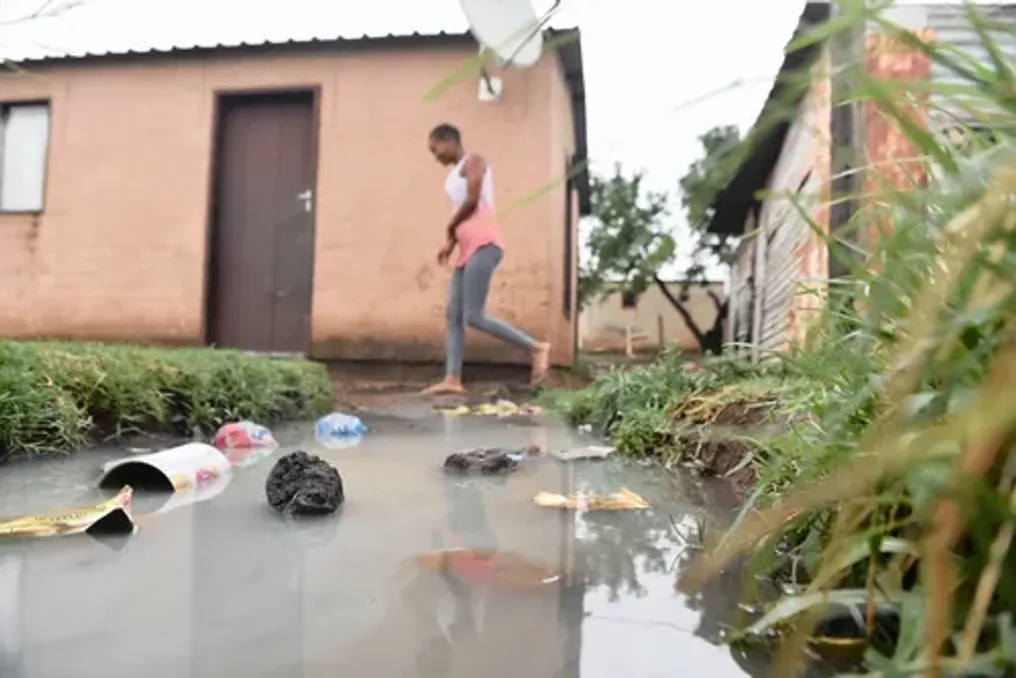
Billions of rand have been spent outside established procurement procedures, allocated without approved budgets, or lost due to expenses that could have been avoided with reasonable prudence. The Treasury asserts that this intervention aims to prevent the worsening of the crisis for communities already facing unreliable water supply, power outages, deteriorating road conditions, and failing sanitation systems.
The Treasury stated that municipalities have shown 'persistent and serious non-compliance' with the Municipal Finance Management Act (MFMA), despite years of engagement, technical support, and previous measures aimed at improving financial governance. The Treasury emphasized that the suspension is a corrective, not punitive, measure, and its goal is to incentivize municipalities to comply with applicable financial management legislation. Allocated funds may be returned once municipalities demonstrate compliance with imposed conditions.
The intervention is implemented in accordance with Section 216(2) of the Constitution, which grants the National Treasury the authority to halt fund transfers to a state entity committing serious or persistent breaches of established financial management measures. The objective is to ensure proper management of public funds, eliminate unauthorized, irregular, wasteful, and extravagant spending, and hold municipal officials and political leaders accountable where provided for by law.
Despite the attention drawn by the Treasury's announcement, this intervention did not happen suddenly. For many years, the Auditor-General of South Africa (AGSA) repeatedly warned about the degradation of local finances, weakening governance structures, and the growing inability of municipalities to provide basic services.
In issuing the Municipal Audit Results for the 2021/22 fiscal year, Auditor-General Tsakani Maluleke described the local government sector as being caught in a cycle of financial instability and institutional dysfunction. She noted that local government is characterized by dysfunctional municipalities, financial mismanagement, council and administrative instability, and the deterioration of municipal infrastructure, leading to a decline in living standards and service delivery failures.
Three years later, her assessment has changed little. Presenting the Overall Local Government Report for 2024/25, Maluleke indicated that municipalities continue to struggle with weak governance, deteriorating infrastructure, and worsening financial health. She added that mayors and sixth administration councils have achieved limited progress in strengthening governance and improving service delivery, while residents and businesses continue to face unreliable services, environmental hazards, and aging infrastructure.
The Auditor-General's report also highlighted a serious issue with financial reporting. According to the latest report, 195 municipalities, or 76%, submitted annual financial statements containing material misstatements, and 99 municipalities, accounting for 39%, ultimately received modified audit opinions. Without corrections made during the audit, only 24% of municipalities would have received unqualified audit opinions.
Political analyst Professor Nthwanano Mthethwa believes that the Treasury's intervention reflects years of deeply entrenched governance failures that were repeatedly identified by the Auditor-General without significant consequences for those responsible. He noted that the lack of accountability measures allowed the same problems to recur year after year.
Among the three categories of financial misconduct, wasteful and extravagant expenditure showed one of the most alarming surges. In the 2018/19 fiscal year, municipalities recorded approximately R2 billion in such expenses. By 2020/21, they incurred another R1.96 billion in new losses, with over R11 billion remaining unresolved from historical cases.
This trend accelerated in the current local government administration. In 2021/22, municipalities recorded R4.74 billion in wasteful and extravagant expenditure, while only 38 out of 257 South African municipalities achieved a clean audit. This amount rose to R7.41 billion in 2022/23. The Treasury estimates the cumulative total at R24.12 billion since the 2021/22 fiscal year.
Unlike irregular expenditure, which is usually related to non-compliance with procurement processes, wasteful and extravagant expenditure represents money spent unnecessarily and which could have been reasonably prevented. The Auditor-General links these losses to recurring failures in municipalities, pointing to poor payment practices, non-competitive and uneconomical procurement methods, low value and benefit from spent money, and weaknesses in project management.
The Treasury's latest assessment confirms this concern. According to the department, 116 municipalities adopted unfunded budgets in the 2024/25 fiscal year, taking on expenditure commitments of approximately R288.17 billion without sufficient revenue to fund these budgets. Such budgets create immediate financial pressure, often leading to unpaid creditors, deteriorating infrastructure maintenance, and increasing reliance on emergency financial interventions.
According to the Auditor-General's latest report, the financial position of many municipalities continues to deteriorate: only 35% were assessed as having a sound financial position, 40% as being in a worrying financial position, and 25% as being in a precarious financial position. The consequences extend far beyond accounting reports, as 174 municipalities lacked sufficient cash reserves to pay creditors, and 123 municipalities lacked enough current assets to cover short-term liabilities.
These financial weaknesses increasingly affect the constitutional obligation of municipalities to provide basic services such as water, sanitation, electricity distribution, waste collection, stormwater management, and local road maintenance. Since much of this work is funded by grants, such as the Municipal Infrastructure Grant, sound financial management is crucial for sustaining infrastructure investment. Mthethwa insisted that the intervention should not be limited to freezing funds but should include personal accountability for those responsible for financial misconduct.
3.