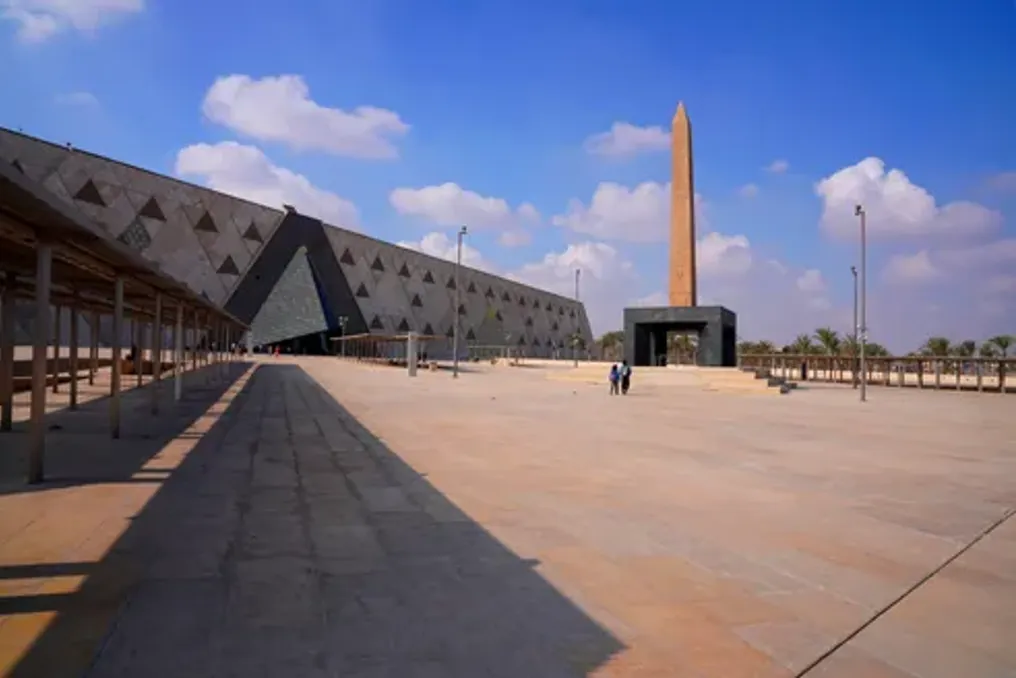
The Grand Egyptian Museum (GEM) in Giza has achieved significant success, becoming the third most visited museum in the world despite only opening its doors in November 2025. This fact highlights the high international interest in Egyptian history.
Scale of Collection and Exhibition
The museum is located just two kilometers from the Giza pyramid complex and features an extensive collection of Egyptian artifacts covering the country's rich history—from the Predynastic period to Roman Egypt. Its collection comprises over 100,000 items, with 20,000 newly exhibited to the public, including the complete Tutankhamun collection.
Visitors are also drawn to recently restored exhibits, such as the second solar boat of Khafre, a collection belonging to Queen Hetchepheres (mother of King Khafre), and artifacts of Yuya and Tuya (parents of Queen Tiye).
Additional Museum Attractions
Other notable features of the GEM include the New Heritage Library, launched in July 2026, which houses 17,000 rare volumes and reference materials on archaeology and Egyptology. The Great Hall features the imposing three-thousand-year-old monumental statue of Ramses II. Furthermore, a dramatic six-story staircase contains about 60 important ancient relics, including sarcophagi and statues of deities.
Strategic Importance of Cultural Heritage
A post on Instagram by @nationbrandco, citing 'Forbes,' notes that the success of the GEM demonstrates that heritage is one of the nation's most vital strategic assets. The post's author asserts that thoughtful curation, investment, and presentation of history contribute to tourism development, economic growth, and global influence.
In 2025, Egypt welcomed 18.6 million international visitors, confirming the potential of cultural heritage as a powerful driver of the national tourism strategy. For African countries, this serves as an example of how history can become a competitive advantage if invested in world-class museums.
Global Museum Rankings
According to the 'Forbes' Top 10 World Museums ranking, following the Louvre Museum in Paris (France) with 9 million visitors and the Vatican Museums (Vatican City) with 6.8 million, the Grand Egyptian Museum (Giza, Egypt) ranks third with 6.5–7 million. The list also includes the National Museum of Korea (Seoul, South Korea), the British Museum (London), the Metropolitan Museum of Art in New York (USA), the National Museum of Anthropology in Mexico City (Mexico), the Russian State Museum in St. Petersburg (Russia), the Uffizi Galleries in Florence (Italy), and Tate Modern in London (United Kingdom).