A new regional center has been commissioned in the Tashkent region, which will be responsible for organizing knowledge and qualification assessment processes in accordance with modern requirements.
A new regional center has been commissioned in the Tashkent region, which will be responsible for organizing knowledge and qualification assessment processes in accordance with modern requirements.
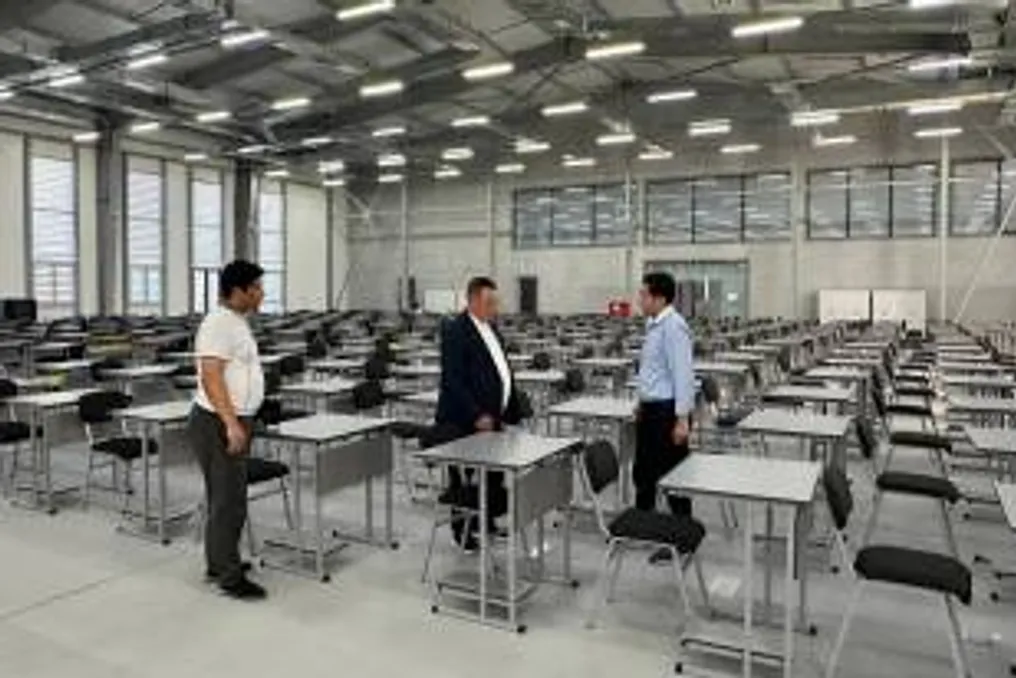
The new building of the Knowledge Assessment Agency operates on a modern infrastructure, creating all necessary conditions for conducting open, transparent, and high-quality test exams. Within the framework of paper tests, the center can accommodate about 1200 applicants, students, and teachers simultaneously.
Additionally, a separate auditorium with a capacity of 150 people has been equipped for computer-based tests, featuring modern technical and information and communication equipment.
Shukr Burkhanov, Head of the Department of Preschool and School Education of the Tashkent Region, visited the center to familiarize himself with the created conditions, the testing organization system, and the technical capabilities.
It is important to note that starting this year, applicants from the Tashkent region will take entrance exams for higher education institutions for the first time at this modern center. This is aimed at ensuring the transparency and fairness of these tests, as well as creating more comfortable conditions for participants.
The modern knowledge assessment center is one of the key infrastructure facilities designed to objectively evaluate the knowledge and potential of young people and improve the quality of education.
Cooperation aimed at implementing dual education in the field of social protection continues to expand. Ensuring quality services for the population in the social protection system is directly linked to training qualified personnel.
In recent years, particular attention has been paid to integrating international experience in this area, ensuring that education aligns with practice, and training modern specialists. Launching a dual education system based on German experience is being considered as one of the important steps.
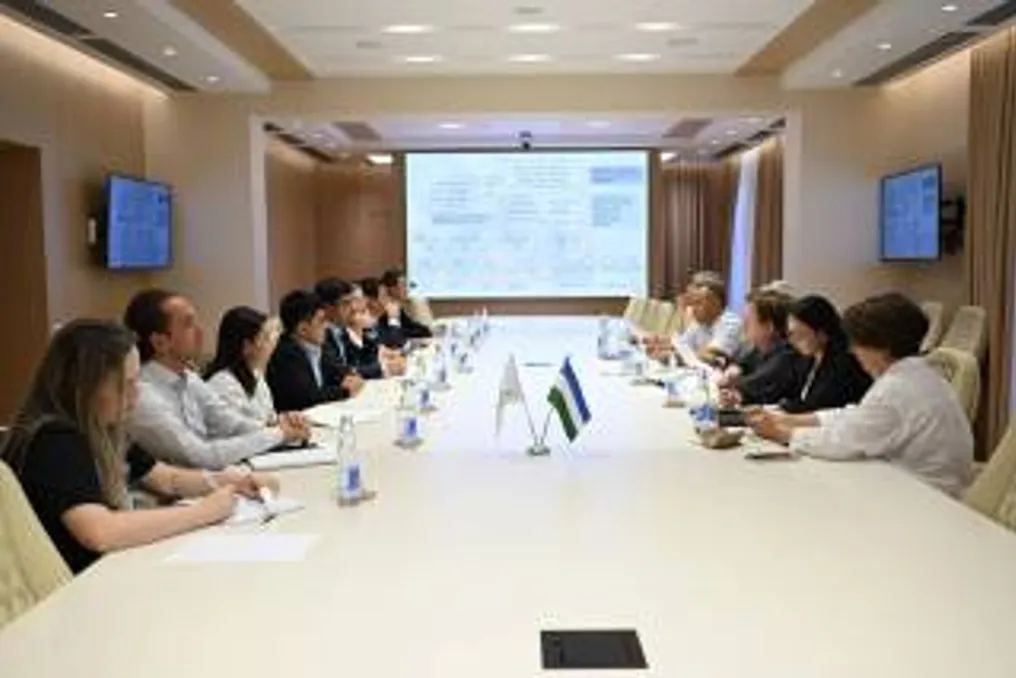
A meeting was held at the National Agency for Social Protection under the President of the Republic of Uzbekistan with representatives of the German Agency for International Cooperation (GIZ). During this meeting, prospects for implementing a dual model of personnel training for the social protection sector, as well as the results of expert analysis, were discussed.
GIZ expert Thomas Lux presented the results of research and practical recommendations conducted in Uzbekistan regarding the development of the system for training social workers and their assistants. He emphasized that aligning theoretical knowledge with practical skills in this field has a tangible positive impact on the quality of personnel training.
During the negotiations, close attention was paid to the issue of introducing a dual education program in the field of 'Social Work'. This model involves combining theoretical study at higher educational institutions with practical training at 'Inson' social service centers and other industry organizations. This allows students to accumulate professional experience directly during their studies.
The parties exchanged views on future tasks concerning the institutional mechanisms for implementing the proposed model, ensuring the quality of practical training, training personnel who meet international standards, and further improving the quality of education in the industry. Following the meeting, an agreement was reached to develop organizational mechanisms and continue joint cooperation to implement pilot projects for developing dual education in social protection within the framework of GIZ PROSPI and TexVET II projects.
According to experts, introducing a dual education system will help form a reserve of personnel possessing practical experience and modern knowledge and skills for the social protection sector. This, in turn, will make a significant contribution to improving the quality and efficiency of social services provided to the population.
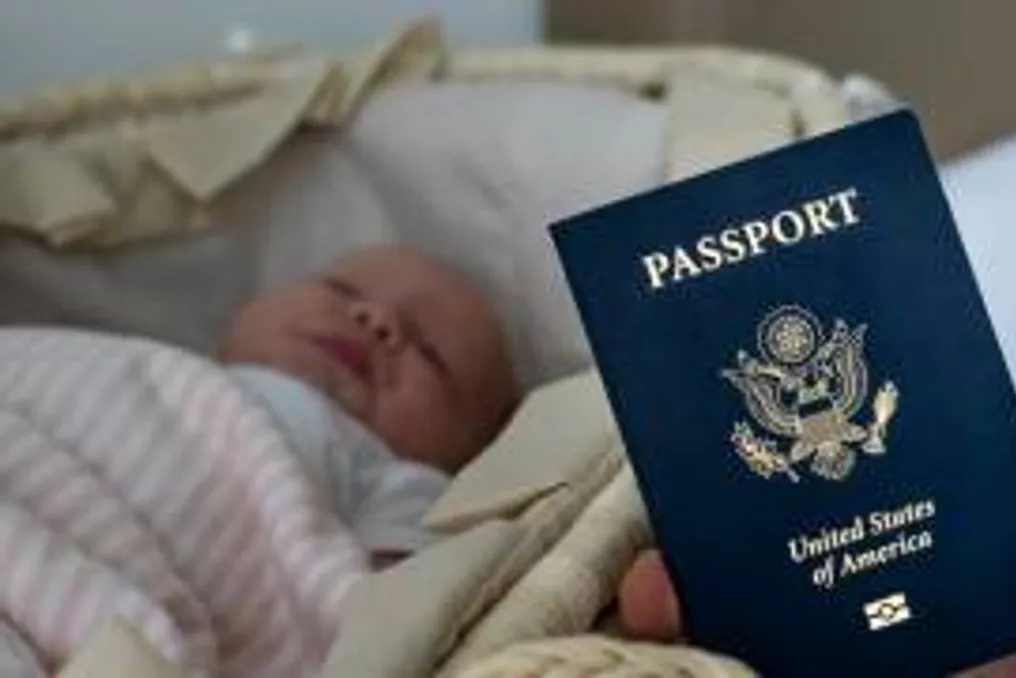
The United States government is studying the possibility of introducing entry restrictions into the country for women who are not US citizens and are in advanced stages of pregnancy, with the aim of countering 'medical tourism.'
According to the newspaper 'Telegraph', the White House administration is considering new measures to limit the entry of foreign women seeking to obtain American citizenship through childbirth. This was also reported by an 'SBS News' source.
After entering a second term, President Donald Trump signed a special decree that cancels the automatic citizenship system for infants born on US territory. This provision, introduced by the 14th Amendment to the Constitution, states that it should only apply to children of parents legally and permanently residing in the country. After the Supreme Court suspended the initiative, the head of state called this decision a 'victory for China' and called on Congress to change the legislation.
According to government officials, such a tourist flow poses a threat to national security. There is a fear that children born to foreign mothers may later steal American intellectual property while studying at US higher education institutions.
According to available data, approximately 26,000 children are born annually in the United States to foreign parents, and the current ban aims to stop this flow.
At the initiative of the leadership of Tashkent region, a press tour was organized for media representatives to major industrial enterprises in the Okhangaron district.
The main goal of the visit was to familiarize participants with investment projects being implemented in the region in the coming years, as well as with modern production capacities and their significance for the development of the country's economy, import substitution, and increasing export potential. It is emphasized that the Okhangaron district is actively transforming into one of the country's major industrial centers.
Dozens of large investment projects have been launched in this district in sectors such as electrical engineering, mechanical engineering, metallurgy, construction material production, and processing industry.
An important moment was the visit by the President of the country to an enterprise in the Okhangaron district electrical engineering technopark on February 13 of this year. During this visit, new enterprises producing high-tech, import-substituting, and export-oriented products were studied, and key tasks for the further development of the region's industry were defined.
Participants of the press tour began their inspection at the joint venture 'Premier Electrotech'. This enterprise, located on the territory of the village, covers an area of 10 hectares and has received investments of 30 million US dollars. Production of various household appliances is established here, with an annual volume of 200 thousand units. The enterprise's production capacity allows it to produce products worth 300 billion sums annually, and 150 new jobs have been created within the project.
During the tour, the conditions for household appliance production, quality control stages, and modern technologies were demonstrated to media representatives. Specialists provided detailed answers to all questions asked.
The press tour then continued to the joint venture 'Enco Group', which covers a total area of 21 hectares. The project, implemented through foreign direct investment, is valued at 57.5 million US dollars. According to enterprise specialists, the production of high-strength cables, copper pipes, and insulated copper busbars has been launched here in a volume of 24 thousand tons annually.
This enterprise is the first in the republic to develop the production of high-voltage cables at 110, 220, and 330 kilovolts. This is strategically important for the country's energy system as it allows covering a significant part of the needs for previously imported products through local production. As a result, a reduction in the import of this product by almost 60 percent and substantial currency savings are expected.
As part of this project, 485 new jobs have been created, contributing to employment provision, training of highly qualified specialists, and strengthening the region's industrial potential.
During the press tour, media representatives also familiarized themselves with production processes, modern technological lines, quality control systems, as well as plans for expanding export geography in the future.