In accordance with the head of state's decision from January 5 of this year, practical measures have been initiated to ensure a safe environment in mahallas, prevent offenses, and increase the effectiveness of preventive work.
In accordance with the head of state's decision from January 5 of this year, practical measures have been initiated to ensure a safe environment in mahallas, prevent offenses, and increase the effectiveness of preventive work.
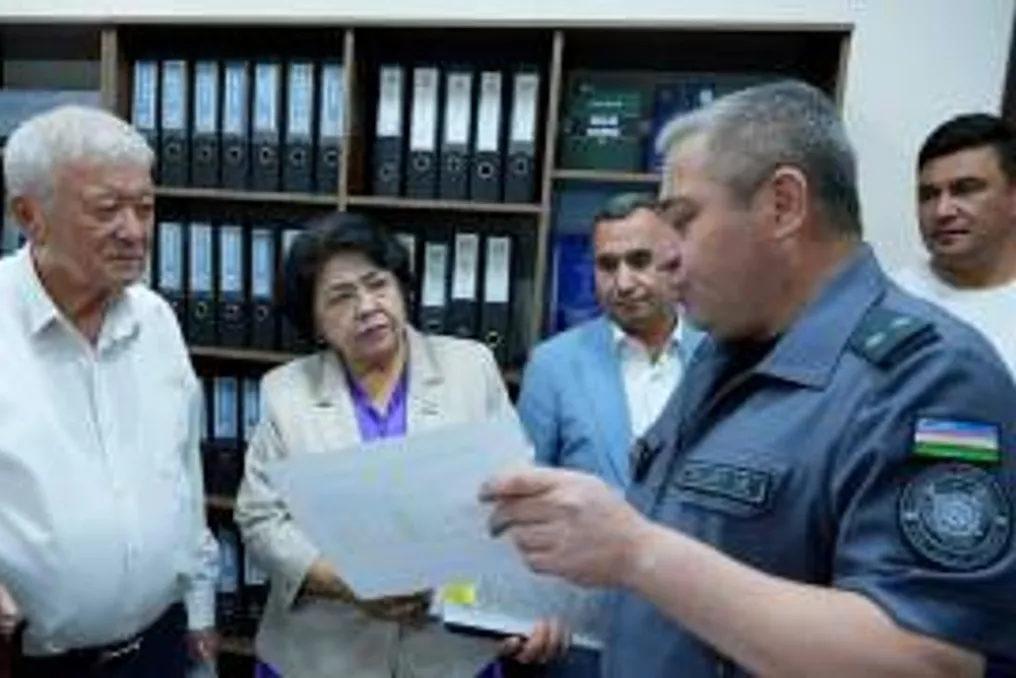
A working group led by Kutbiddin Burkhonov, Chairman of the Senate Committee on Defense and Security, studied the implementation process of this decision in the Yangikhaot district of Tashkent city. Gulnora Marufova, a member of the Committee on Science, Education, and Health, as well as heads of relevant organizations, participated in the event.
The working group familiarized itself with the activities of the headquarters in this district, examining the effectiveness of aspects such as timely prevention of offenses, maintenance of public order, targeted implementation of preventive measures, interaction with public appeals, and interdepartmental cooperation.
During meetings with residents of the 'Yoldosh' and 'Mashhal' mahallas, issues of ensuring safety, stabilizing the crime situation, social prevention, targeted work with youth and young women, introduction of digital control means, and the activities of the mahalla committee were discussed.
At meetings with mahalla activists, preventive inspectors, and specialists, problems causing concern among residents, mechanisms for their elimination, some aspects of law application, and proposals for further improvement were discussed.
As part of the study, special attention was paid to preventing violence against women, strengthening the prevention of offenses among minors, and reinforcing cooperation between educational institutions, mahallas, and families.
Following the event, relevant tasks were defined regarding the comprehensive study of the submitted proposals, taking them into account when improving the legislative framework where necessary, and taking concrete measures by responsible organizations.
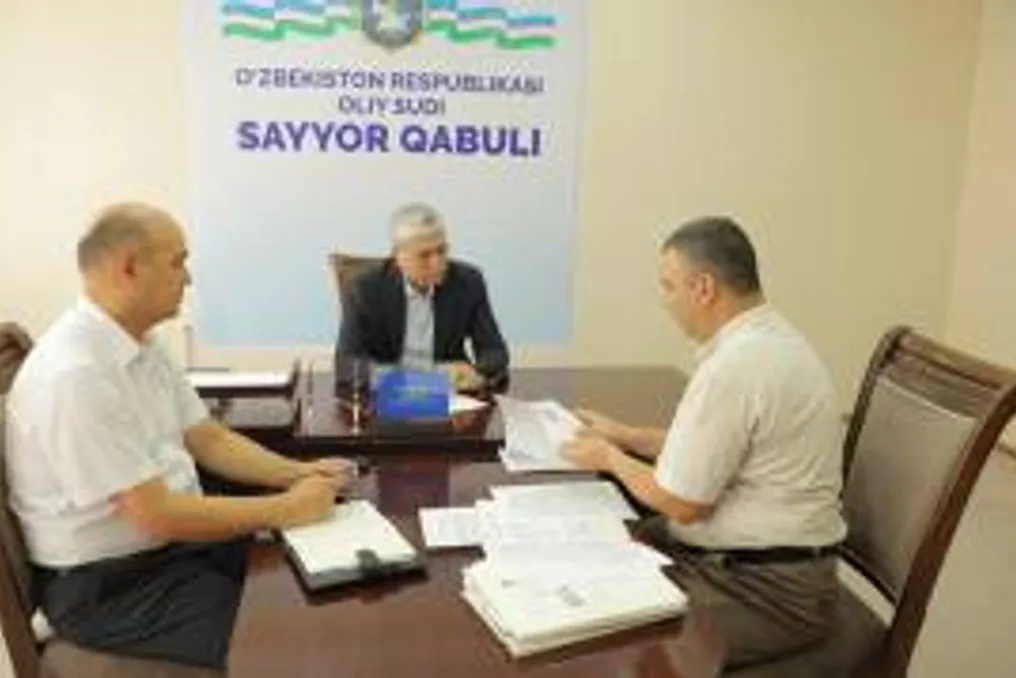
To ensure open and effective communication with the population, study citizens' appeals on legal issues, prevent unnecessary troubles for them, and promptly resolve legal problems, Deputy Chairman of the Supreme Court A. Shukurov organized outreach reception points in the Karakalpakstan Republic.
These outreach receptions took place in the districts of Chimbo and Amudarya, where appeals from 40 citizens were heard. During the reception, issues concerning the judicial and legal sphere were discussed in detail, and a legal explanation was provided for each appeal based on legislative requirements.
The analysis showed that 22 appeals related to criminal cases, 13 to civil cases, and 5 to administrative proceedings. Additionally, during the reception, oral appeals from 21 citizens were heard, and 19 written applications and complaints were officially accepted.
A legal explanation was provided for 21 appeals reviewed during the outreach receptions, and the rights and obligations of citizens were widely explained based on current legislation. The remaining 19 applications and complaints were transferred to investigative bodies for consideration in a lawful manner and for the adoption of appropriate measures.
It is emphasized that such outreach receptions play an important role in strengthening public trust in the courts, respecting human dignity, deeply studying the problem behind each appeal, as well as ensuring the openness and transparency of fair judicial proceedings. In particular, 9 citizens whose appeals were resolved positively sent letters of gratitude to the President of the Republic of Uzbekistan and the Chairman of the Supreme Court.
Judicial bodies contribute to protecting the legitimate interests of the population through the organization of such local outreach receptions, strengthen direct contact with citizens, and ensure the consistent application of the principles of justice.
As part of the project, which is being implemented in cooperation between the Ministry of Poverty Reduction and Employment and the European Union, the program 'Strengthening the Economic Potential and Efficiency of Farms and Landowners in Uzbekistan' is being carried out. The main goal of this initiative is to promote the development of a sustainable, market-oriented, and inclusive food production system.
The project aims to increase the income of landowners and farms, expand employment and income opportunities in rural areas, and strengthen food security. Dil'dor Otazhonov, Consultant at the Ministry of Poverty Reduction and Employment on agricultural product export issues, notes that the experience of European countries shows that cooperatives allow farms and products produced on land to achieve real competitiveness in external markets.
This is particularly relevant because currently over 5.2 million families in Uzbekistan grow agricultural products on their own land, as well as on land allocated to the population, covering a total area of 220 thousand hectares. However, most of them operate on small plots and face certain difficulties in processing, storing, packaging, and exporting products, which limits their ability to earn high income.
Uniting several small farms into one cooperative gives them the opportunity to jointly use necessary machinery, warehouse facilities, logistics, and other resources. This creates a favorable environment for export. In personal experience, selling a large batch of products is significantly easier than selling a small volume from a single farm. Furthermore, cooperatives are easier to attract loans and subsidies because banks and funds prefer to work with stable cooperatives rather than individual farms.
Another important aspect is knowledge exchange: landowners and farmers within the cooperative study effective methods from each other and adopt modern agricultural technologies more quickly. It is assumed that with the development of the cooperative system in the regions, the export income of the participating farms could increase by at least 25 percent. The project, implemented by the Ministry of Poverty Reduction and Employment together with the European Union, lays the foundation for the systematic development of this area in the regions.
Within the framework of the project, the legal and practical literacy of landowners and farmers is increased, training sessions on modern agricultural technologies, product processing and packaging methods, and ways to enter the export market are organized. In the first stage, landowners and farmers who expressed a desire to form 30 cooperatives in Tashkent region participate in educational and practical seminars. There they are provided with the necessary knowledge and skills on creating and managing cooperatives, attracting financial resources, and effectively using logistical and marketing opportunities.
Thanks to this, farms and landowners gain the opportunity to integrate their products into the value chain, reduce costs, and increase market competitiveness. As a result of the project, new jobs will be created for the population in rural areas, stable sources of income will be formed, and food security will be strengthened. The Law 'On Agricultural Cooperative' will also play a regulatory role in this process. The project will ensure the effective participation of citizens without employment in agriculture in these processes and increase their awareness of current regulatory legal documentation.
During the implementation of the program, mentorship, training trips to Latvia, and start-up grants are provided. The practical experience gained will be summarized in a guide on cooperative development. The duration of the project is 3 years, and 2,617,545 euros will be allocated to it. The Republic of Latvia, through the Central Agency for Finance and Contracts (CFCA) and the Center for Agricultural Consulting and Training (LLKC), conducts technical activities such as training landowners and farmers, developing and supporting cooperatives, mentorship, training trips, and applying European experience in agricultural consulting and cooperative management.
Starting from July 2026, educational and practical seminars involving agricultural producers will begin in the regions of Tashkent, Samarkand, and Andijan. From July 8, 2026, the project team will start working in the Tashkent region, where practical seminars will be organized on agricultural production, problems faced by farmers, cooperation opportunities, exports, storage and processing of products, use of common resources, and cost reduction. In July-August of this year, the project will continue in the Samarkand and Andijan regions. Based on these works, the project team will determine the most relevant needs and practical opportunities for agricultural producers in each region to develop targeted support measures in subsequent stages.
According to the Hydrometeorological Service of the Republic of Uzbekistan, on June 27, the weather in Tashkent is expected to change with possible short-term rains and cooling. In the east, the wind is blowing at a speed of 3-8 meters per second, and in some places it may intensify up to 10-12 meters per second. At night, the temperature will be 23-25 degrees, and during the day—38-40 degrees. In Karakalpakstan and Khorezm region, the weather will change, but no rain is expected, while daytime heat is anticipated up to 32-37 degrees. There is a risk of floods in mountains and mountainous areas, and the wind may reach 13-18 meters per second.