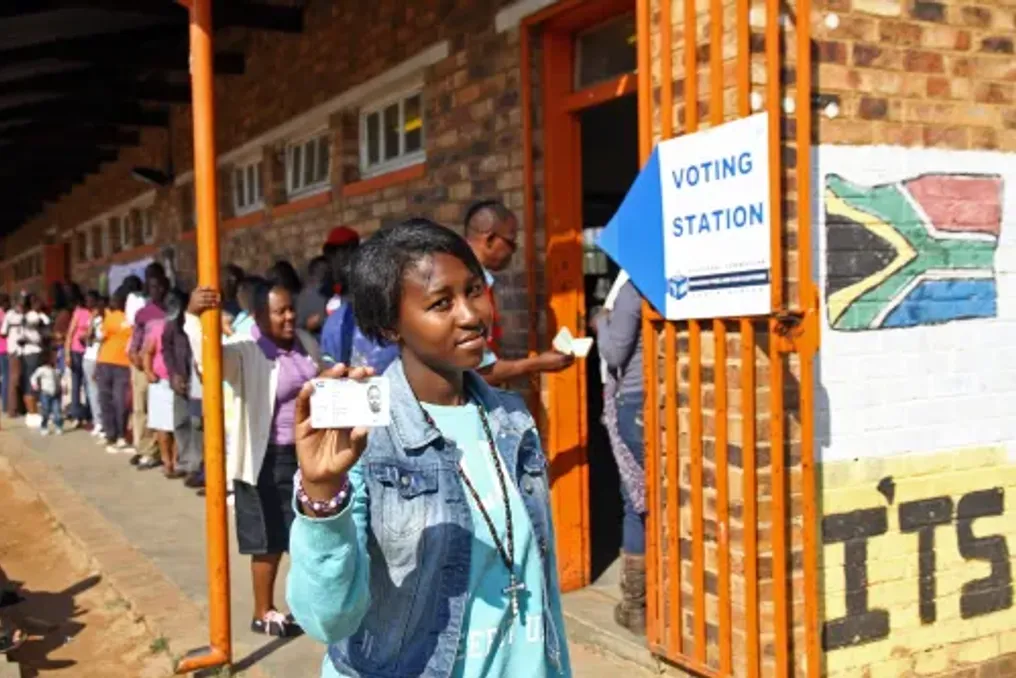
As local elections approach in South Africa in 2026, where women constitute the majority of registered voters, gender activists are sounding the alarm. They warn that coalition politics could jeopardize decades of progress in women's political representation, emphasizing the urgent need for more decisive commitments to gender equality.
Decline in Women's Representation
The warning came after the presentation of a report by the Commission for Gender Equality (CGE) on the 2021 local elections. According to the report, the share of women in municipal councils decreased from 41% in 2016 to 37% in 2021, marking the first significant drop in over a decade.
CGE researcher Liketseng Molakona-Motopi characterized this decline as a worrying setback. She stated that the 2021 election results showed a loss of achieved progress in women's representation compared to previous electoral periods. The commission's study indicated that political parties with formal gender equality policies and quota systems generally promoted female candidates better, but researchers warned that progress remains vulnerable without stronger political engagement and accountability.
Broader Trend of Decline
For Susan Tolmay of Gender Links Gender and Governance, this decline is part of a broader trend extending beyond South Africa. She noted that after many years of success, the country is starting to move backward. Although women consistently make up between 55% and 56% of registered voters, their share in leadership fluctuates rather than showing steady growth.
Tolmay cited the sharp decrease in female prime ministers—from 44% in 2004 to only 11% in 2024—to demonstrate the fragility of political gains. She argues that political parties remain the main gatekeepers to leadership opportunities, acting either as facilitators or obstacles to women accessing decision-making positions.
Barriers to Progress
According to her, the decline in representation is partly linked to reduced electoral support for parties that adopted voluntary gender quotas. Tolmay cautioned that numbers alone are insufficient. It is necessary to analyze the situation year by year to determine whether women are leaving their posts mid-term or facing obstacles.
One of the most serious barriers remains violence against women in politics. Quoting international studies, Tolmay reported that 80% of surveyed female politicians reported experiencing psychological violence, and 67% reported sexual violence. More than four in ten reported receiving threats of murder, rape, or kidnapping. She called these statistics astonishing and requiring thorough investigation.
Role of the Media
The role of the media in shaping public opinion about female leaders was also highlighted. A study presented during a webinar showed that only 15.5% of sources cited regarding the 2024 elections were women, compared to 20% in 2019. Tolmay pointed out that during the election campaign, there were over 1250 online attacks on journalists, six out of ten victims being women.
Tolmay believes that South Africa's problem is no longer the absence of progressive legislation, but the inability to translate legal protection into real equality. She emphasized: 'We do not lack legislation. The problem is implementation.' This gap between law and reality has been named one of the defining challenges for women's empowerment.
Beyond Statistics
Noxililo Mashiya, an advisor from the Association of Local Municipalities of South Africa, stated that the discussion must go beyond simply counting women in political structures. She noted that the presence of women on councils does not automatically guarantee governance that addresses gender needs.
Mashiya acknowledged significant achievements since 1994 but warned that representation does not always translate into influence. Women continue to face patriarchal attitudes, exclusion from key decision-making spaces, and resistance when taking up positions of power. She added that in some cases, women may be present but lack the full power to shape outcomes.
The advisor warned that women remain underrepresented in many top leadership roles, and the progress made over decades can easily be reversed. She stated: 'The next stage of transformation requires us to move beyond counting women and ensure that women matter.'
Inclusion of Women with Disabilities
The discussion also covered the experiences of women with disabilities, who remain one of the most marginalized groups in political life. Tandile Butana from Blind SA stated that full democracy is only possible when every citizen can participate equally in political and electoral processes. She stressed that women with disabilities are among the most marginalized groups in society.
Butana noted that women with disabilities continue to face barriers such as inaccessible political information, economic exclusion, discrimination, and limited leadership opportunities. She emphasized that women with disabilities are not just voters, but leaders, decision-makers, activists, professionals, and community builders. Butana called on political parties and government institutions to ensure accessibility and inclusivity of electoral processes before the 2026 elections.
Impact of Coalition Politics
A constant theme of the discussion was the growing influence of coalition politics on women's representation. CGE Commissioner Mokgadi Mogan warned that coalition negotiations often come at the expense of gender equality. She stated that viewed through a gender lens, a darker truth emerges: women have become collateral damage in many backroom deals.
As an increase in coalition governments is expected after the 2026 local elections, Mogan warned that representation gains could face additional pressure. She noted that when political elites strike secret deals to form a majority, the principle of gender equality is often what gets traded away. She pointed out that mayoral, speaker, and executive portfolios often become bargaining chips during coalition negotiations, leaving women sidelined from influential positions.
Consequences Beyond Politics
Mogan argued that the consequences extend beyond politics. She added that local government is the sphere closest to the people, and when it fails, women and children suffer first.
Electoral management expert Terry Tselane stated that gender equality must be integrated into the entire electoral process, not treated as a secondary issue. He warned that factors such as political violence, election administration, and access to participation opportunities can both promote and hinder women's representation. He noted: 'If the environment is such that there are forbidden zones or where violence is widespread, it obviously hinders participation.'
Striving for Equality
At the close of the discussion, Mogan emphasized that the pursuit of equality should not be seen as a threat to men. She stated: 'The rise of women does not mean the fall of men. The demands we are making are not polite requests for favors. They are constitutional imperatives.'
Participants agreed that reversing the decline requires more than just political rhetoric. Key proposals discussed included introducing mandatory gender quotas for political parties, strengthening the implementation of existing equality commitments, and measures to ensure women occupy winning positions on candidate lists, not symbolic ones. Participants also called for increased financial support, mentorship programs, and leadership development initiatives for female candidates, especially young, rural, and disabled women. There were also calls for creating a safer political environment through more decisive action against violence, intimidation, and online abuse, and for coalition agreements to include guarantees protecting women's representation in leadership roles.
Thirty-two years after democracy, South Africa's standing on women's political representation remains one of its most vital democratic achievements. Nevertheless, speakers repeatedly warned that these achievements are becoming increasingly fragile.
Shaping the Future of Democracy
For Tolmay, the debate ultimately boils down to three questions that will define the country's democratic future: 'Who is represented, who holds power, and who benefits from democracy?' As political parties prepare for the 2026 local elections, the answer to these questions may determine whether women continue to advance into leadership or become victims of an increasingly complex coalition era.