China's brain-computer interface (BCI) sector is transitioning from laboratory research to clinical and commercial implementation amid accelerated regulatory approvals and record venture funding.
China's brain-computer interface (BCI) sector is transitioning from laboratory research to clinical and commercial implementation amid accelerated regulatory approvals and record venture funding.
In March 2026, the implanted BCI system Boruikang NEO-ONE SCI received approval from China's National Medical Products Administration, becoming the world's first invasive medical BCI device to undergo clinical use. Just two days later, it was granted medical insurance coding.
On June 11, Boruikang filed for an IPO on the STAR Market aiming to raise $3.4 billion, positioning itself as the first Chinese BCI stock. On the same day, NeuroXess published a video demonstrating two quadriplegic patients, located 800 kilometers apart in Shanghai and Nanchan, playing chess using only their thoughts via a fully implanted and wireless BCI system.
On July 7, NeuroXess began GCP clinical trials at Huashan Hospital for its first subcutaneous implantable BCI product in China, seeking Class III medical device certification. These events mark the transition of BCI from a laboratory concept to a clinical reality in China.
The sector attracted more venture capital in the first quarter of 2026 than in all of 2025. BrainCo completed a pre-IPO round worth $2.8 billion. Ladder Medical raised $700 million with participation from Alibaba, and Zhiran Medical gathered $830 million over six months.
Government policy is stimulating the adoption of this technology. City-level medical insurance in Shanghai now covers consumables for BCI surgeries, and Guangdong province has officially included BCI-related services in its medical pricing catalogs. As noted in both the 2026 State Work Report and the BCI 15-Year Plan, it is designated as a priority future industry.
Projections based on Boruikang's IPO application documents and data from Diaoyu Consulting suggest the global BCI market could reach $50 billion by 2035, with China's share approaching $14 billion. China already leads in the volume of BCI patent applications, although the US maintains an advantage in fundamental neurotechnology and precision components.
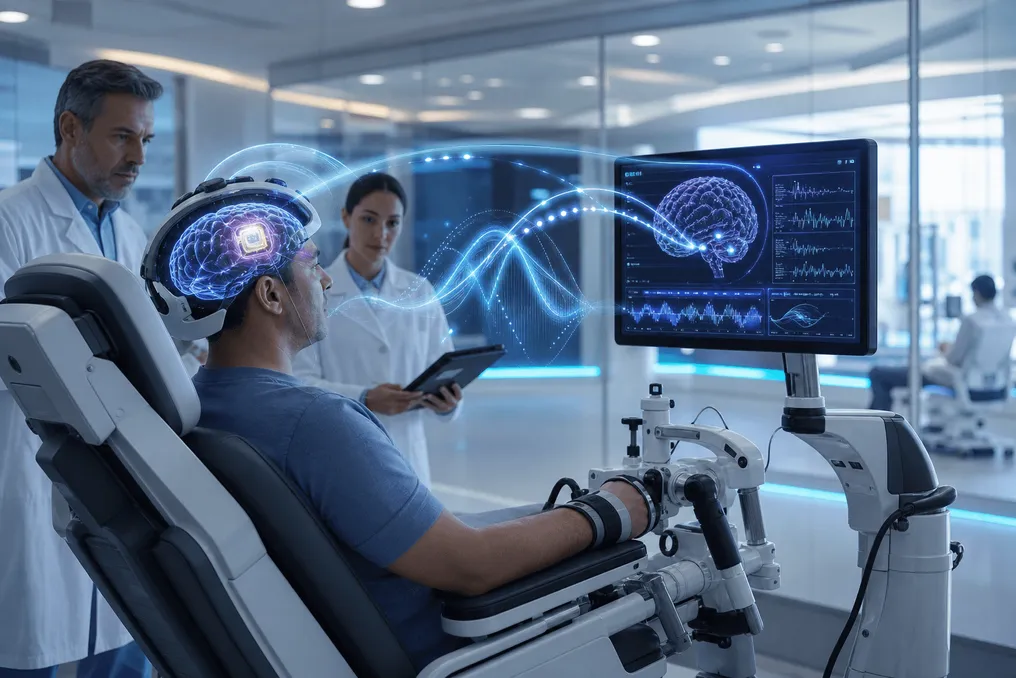
Three technical approaches are converging: non-invasive (wearable EEG headsets), semi-invasive (electrodes under the skull but outside brain tissue, the Boruikang path), and fully invasive (implants within brain tissue, developed by Neuralink and NeuroXess). Each approach represents a different balance between signal accuracy and surgical risk.
Industry leaders warn that obtaining regulatory approval is only the initial stage. The realization of BCI's commercial potential will depend on physician adoption, patient accessibility, rehabilitation systems, and after-sales support.
China is traditionally considered the world leader in the mining and processing of rare earth elements (REEs). Globally, about 70% of the mining and approximately 90% of the processing of these elements takes place in China. However, a new study has revealed another side of this coin.
According to the study, while China leads in raw material extraction and processing, it lags behind the US and Japan in the most critical and expensive technologies related to rare earth elements. Data from the South China Morning Post in Hong Kong indicates that many key patents concerning advanced functional materials made from rare earth elements remain owned by Japan and America.
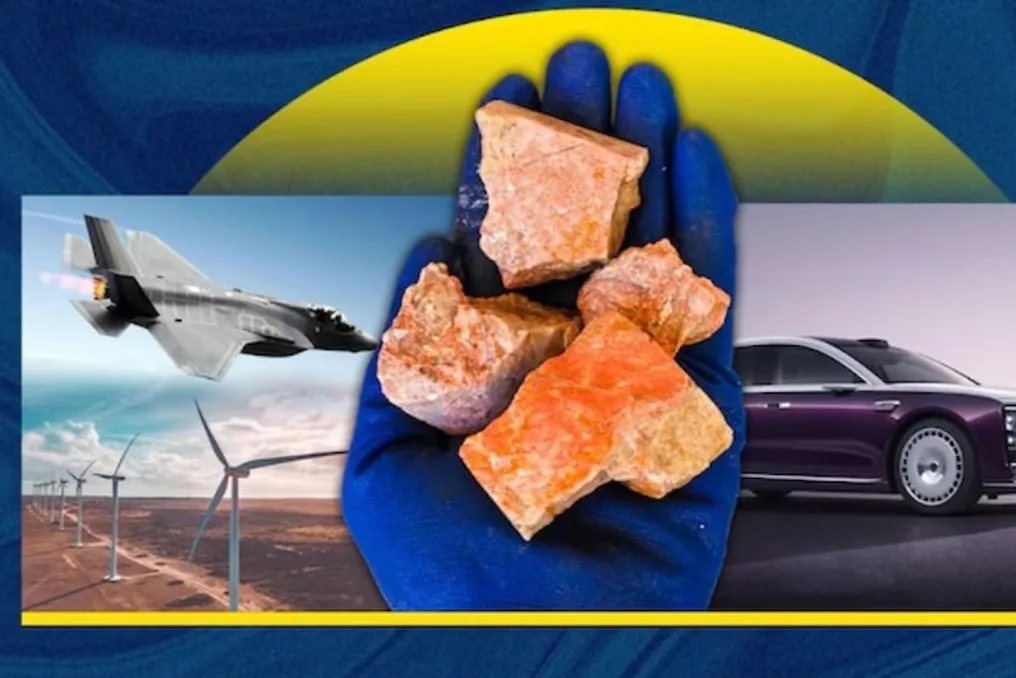
Rare earth elements are critically important not only for business but also for strategic and defense sectors, as they are used in many high-tech devices, including radars, sonar systems, missiles, fighters, as well as smartphones, satellites, and electric vehicles.
The research showed that over 80% of patents related to permanent magnets, catalysts, luminescent, and polishing materials made from processed rare earth elements are registered worldwide. In this context, Japan holds a leading position in permanent magnet technology, while the US dominates in catalyst, luminescent, and polishing material technologies.
It was found that China has achieved advantages only in limited areas. It still lags behind Japan and the US in several crucial manufacturing processes and material systems. This means that China has not yet been able to fully transform its raw material advantage into high-value technologies. Despite China filing a large number of patents, the international influence of its high value-added patents is less than that of its competitors. Experts emphasize that to achieve complete global leadership in the rare earth element sector, China must not only dominate mining and processing but also catch up with the US and Japan in advanced innovation and technology.