Systemic work is underway in the country to modernize the pharmaceutical sector and attract foreign investment into this industry.
Systemic work is underway in the country to modernize the pharmaceutical sector and attract foreign investment into this industry.
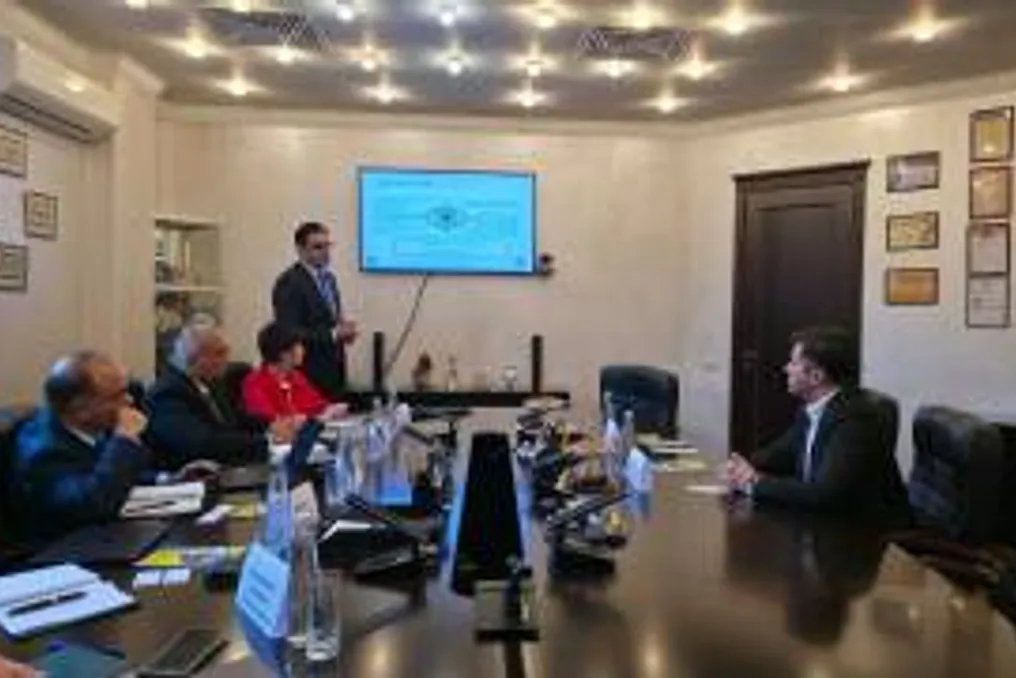
As part of a working trip to the Russian Federation, a delegation led by Abdullah Azizov, Director of the Agency for Medicine and Pharmaceutical Development, held a meeting with the CEO of Advanced Pharmaceuticals.
During the negotiations, the company's management was presented with detailed information about the sustainable reforms being carried out in Uzbekistan's pharmaceutical industry, as well as the country's investment potential and the advantages created for foreign investors. Special attention was paid to the modern capabilities and infrastructure available in the innovative pharmaceutical cluster 'BioPharma City' being established in the country.
The parties exchanged views on the most relevant areas in this field. In particular, they discussed in detail cooperation prospects such as launching the production of modern high value-added pharmaceutical products, transfer of advanced technologies, localization of production, implementation of new investment projects, and introduction of international quality standards.
Following the meeting, important agreements were reached to elevate bilateral relations to a new level. The parties agreed to develop mutually beneficial cooperation, jointly implement promising investment projects, and continue practical consultations in the future. Such contacts contribute to ensuring the population has access to quality and affordable medicines.
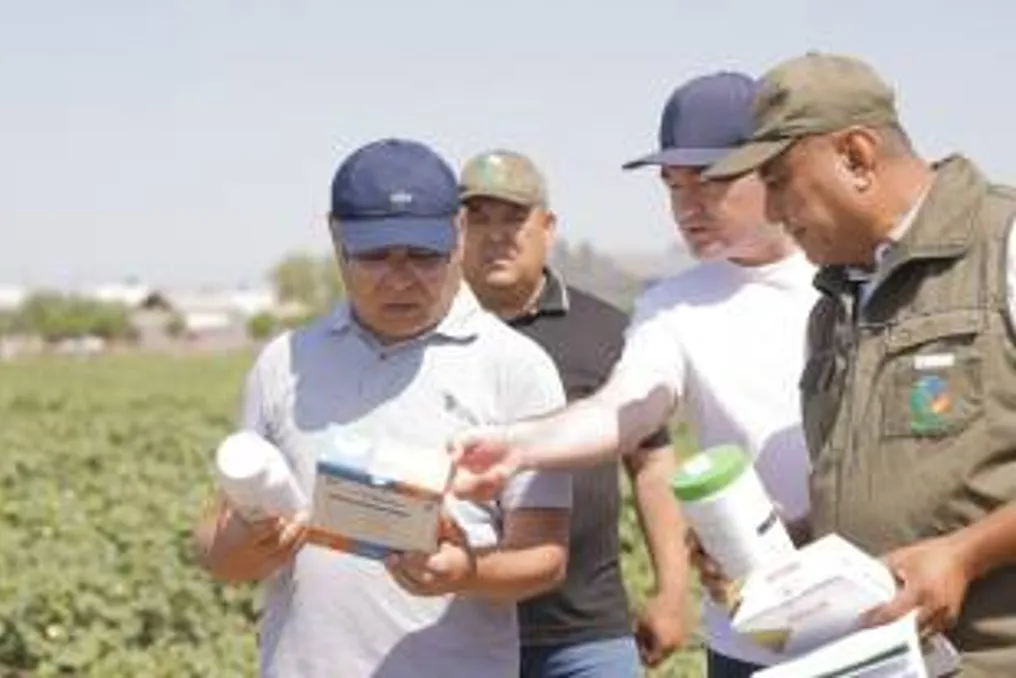
The Minister of Agriculture, Ibrohim Abdurakhmanov, visited the territories of the Tashkent region to familiarize himself with the seasonal work being carried out in cotton fields. The initial site inspected was the 'Zero Maks Agro Biznes' farmstead in the Urta Chirchiq district.
On 30 hectares of this farmstead, 'Shinjian' variety cotton was planted using a dense planting method under plastic film. Irrigation and nutrition processes are carried out using a drip irrigation system. Additionally, special films of different colors—red, green, and blue—are being used on 15 hectares to test their influence on crop development.
A field session was organized during the visit with the participation of farm enterprise managers. The Minister discussed in detail the differences in the development of cotton grown under colored films versus open fields, as well as the advantages of each method and the possibilities of implementing them in practice. Subsequently, a 10-hectare field at the 'Oktam Ata' farm enterprise in the same district was inspected, and an area of 30 hectares was generally viewed. An assessment of the crop growth condition in the field conditions was conducted, and practical recommendations were given for the agrotechnical measures necessary during the growing season.
During the observations, the minister emphasized that maintaining a balance between vegetative and generative development to prevent excessive crop growth is a critically important condition for achieving a high yield. It was also noted that the widespread implementation of scientifically based agricultural technologies and decision-making based on the specifics of each field is a current task of modern cotton farming.
In conversations with farmers, the minister noted that despite large-scale information campaigns, field seminars, and training meetings in the region, not all farmers are adopting modern agricultural technologies and scientific recommendations. Therefore, the need to convey the scientific basis of the agrotechnical measures required in cotton farming in a simple and practical way, as well as conducting work based on modern knowledge and best practices, was particularly stressed.
In addition, the condition of fields growing low-yield cotton varieties was studied in the Oqqurgon district. The Minister paid particular attention to the timely and quality execution of agrotechnical processes in the fields. He highlighted the importance of conducting cultivation agrotechnical work on a scientific basis, according to a clear plan established by norms and requirements. The Minister also gave advice on the use of chemical and local fertilizers, emphasizing the need for strict planning of their application to preserve soil fertility.
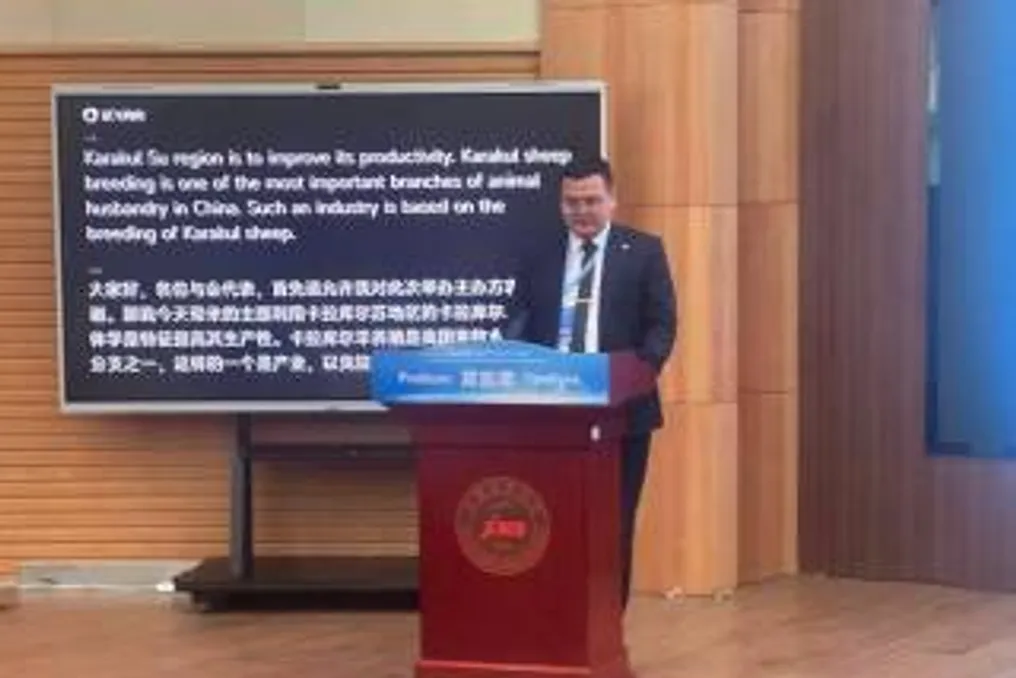
A Doctor of Agricultural Sciences, A. Urimbetov, a lecturer at the Department of 'Zooengineering' of the Samarkand State University of Veterinary Medicine, Animal Husbandry and Biotechnology, Nukus Branch, participated in the international conference '2026 China–Central Asia Industry–University–Research–Application Cooperation Conference,' which was held in Urumqi, People's Republic of China.
This prestigious international forum was organized with the assistance of the Ministry of Education of the People's Republic of China and the government of the Xinjiang Uygur Autonomous Region. The event gathered representatives from higher educational institutions, scientific research institutes, production enterprises, and specialists from China and Central Asian countries.
During the conference, issues of strengthening the integration of science, education, and production, implementing modern scientific developments into practice, expanding the exchange of innovative technologies, and developing international scientific cooperation in the agricultural sector were discussed. A. Urimbetov presented a report at the conference on current problems, practical research results, and scientific approaches in this field.
The participation of a scientist from Karakalpakstan in this international forum was one of the important steps toward expanding the branch's international scientific ties, strengthening cooperation with foreign higher and scientific institutions, and increasing the activity of professors on the international scientific stage.
Attending such significant international conferences opens up broad opportunities to study advanced scientific experience, exchange knowledge, support promising scientific initiatives, and implement future joint research projects. This, in turn, contributes to enhancing the scientific potential of this higher educational institution, expanding the geography of international cooperation, and making a worthy contribution to the development of agricultural education and science.
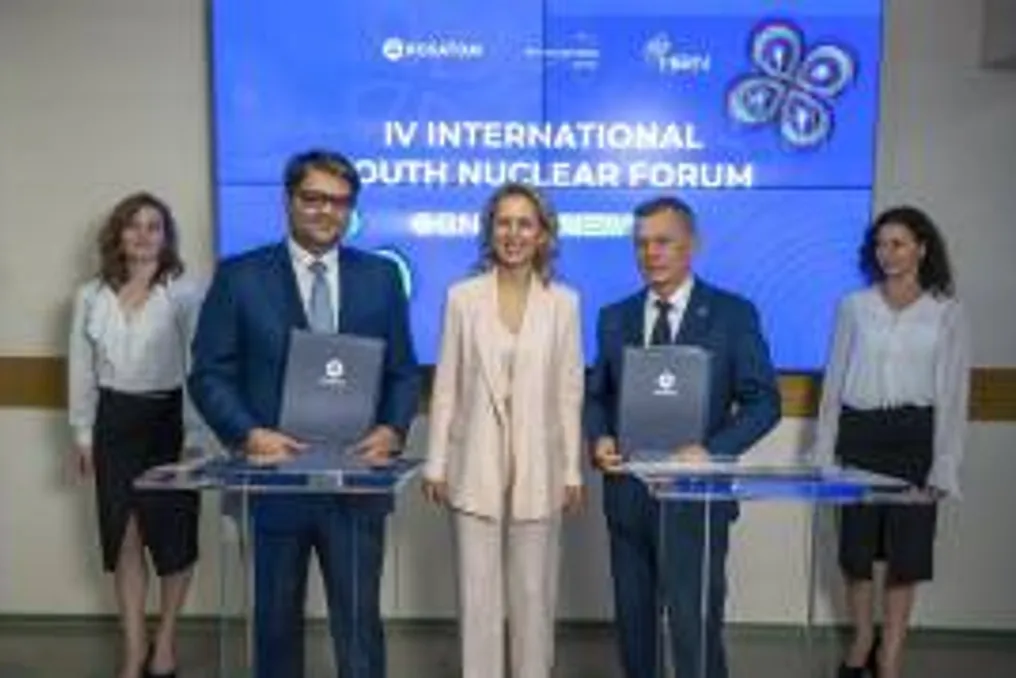
An agreement was signed between the Atomic Energy Agency of the Republic of Uzbekistan (Uzatom) and the Rosatom Technical Academy regarding cooperation in nuclear medicine and related fields.
The document was signed by Yuri Seleznev, Rector of the Rosatom Technical Academy, and Azim Ahmedkhojaev, Director of the Uzatom Agency. The main goal of the agreement is to develop the national infrastructure for nuclear medicine in Uzbekistan, train highly qualified personnel for the field, continuously improve the skills of specialists, and systematically establish the exchange of scientific and technical information.
Within the scope of cooperation, educational programs will be developed based on the national needs of Uzbekistan and other countries, as well as advanced international experience. This cooperation covers important areas such as the research and production of medical isotopes, radionuclide diagnostics and therapy, theranostics, radiation therapy, the creation, production, and clinical application of radiopharmaceuticals, as well as radiation safety.
Yuri Seleznev, Rector of the Rosatom Technical Academy, emphasized that the academy possesses extensive experience and unique competencies in nuclear technologies and their application outside of energy. He stated its readiness to offer its educational and scientific-methodological potential to train highly qualified specialists who can work with modern technologies compliant with international standards to develop nuclear medicine in Uzbekistan.
According to Azim Ahmedkhojaev, Director of the Uzatom Agency, developing nuclear medicine is one of the important ways to improve the healthcare system of Uzbekistan. He mentioned that the work on preparing a strategy for developing nuclear medicine has reached its final stage. This strategy is aimed at developing human resource capacity, improving the regulatory legal framework, introducing modern technologies, and strengthening the national infrastructure of the field.
Ahmedkhojaev stressed that this agreement is an important step in strengthening cooperation and implementing the defined tasks. It will not only expand cooperation in the field of education but also serve to form a comprehensive system for training and improving the skills of doctors, medical physicists, radiochemists, radiopharmacists, and engineering technical staff working in the field of nuclear medicine.
It should be noted that this agreement was signed during the 'Obninsk NEW' International Nuclear Industry Youth Forum held in the city of Obninsk, Russian Federation.