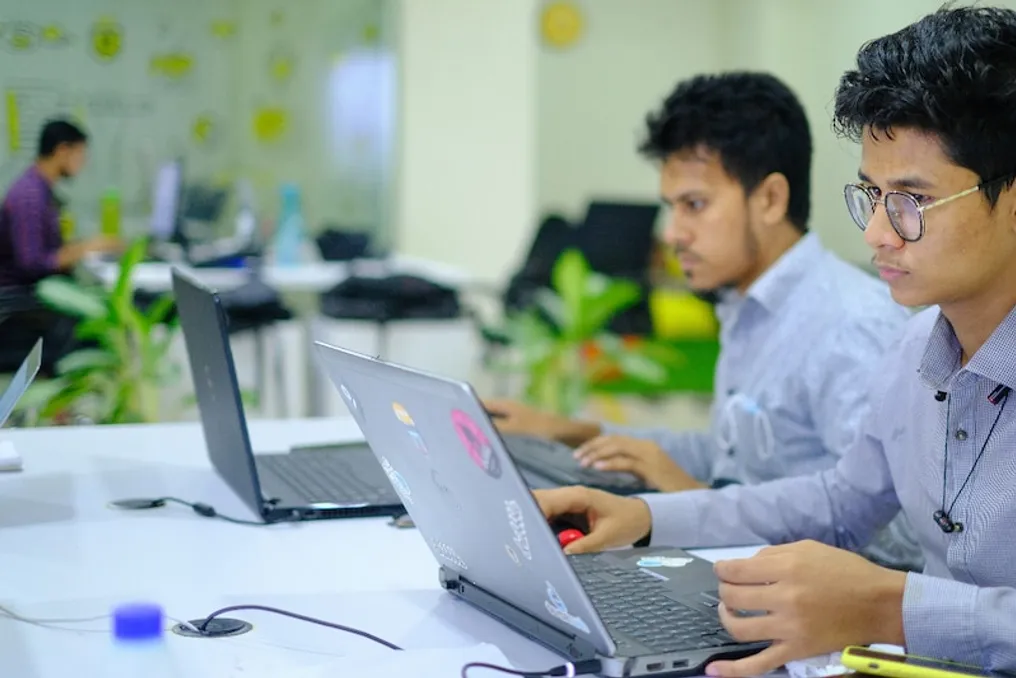
For decades, the aspirations of the middle class in India were defined by choosing professions as a doctor or an engineer. These specialties served as synonyms for success because they promised a stable income, high social status, and opportunities for social growth. Parents actively encouraged these choices, and schools and students followed this example, often assuming there were few other equally respected alternatives.
Shifts in the Global Labor Market
However, this traditional formula is gradually transforming against the backdrop of massive changes in the global labor market. According to the World Economic Forum's report on the future of work in 2025, structural changes will lead to the creation of 170 million new jobs by 2030, while 92 million existing positions may disappear. Furthermore, the report predicts that 39 percent of workers' skills will either change or become obsolete.
Thus, although engineering and medicine remain in-demand professions in India, they are no longer the sole primary aspirations for a generation entering a labor market transformed by artificial intelligence, digital business, startups, renewable energy, and the skills-based economy.
The Enduring Significance of Traditional Fields
The dominance of engineering and medicine remains noticeable in India's higher education system. The Ministry of Education and Technology reports that engineering remains the largest discipline in technical education, providing the highest number of enrollments in technical courses. The scale of engineering education spans thousands of institutions across the country, underscoring its constant appeal.
Medical education has also expanded significantly over the last decade. The National Medical Commission (NMC) and the Ministry of Health and Family Welfare indicate that since 2014, the number of medical colleges in India has more than doubled, leading to a substantial increase in MBBS training seats. This expansion was driven by the opening of new public and private medical institutions, especially in underserved regions, to address the doctor-to-population ratio issue.
Competitive exams reflect a similar picture: millions of people continue to compete annually for seats in engineering and medical universities through entrance tests such as JEE and NEET. For many parents, these professions represented a guarantee of stability, as engineering often led to employment in campuses, multinational corporations, or abroad, while medicine promised constant demand regardless of economic cycles, along with immense social respect.
Broadening the Concept of a 'Good Career'
Outside the university walls, the definition of a 'good career' is becoming much broader. India's economy in 2026 is vastly different from two decades ago. Today, India is home to one of the world's largest startup ecosystems. Global centers of excellence continue to expand in various cities. Digital commerce, fintech, content creators, gaming, climate tech, and artificial intelligence have spawned new types of employment that barely existed when current parents entered the job market.
Balasubramanian A, Senior Vice President at the Indian recruitment firm TeamLease Services, noted: 'Engineering and medicine remain among the most preferred career choices in India due to their perceived stability, social prestige, and long-term earning potential. However, we are observing a gradual but significant shift, especially among young professionals and urban talent.' He added that government initiatives supporting manufacturing and innovation, such as Make in India and PLI schemes, combined with India's startup ecosystem, are expanding employment opportunities beyond traditional professions.
Prioritizing Skills Over Diplomas
Perhaps the most significant shift is occurring in hiring. Employers are increasingly demanding proof of a candidate's ability to perform the job, rather than just possessing a degree. According to the TeamLease SVP, 'Employers are increasingly hiring based on skills rather than degrees, although the importance of formal qualification still depends on the role and industry. For many modern jobs, especially those related to technology, manufacturing, logistics, healthcare, retail, and customer operations, the ability to perform the job effectively often outweighs the qualification itself.'
Balasubramanian A clarified that the fastest-growing skills are no longer limited to software coding. Employers are seeking expertise in artificial intelligence, cloud computing, cybersecurity, and data analytics, alongside practical technical skills such as electrical maintenance, quality control, machine operation, warehouse management, and field services. He also emphasized that besides technical abilities, communication, adaptability, teamwork, analytical thinking, and a willingness to learn continuously have become equally important across all industries.
Young Indians Rethinking the 'Mainstream'
A small independent survey conducted for this article reflects a wider shift in mindset. About 80 percent of the 30 respondents stated that engineering and medicine are no longer the only 'safe' career options. Nearly nine out of ten would say they would encourage the next generation to explore career paths outside traditional professions, with many noting that skills, adaptability, and personal interests are now more important than following conventional career trajectories. Among the most frequently mentioned fields in terms of prospects for the next decade were artificial intelligence, data science, and cybersecurity.
Several respondents also felt that future success would depend less on degrees and more on adaptability. Tripti Kumar, who recently graduated with a Bachelor of Home Science, explained her choice by saying she realized her interests lay elsewhere. She said she recognized that engineering and medicine never suited her because she was more interested in human development, nutrition, family studies, and community well-being. She stated: 'I wanted a career where I could work closely with people and make a positive impact on their lives.'
A psychology student also felt compelled to go beyond. She recounted realizing in the 10th grade that engineering and medicine were not the right path after developing a deep interest in understanding people and their behavior. Although some relatives considered engineering and medicine the 'best career choice,' she never felt pressured to choose them. She added: 'It was worth it because I am studying what I like.' Her parents supported her decision, giving her confidence in choosing home science 'without hesitation.' She believes this choice has paid off, noting that the course strengthened her practical knowledge, communication skills, and self-confidence. 'Most importantly, I like what I study, and that makes the path meaningful and fulfilling.'
Nevertheless, traditional paths have not lost their relevance. Shivendra Singh, a media professional, noted that 'someone has to be a doctor and an engineer, so it should always remain a career option.' At the same time, one respondent from the media sector reported that 'even people with degrees in medicine or engineering are moving into content creation and slowly making it their main focus,' citing the rapid growth of the creator economy.
Durgesh Kumar Jha, a PR specialist at Kalka Co. Media Consultancy, agreed with this sentiment, stating: 'Engineering and medicine remain respected professions, but today's youth are embracing diverse fields such as communications, digital media, entrepreneurship, design, and technology. The most important thing is aligning one's passion and skills with the opportunities of a rapidly changing world.'
Global Trend in Career Choice
This changing mindset is not unique to India. According to the Deloitte Gen Z and Millennial survey for 2026, young professionals are increasingly defining career success on their own terms, rather than through conventional milestones. The report found that financial pressure continues to influence career decisions, while workers are actively investing in new skills, viewing adaptability as a key career competency. The adoption of AI has become mainstream: nearly three-quarters of Gen Z and millennial respondents already use AI at work not only to boost productivity but also to seek learning opportunities and career advice.
Employment Prospects for the Next Decade
According to TeamLease, job growth over the next five to ten years is expected to occur across a much wider range of sectors than in previous generations. Key employers are expected to remain global centers of excellence, manufacturing, renewable energy, healthcare, logistics, retail, e-commerce, BFSI, and telecommunications. There is also a projected sustained demand for AI specialists, cybersecurity experts, software developers, electric vehicle technicians, healthcare workers, production operators, and logistics specialists.
Srishti, a Senior Executive working in regulatory intelligence and market research, believes the changes are already evident: 'The era (of engineering dominance, medicine, etc.) is over. The digital economy and AI have created huge, high-paying career paths outside traditional fields. Today, skills in UI/UX design, data science, cybersecurity, and digital marketing offer equal financial success and a better work-life balance.'
The World Economic Forum's report on the future of work in 2026 added that AI transforms, rather than eliminates, early careers. Instead of completely replacing graduates, the report argues that employers will increasingly value work-integrated learning, practical problem-solving, technological literacy, and alternative indicators of job readiness alongside traditional degrees.
Rethinking the Concept of a 'Safe Career'
For generations, the idea of a 'safe career' in India was closely tied to a small number of professions. But as industries evolve, as technology transforms workplaces and entirely new roles emerge, this definition is changing. Balasubramanian from TeamLease stated: 'The focus should no longer be on choosing a 'safe' career for life, but on developing adaptable skills that remain relevant as industries develop.'
Ultimately, the answer may lie in finding a balance between the reliability of traditional professions and the freedom to explore new opportunities. Silki Mahajan, a marketer at a startup, said: 'We need to combine reliable traditional careers, such as engineering and medicine, with modern technologies. To succeed today, the next generation must blend these stable fields with crucial skills like analytical thinking, leadership, and AI awareness.'
Professions once chosen, such as engineering, medicine, and law, are unlikely to lose their status anytime soon. However, they are no longer the only answer when someone asks a child what they want to be. In modern India, the more relevant question may not be which profession is the safest, but which skills and fields will remain valuable.