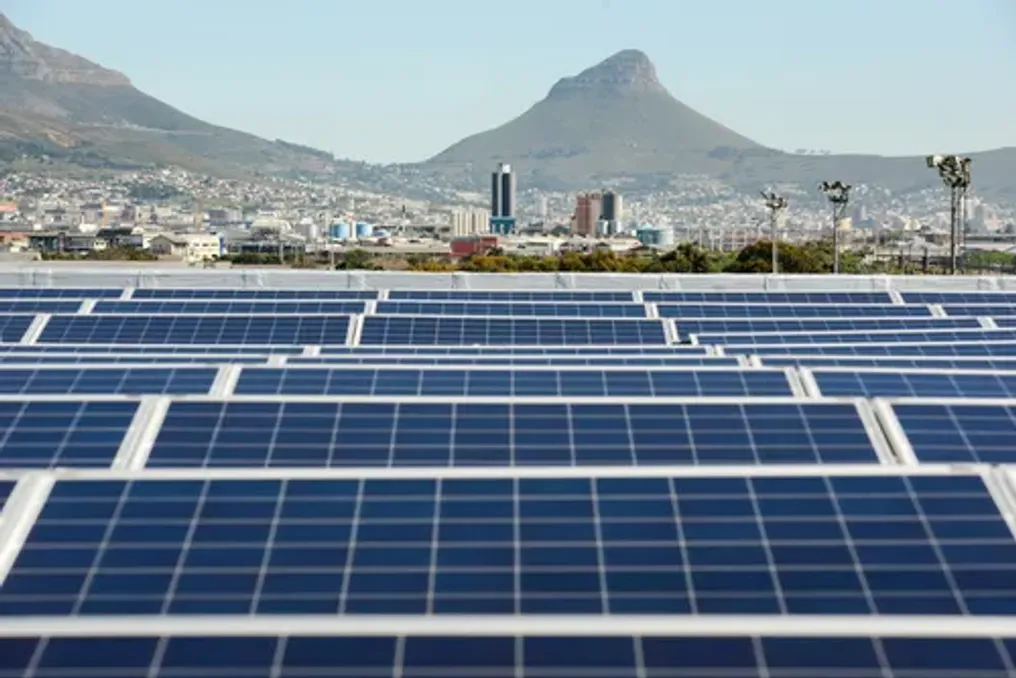
South Africa is at a critical stage of development, with plans for 72 GW of renewable energy projects, as well as an overall portfolio of 220 GW such projects. However, problems with the national power system's capacity threaten to halt this progress, which could lead to further electricity and economic crises.
Popular
Barrier to the green transition
This 'deadlock' in network operation represents the most serious obstacle to realizing the country's renewable energy potential. It creates a significant risk of slowing the transition to a 'green' economy and could trigger new energy and economic shocks. Instead of focusing solely on financing and building new power stations, the priority task is the modernization of the entire energy infrastructure, which is the foundation of a functioning system.
Deficiencies of outdated infrastructure
The outdated infrastructure of South Africa's power grid is one of the main bottlenecks hindering the growth of renewable energy sources and the stability of the country's energy landscape, directly impacting the economy. The network, built mainly in the mid or late 20th century, was originally designed for linear, centralized delivery of reliable energy from several coal-fired power stations located primarily in Mpumalanga. However, decades of underfunding maintenance and lack of capital expenditure for modernization have resulted in the transmission infrastructure no longer meeting modern requirements.
As energy needs and the structure of the energy balance change, the transmission infrastructure has remained static. Most corridors with high renewable energy potential are far from the main connection points to the grid. Furthermore, the network capacity in most areas with high green generation potential has reached saturation, making it difficult to deliver renewable energy to those who need it. The lack of available capacity effectively halts large-scale power generation projects, limiting the ability to integrate new, cheaper energy sources into the energy balance.
Consequences for the economy and security
This has serious consequences for businesses and consumers, who are forced to use increasingly expensive and unreliable traditional power sources. The situation also slows down new investments in renewable energy projects and increases dependence on costly diesel peaking plants, seriously undermining recent progress in South Africa's energy transition. Given South Africa's vulnerability to geopolitical fuel price shocks, this also raises energy security risks.
Importance of grid expansion and storage systems
According to a report by the South African Energy Traders Association (SAETA) titled 'Policy to Power - Ten actions to deliver green, accessible and secure electricity', energy sector reform depends on transmission capacity. The report emphasizes that new capacity cannot connect without rapid network expansion, making line construction a critical issue for ensuring system reliability. Although the National Transmission Company of South Africa (NTCSA) has made progress in fulfilling its commitment to add about 14,450 km of new lines by 2034 (to connect 56 GW of new capacity), the pace must be faster, otherwise private generation projects will stall.
Even with increased capacity, deploying renewable energy is not a simple process. Since renewable sources are inherently variable—solar energy is generated during the day, and wind energy under favorable conditions—there is a mismatch with the outdated network designed for stable coal power delivery. Successful integration of renewable energy into a rigid old network requires smart grid technologies, the most important of which are Battery Energy Storage Systems (BESS).
These systems are necessary to provide the stability required to connect intermittent renewable sources like solar and wind. They make variable renewables manageable by storing excess energy and releasing it during peak demand periods. They also stabilize the system by regulating frequency and maintaining reserves, allowing for a greater share of clean energy without compromising reliability. Moreover, BESS can defer transmission investments: strategically placed storage at overloaded substations absorbs energy the grid cannot export and releases it when lines have spare capacity, opening opportunities years before new infrastructure is permitted and built, while reducing costs. This changes the concept of curtailment, often used to manage an overloaded grid, from a simple loss to a manageable signal. With proper use and advance notification, a generator facing curtailment can plan to direct that energy to its own batteries instead of losing it, turning curtailment into stored value and postponing the need for grid modernization.
Energy market and the wheeling mechanism
South Africa is moving towards an open energy market. The cornerstone of this process is 'wheeling'—a mechanism that allows a South African company to purchase renewable energy from an independent producer or through a trader and route it to its operations through the grid. This process is critical for creating a local liberalized market because it allows bypassing local generation constraints (i.e., a generation project is not obliged to be built on-site or nearby). It also gives corporate customers direct access to clean energy without having to take on the complexity, large capital costs, and risks of developing, building, and operating a large renewable energy project, thereby stimulating private investment.
Wheeling also supports the system as a whole. By allowing buyers to contract with generators across the country, it creates a commercial pathway to the market that encourages a geographically diverse portfolio of renewable sources. While the wheeling mechanism itself does not change power flows, the system benefits from having diverse generation connected to the grid, as geographical distribution ensures a more stable aggregate output and facilitates balancing. However, the successful realization of the benefits of wheeling depends on the availability of network capacity.
Role of the public sector and private initiatives
The implementation of NTCSA's Transmission Development Plan (TDP) is the most crucial action to ensure the network infrastructure aligns with future generation activities and, consequently, the country's energy security. The TDP, presented in October 2024, includes an ambitious commitment to build 14,450 km of new transmission lines and 210 transformers to commission the required 56 GW of new capacity. According to the same SAETA report, NTCSA's target for the 2025/2026 financial year is 423.1 km, with just over 108 km completed by October 2025. Despite progress in planning and procurement, slow transmission rollout rates in South Africa remain a serious risk to energy security and decarbonization efforts.
Accelerating grid expansion is necessary to connect private renewable projects and maintain public confidence in sector reforms. There is also concern that these delays signal not only capacity problems but also Eskom's unwillingness to facilitate greater access for private participants. Given the projected need for network modernization and expansion of 440 billion rand against the utility's current asset base, effective public-private partnership is critical. Therefore, NTCSA's true independence is paramount. An open competitive electricity market cannot be created when the dominant generator also controls access to the grid. Private investors in generation, storage, and transmission itself require a neutral counterparty they can rely on.
However, it must be clearly understood: decentralization is an opportunity, not a replacement. Restructuring the organizational chart does not lay a single kilometer of line. Independence will only unlock network capacity if it is backed by capital and execution, which is provided by the Independent Transmission Program (ITP). ITP, based on a proven approach to renewable procurement, allows private players to finance, design, build, and operate transmission infrastructure, with assets ultimately transferred to NTCSA. Only the pilot phase targets over 1,100 km of new lines to unlock over 3 GW of network capacity. With urgent scaling, ITP can do for transmission what independent power producers have done for generation: attract private capital and skills that the state budget lacks, and this deserves full support from policymakers, creditors, and industry.
Path to a resilient grid
South Africa's resilient grid will be built through both wires and flexibility, not just new capacity. Transmission expansion and battery storage scaling are practical measures that convert abundant renewable resources into reliable energy for households and industries. The current challenge is execution. It is necessary to accelerate the implementation of NTCSA's TDP, mobilize public-private capital and capabilities through tools like ITP, and complete market reforms—SAWEM, ancillary services, and capacity mechanisms—that make reliability an attractive investment.
Another structural reform must also be seriously considered: transferring the Grid Access Unit (GAU) from Eskom Distribution to NTCSA or another independent entity. In its current form, GAU resides within the same business that collects retail revenue, so every wheeling connection approved by it for a project outside of REIPPPP reduces the income of the organization to which it reports. This creates a clear conflict of interest, which, combined with a lack of authority over NTCSA's resources upon which it depends for project decisions, generates delays and distorted incentives. Integrating grid access facilitation into an independent transmission structure would allow these decisions to be made objectively and efficiently, although this would require careful legislative alignment, as GAU's administrative role in guiding IPPs differs from NTCSA's supervisory role in providing access under Section 34B of the Electricity Amendment Act.