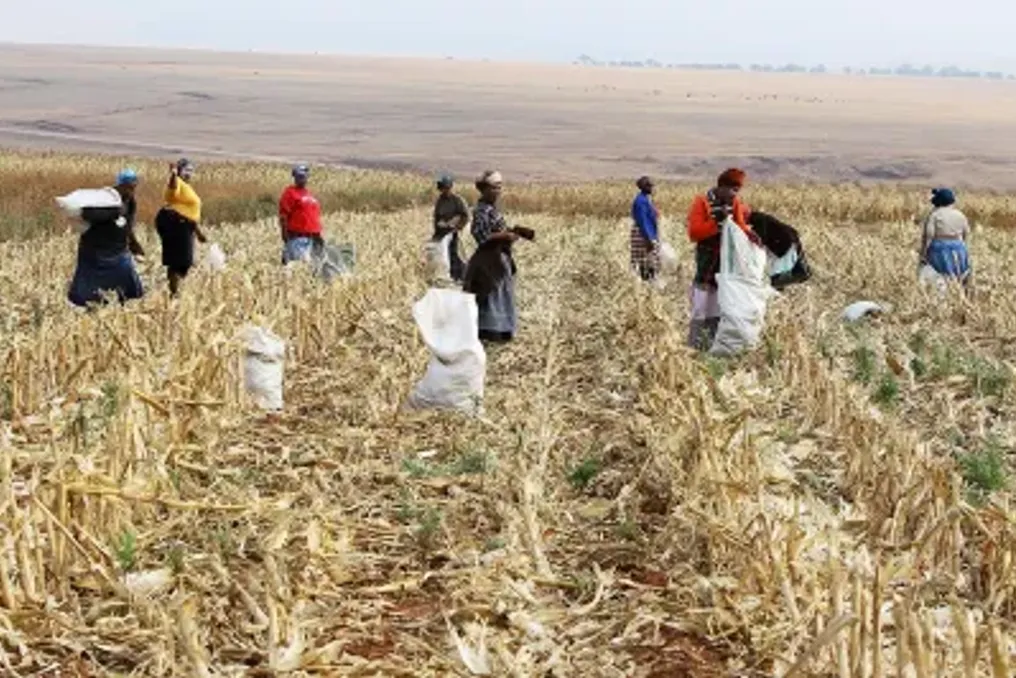
Grain SA is defending its position regarding import tariffs, agricultural technologies, and farmer development, asserting that sustainable local food production is essential for ensuring long-term food security in South Africa.
On Tuesday, Grain SA CEO Dr. Tobias Doer testified at the South African Human Rights Commission's (SAHRC) National Inquiry into Food Systems. There, he answered the commission's representatives' questions about the role of commercial agriculture in addressing hunger, food accessibility, and inequality.
Doer's testimony came against a backdrop of alarming data demonstrating a deep link between food shortages, poverty, and adverse socio-economic conditions in South Africa. According to findings presented by the SAHRC during the initial phase of the investigation in March, over 14 million people, representing 22.2% of households, regularly go to bed hungry. Furthermore, malnutrition among children is rising, with more than one in four children suffering from growth stunting—a critical indicator of ongoing nutritional deficiency.
During the hearings, commission representatives questioned Doer about the impact of commercial agriculture on combating hunger, price affordability, and socio-economic inequality. Doer stated: 'I believe that we, as Grain SA, are one of the organizations that contributes most significantly to food security.' He also emphasized that South African maize is among the best in the world, ensuring access to the most affordable product. However, he noted that wheat presents a complex issue because it is primarily produced in traditional first-world countries that support producers through subsidies.
The discussion took a critical turn when Doer was questioned about Grain SA's lobbying for increased tariffs on imported wheat. Critics argued that such protective measures could lead to higher prices for staple foods, disproportionately affecting low-income households. Doer countered by stating that while Grain SA advocates for a fair competitive environment, the organization strongly opposes competition with heavily subsidized international producers. He added that they are willing to compete on equal terms but do not agree with unequal playing fields.
Doer also pointed to rising transport costs and infrastructure expenses as key factors contributing to food inflation, which in turn affects suboptimal market prices. Earlier this week, Visani Baloyi, an SAHRC representative, reported a strong correlation between food shortages, poverty, and poor socio-economic conditions, expressing concern over the consequences of poor nutrition. He mentioned statistics on obesity in the country, noting that nearly half the population consumes food leading to obesity problems, and many people are unaware of what specific food they are consuming.