Problems continue to plague the Indian team during their visit to England. In the third T20 match, the team suffered a crushing defeat by a margin of 125 runs. While chasing a target of 202 runs, the team managed to score only 76 runs, which was the second lowest total in India's T20 international match history.
Contrast Between Games
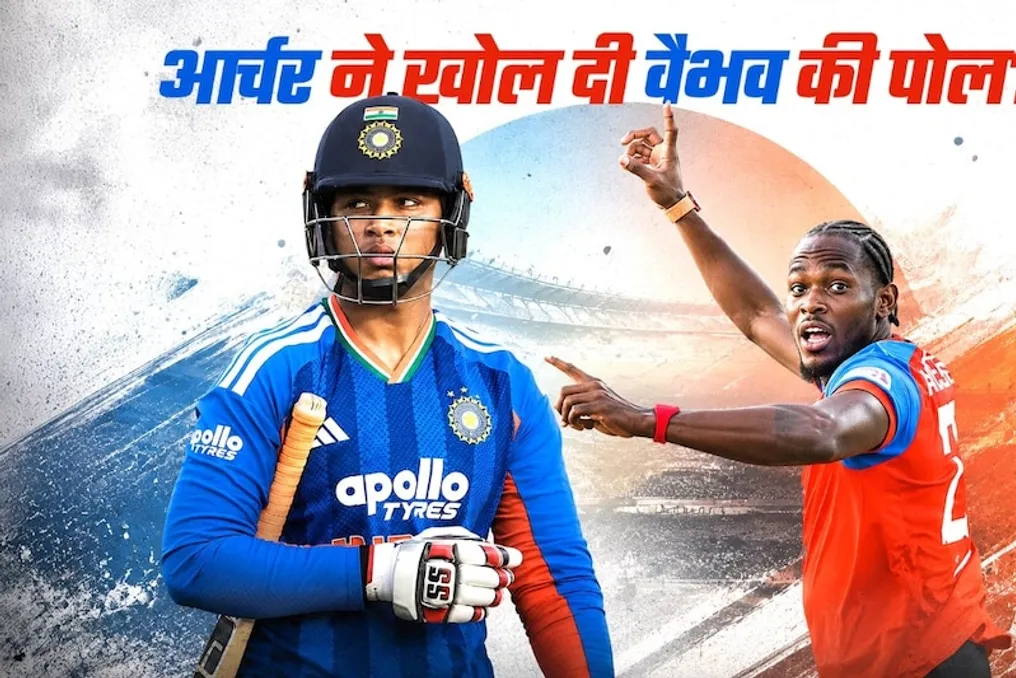
Despite the humiliating loss, the most interest was drawn to the confrontation between 15-year-old Vaibha Suryavanshi and Jofra Archer. Before the match, the Indian team faced full readiness from the home side. Among them was Jofra Archer, capable of bowling at a speed of 145 km/h. The home team's plans were clear: not to allow Vaibha to play freely.
Archer's and Tang's Pressure
England started the game by scoring a difficult total for the opposition at 201/7. The Indian batsmen looked clearly uncomfortable facing the sudden acceleration and extra height of the ball. Jofra Archer (3-0-29-3) and Josh Tang (4-0-28-4) created strong pressure with new deliveries, causing India to lose players consecutively. Both players focused not on full-length balls but on short-pitched and back-of-a-length deliveries, which prevented the Indian batsmen from attacking forward or feeling confident in a defensive position.
Tactical Trap Against Vaibha
The most exciting confrontation took place between Vaibha Suryavanshi and Jofra Archer. England knew that Vaibha preferred an aggressive start with the new ball. Therefore, Archer decided to test him not through opportunities for drives, but through balls aimed at the body. On the fourth delivery of the second over, Archer bowled a fast short ball down the leg line, reaching a speed of 145 km/h. Vaibha attempted to play a hook shot in his usual style, but the ball's speed was so high that he could not create enough space for the shot. The ball slightly grazed the edge of his glove and hit the hands of bowler Jos Buttler. The umpire immediately called it out, and Vaibha returned to the dressing room without asking for a review. At that moment, India's score was 29/2.
Strategy, Not Just One Ball
Vaibha's dismissal was the result not just of one brilliant delivery, but part of a pre-planned English strategy. First, Vaibha was subjected to the pace and bounce of the ball, and then a short ball was bowled, giving the batsman very little time to react. Archer's goal was to provoke Vaibha into an aggressive shot and exploit this tendency. Thus, Vaibha's exit was not just a success for England, but confirmation of the success of their 'short ball trap.'
New Challenges for Vaibha
For Vaibha Suryavanshi, playing at the international level at the age of 15, this is more of a lesson than a failure. Now opponents will not take him lightly; his game will be analyzed, plans will be developed, and his weaknesses will constantly be targeted. The main challenge now for Vaibha is whether he can step onto the field next time with better preparation for short balls. If the answer is yes, this 145 km/h ball could become the most important lesson of his career.
Captain's Reaction
Interestingly, captain Shreyas Iyer also commented on the failure in this part of the game, calling the team's performance 'Atrocious and Unacceptable'. This statement raises questions not only about the players themselves but also about the captain's responsibility.